Ukraine is running out of Patriot air defense interceptors as Russia increases missile attacks on Kyiv, exposing a severe shortage across Western military stockpiles.
The Economist reported that American ammunition reserves have been heavily depleted, which also helps explain why President Donald Trump has repeatedly stepped back from threats to resume military action against Iran.
The supply crisis is affecting U.S. allies worldwide. Switzerland expects its orders for Patriot systems to be delayed by up to seven years, while Taiwan fears that 102 units ordered several years ago will not arrive on schedule this year. Defense manufacturer Lockheed Martin, which produces the advanced PAC-3 MSE variant, stated that it cannot guarantee delivery schedules to any foreign client because the U.S. Department of Defense retains the authority to redirect shipments. While ammunition shortages are common in major, exhausting wars, America is experiencing a deficit following a brief conflict against a medium-sized state.
Depletion of Western Defense Inventories
The immediate cause of the shortage stems from the extensive use of interceptors by the United States and its Middle Eastern allies during President Trump's war against Iran earlier this year. According to the Center for Strategic and International Studies, a Washington-based defense think tank, the Pentagon consumed nearly two-thirds of its pre-war Patriot inventory alongside a significant portion of other interceptors.
The think tank stated that the conflict accelerated a reckoning decades in the making, noting that defense industries in North America and Europe were operating at a peacetime pace despite growing military tensions. It highlighted that the issue was compounded by global missile proliferation, military leadership spending more on high-profile weapons than consumable ammunition, inefficient American budgeting processes, and overconfidence in U.S. air superiority.
CSIS estimates that restoring Patriot stocks to pre-war levels will take until 2029, provided Congress approves President Trump's $1.5 trillion defense budget request, a 50 percent spending increase that analysts consider unlikely to pass. Despite the supply constraints, Patriot systems remain the primary point-defense mechanism, protecting critical infrastructure such as airbases, for 19 nations.
Asymmetric Costs and Dropping Interception Rates
Justin Bronk, a senior analyst at the Royal United Services Institute, a British defense think tank, explained that Patriot systems served as a universal solution that was rarely needed, but when required, little else could replace it. However, defending forces face a severe cost disparity because ballistic missiles are significantly cheaper than the interceptors used to destroy them.
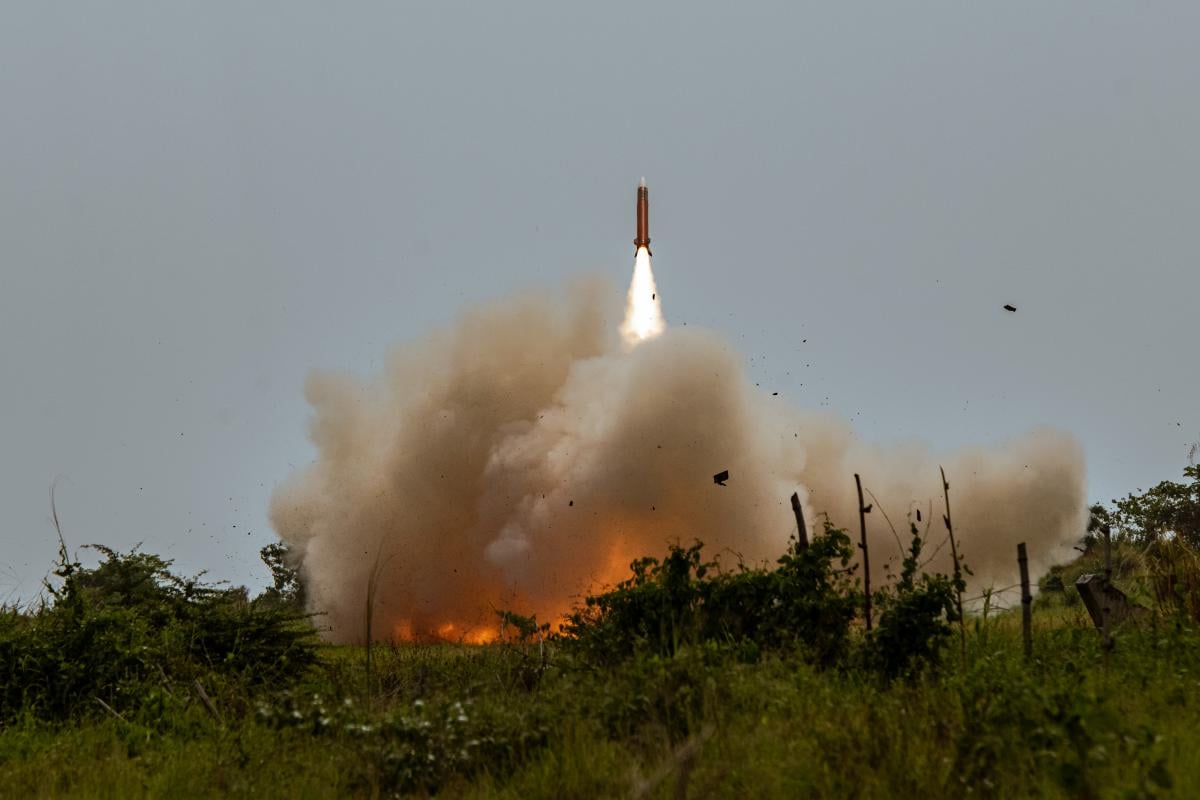
Advanced PAC-3 MSE interceptor rounds cost between $4 million and $5 million each, whereas Iranian-designed Shahed drones are two orders of magnitude cheaper. Air defense doctrine typically requires launching at least two interceptors per incoming missile to maximize success, rapidly burning through available stockpiles.
While Ukraine maintains an effective network against Russian drone swarms and intercepts most large cruise missiles with European air defense systems, only Patriot batteries can counter Russian Iskander-M and Kinzhal ballistic missiles. Ukrainian forces reported intercepting approximately 70 percent of incoming ballistic missiles in March, but that figure dropped to 20 percent in July, with conditions expected to deteriorate further in August as Russia expands its missile production.
Efforts to Expand Production and European Stockpiles
With winter approaching, Ukrainian officials have requested at least 300 additional Patriot interceptors. Several countries retain sufficient stockpiles, including Germany, Greece, Poland, and Spain, but European governments are increasingly reluctant to transfer their remaining supplies.
To address the deficit, manufacturers agreed this year to boost annual PAC-3 production from 600 units to approximately 2,000 by the early 2030s. Allied industrial capacity is also being drawn upon, with Japan producing around 30 PAC-3 interceptors annually under license, primarily for its own defense needs.
In Europe, defense contractor MBDA is preparing to begin production of older PAC-2 models in Germany. However, industry reports indicate that American manufacturers Lockheed Martin and RTX fear losing proprietary technical know-how or being displaced by lower-cost Ukrainian alternatives.
Alternative Missile Defense Projects
Ukraine is also evaluating alternative air defense platforms. The Franco-Italian SAMP-T system is capable of engaging short-range and medium-range ballistic missiles, but Ukrainian military sources state that it performs worse than the Patriot PAC-2 system, let alone the PAC-3. Ukraine will begin receiving upgraded SAMP-T batteries with modernized interceptors next year, though production volumes remain smaller than Patriot manufacturing.
To fill the defensive gap, the Ukrainian defense industry and new Western firms are working on anti-missile defense initiatives, including Project Freya, which involves Ukrainian defense firm Fire Point and multiple European weapons manufacturers. The project aims to develop an interceptor costing one-quarter of a PAC-3 unit without using American technology, with flight tests scheduled to begin next year. Douglas Barrie, an air warfare specialist at the International Institute for Strategic Studies, a British think tank, described Project Freya as a moonshot project.
Meanwhile, Lockheed Martin has announced development of the PAC-3 ACE, also known as the Baby Patriot, which will be smaller and less capable than the PAC-3 MSE but will cost half as much, with production potentially starting in 2028. Separately, Poland plans to launch missile production for the Patriot system, as constructing manufacturing facilities inside Ukraine remains virtually impossible during the war.