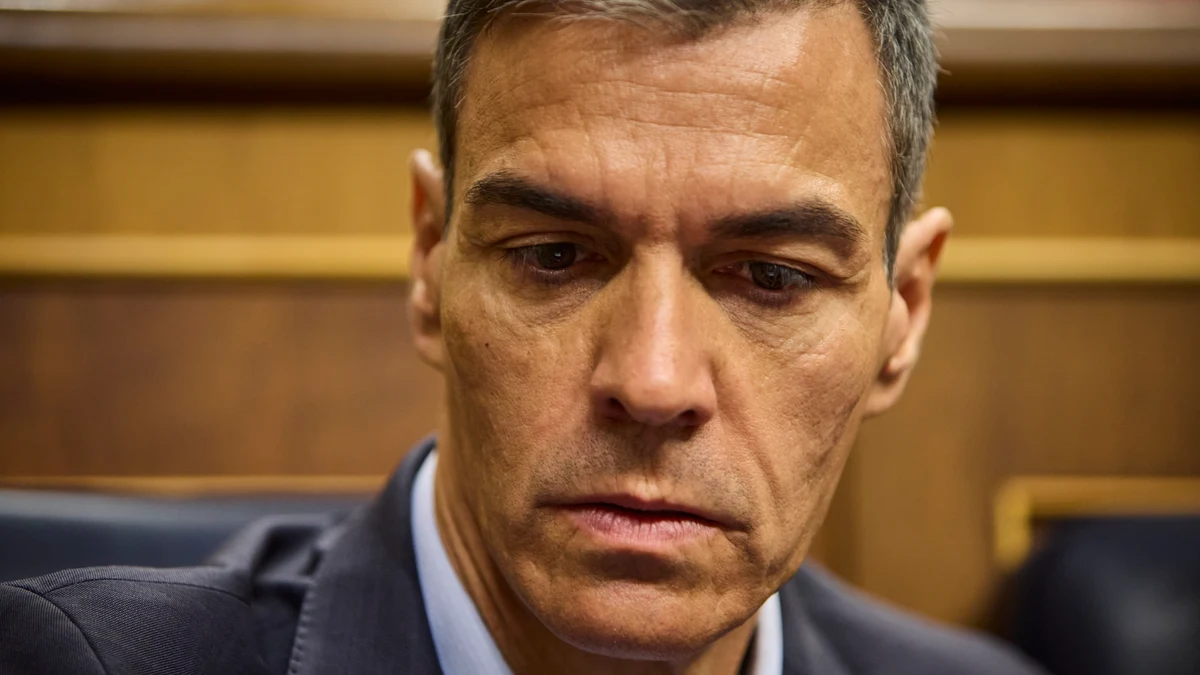
Spain's Partido Popular has been forced to put forward plans during the election pre-campaign to repeal major legislation enacted under Prime Minister Pedro Sanchez.
The conservative opposition, together with the right-wing party Vox, faces what political commentator Julian Cabrera describes as a massive initial governing task focused on overturning laws introduced by the left-wing government. Writing in an analysis of the pre-campaign, Cabrera suggested that the scale of the rollback would practically require the incoming administration to set up a dedicated ministry of repeals.
The challenge comes as Spain enters an intense pre-election period. Cabrera warned that the Spanish right has historically fallen into the habit of celebrating victory before securing power, often running out of energy in the final stretch of campaigning while the Spanish Socialist Workers' Party mobilises disenchanted supporters at the eleventh hour. However, the pressure to dismantle the political and legislative legacy of Sanchez has made repeals a central focus for conservative strategists.
According to the commentary, the legislative drive is framed as necessary to restore institutional stability. Cabrera argued that multiple statutes passed under Sanchez's administration have undermined core tenets of the democratic consensus established by Spain's 1978 constitution, creating friction in public life.
Legislation targeted for repeal
The proposed legislative unwinding covers a wide range of policy areas, though the difficulty of repealing individual laws varies sharply. Cabrera divided the targeted legislation into measures that can be reversed relatively easily and those that present deep legal and practical complications.
Among the statutes considered feasible to scrap quickly is Spain's democratic memory legislation. The Partido Popular and Vox have already established precedents for altering or repealing these historical remembrance regulations in several regional administrations where the two parties govern in coalition. These regional efforts have sought to replace national memory statutes with alternative heritage rules.
Also listed as relatively straightforward to dismantle is the controversial amnesty law enacted by Sanchez's government. The measure was introduced to clear legal penalties for Catalan politicians and activists involved in the 2017 independence drive, a decision that Cabrera said left the Supreme Court exposed and vulnerable. Conservative opponents have viewed the statute as an unacceptable compromise with regional separatists.
Other targets identified as technically simpler to repeal include the transgender rights law, commonly known as the trans law, which introduced self-determination of gender. In addition, the conservative agenda targets national housing regulations and recent reforms to the Criminal Code that restricted pardons for politicians convicted of corruption offences.
Reforms facing legal and practical hurdles
In contrast to those measures, Cabrera cautioned that other flagship reforms cannot simply be wiped away overnight. He compared the task to trying to squeeze spilled toothpaste back into a tube, noting that legal consequences already set in motion cannot easily be undone by a change of government.
A primary example is the sexual consent legislation known as the only yes means yes law. The statute, introduced to reclassify sexual offences around explicit consent, inadvertently created lower minimum sentencing thresholds that allowed hundreds of convicted sex offenders to secure sentence reductions and early release from prison. Because the Spanish constitution prohibits the retroactive application of harsher criminal penalties, undoing the practical impact of those releases remains legally impossible.
Labour reform is another area where returning to previous frameworks is viewed as exceptionally complicated. The employment rules enacted under Sanchez overhauled temporary contracts and collective bargaining agreements, establishing market conditions that businesses and trade unions have already integrated into daily operations.
Environmental policies and national water regulations face similar hurdles. Cabrera pointed to the historic struggle over water planning, recalling the national hydrological plan pursued by former conservative Prime Minister Jose Maria Aznar. Aznar's administration had sought to redistribute water across regions, but comprehensive water management continues to spark intense regional disputes over resources.
Electoral hurdles and coalition arithmetic
Beyond the legal hurdles of individual statutes, Cabrera argued that the overarching objective of the conservative programme is to dismantle what critics term the sanchista system. He accused the current administration of seizing control of independent state institutions, weakening the international reputation of the Spain brand, and leaving the country isolated among nations outside the Puebla Group, the international alliance of left-wing political figures.
Yet before any ministry of repeals can begin dismantling past statutes, the conservative parties face an immediate electoral obstacle. Cabrera emphasised that neither the Partido Popular nor Vox can enact changes without first securing a combined working majority in the Cortes Generales, warning that planning a governing agenda means little unless the numbers add up on election night.