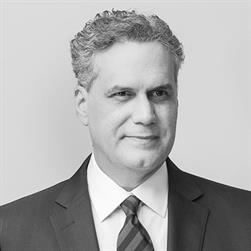
The Peruvian government proposal to obtain delegated legislative powers from Congress to classify violent criminal organizations as terrorist groups lacks practical utility and fails to address core operational deficiencies in law enforcement, according to criminal litigation lawyer and legal scholar Cesar Azabache Caracciolo.
Writing in an analysis published on September 2, 2026, Azabache stated that changing legal terminology offers no concrete solutions without real operational measures. He noted that the administration of Prime Minister Luis Galarreta is requesting congressional authorization to increase criminal penalties, simplify trial procedures, and relocate legal jurisdictions for violent crime, even though statutory mechanisms for procedural simplification and jurisdictional transfers already exist under Peruvian law.
Azabache pointed out that the executive branch statement of motives reveals the narrow scope of the initiative. The explicit goal of introducing the word terrorism into public security legislation is merely to label and classify violent organizations. According to the executive request document, this naming convention is modeled on similar measures adopted in El Salvador, Argentina, and Ecuador.
Furthermore, the government claimed that adopting the terrorism label would provide a legal framework to organize the intervention of the Armed Forces against violent criminal groups. However, Azabache argued that the government failed to explain why a new legal classification is necessary for military action. He highlighted that army units are already deployed in the mining province of Pataz in northern Peru, an operation accomplished without needing to alter legal definitions or declare gangs as terrorist entities.

Government request lacks practical measures
Azabache questioned the practical value of treating violent organized crime in the same manner as terrorist organizations during a debate on delegated legislative powers. He observed that Congress has already increased prison sentences for violent crimes on multiple occasions, yielding minimal deterrence.
Regarding procedural simplifications and jurisdictional transfers, Azabache emphasized that existing legal frameworks already permit prosecutors and judges to expedite trials and transfer high-risk cases to specialized courts in Lima. The primary obstacle preventing the use of these existing tools is not a lack of legislation, but a deficiency in building solid legal cases.
He explained that Peru suffers from administrative inefficiencies in police process management and poor operational coordination between the National Police and the Public Prosecutor Office. He added that legislative changes enacted by the previous Congress severely damaged coordination between police officers and prosecutors.
The government legislative request also proposes establishing a post-penitentiary surveillance regime that would create a mandatory registry for high-risk convicts after they serve their prison terms. While Azabache acknowledged that post-release supervision is a concept worthy of legislative debate, he questioned whether a request for emergency delegated powers is the appropriate venue to design such a complex system.
He stressed that implementing post-penitentiary surveillance requires specialized administrative capacity and physical infrastructure, specifically electronic monitoring ankle bracelets. The Ministry of Justice faces a 16-year delay in implementing electronic surveillance procedures. Azabache noted that because the state has been unable to purchase and deploy electronic ankle monitors for over a decade and a half, expanding their use to monitor released convicts remains entirely unrealistic under current state capacities.
Technical objections and historical anti-terror model
Azabache raised technical objections to applying the term terrorism to organized criminal gangs. In contemporary international law and legal terminology, terrorism refers to politically or ideologically motivated acts, particularly international terrorism. He argued that applying the same legal label to two fundamentally different phenomena creates confusion and constitutes bad legal practice.
However, he stated that his technical reservations would yield if the proposal served a clear strategic purpose, such as reviving the successful investigative methods developed by Peruvian law enforcement against subversive groups during the 1980s and 1990s.
Reflecting on historical anti-terror efforts, Azabache recalled that between 1983 and 1991, Peru created a highly specialized, professional police intelligence unit that operated independently of political influence and remained free from corruption. This body was the Counter-Terrorism Directorate, known as DIRCOTE, which incorporated the Special Intelligence Group, or GEIN, before expanding into a National Directorate prior to the April 1992 constitutional coup.
That professional intelligence framework successfully led to the capture of Abimael Guzman, the founder and leader of the Shining Path insurgent group. Azabache noted that replicating the success of that era requires understanding the fundamental differences between past insurgencies and modern criminal networks.
Differences between past insurgencies and modern crime
Today, Peru faces a decentralized network of violent criminal organizations focused entirely on financial accumulation rather than political doctrine. Unlike historical insurgent organizations such as the Maoist Shining Path, or Sendero Luminoso, and the Marxist-Leninist Tupac Amaru Revolutionary Movement, known as MRTA, contemporary criminal cartels lack ideological cohesion.
Moreover, modern organized crime syndicates possess a capacity for institutional corruption far exceeding that of past terror groups. Today syndicates obtain military weapons through clandestine black markets, launder large sums of illicit revenue, and operate within illegal economic sectors such as illegal mining. Azabache warned that these illicit financial flows risk corrupting elements within the state security forces themselves.
To effectively combat modern violent crime, a specialized police body must possess strong internal counterintelligence capabilities to monitor and purge corruption within security forces. Azabache asserted that establishing such counterintelligence mechanisms appears difficult under the current administration, which continues to promote legal protections and shields under police jurisdiction.
He argued that shifting the national security strategy against organized crime is not a matter of delegating legislative powers to the executive branch, as Prime Minister Galarreta claimed. Instead, real progress depends on political decision-making, structural police reorganization, and executive leadership.
Legacy barriers and police independence
Azabache highlighted political legacies that restrict the current administration maneuvering capacity. He recalled that the most recent attempt to establish an independent, highly specialized police investigation unit occurred with the High-Complexity Crime Investigation Division, known as DIVIAC, working alongside the Special Team of prosecutors tackling corruption in power.
However, the political coalition supporting the current government dismantled both DIVIAC and the Special Prosecution Team once their investigations began targeting former Attorney General Patricia Benavides and individuals in the inner circle of President Dina Boluarte.
Azabache stated that the government could still establish an independent police body dedicated to supporting organized crime prosecutors. Such a unit could be structured outside the police autonomy laws passed by the previous Congress and partially upheld by the Constitutional Court.
However, he expressed doubt over whether the executive branch genuinely desires an independent investigative police force capable of tackling high-level crime, emphasizing that creating such a body requires no delegated powers from Congress.
Cesar Azabache Caracciolo is the director of Azabache Caracciolo Law Firm and a veteran criminal litigation attorney. He previously taught law at the Pontifical Catholic University of Peru and the Judicial Academy. He hosts the news programs En Coyuntura on LRTV and Encuentros Muleros on La Mula portal, serves on the board of Gaceta Penal magazine, and has authored numerous essays on criminal justice reform.