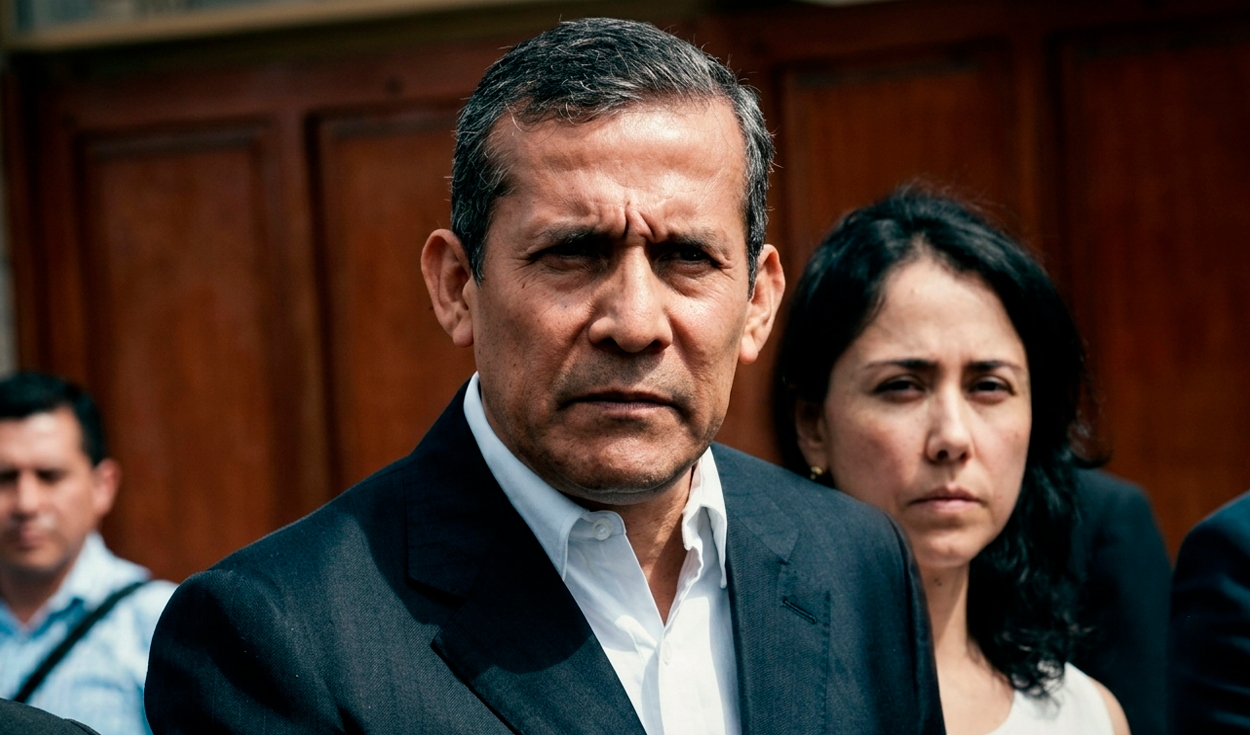
Peru's Constitutional Tribunal has ordered the release of former president Ollanta Humala after granting a habeas corpus petition and voiding the entire criminal case against him for alleged aggravated money laundering.
The ruling annulled preliminary investigations opened in 2019 and all subsequent proceedings, including a fifteen-year prison sentence handed down on 29 April 2025. The tribunal ordered prosecutors to formally close the case and archive all investigative material, and directed the trial court to define Humala's legal status on the same day it receives notification of the ruling.
The vote among the seven justices was five to two. Justices Domínguez Haro, Morales Saravia, Gutiérrez Ticse, Ochoa Cardich, and Hernández Chávez supported the decision. Justices Luz Pacheco Zerga and Manuel Monteagudo Valdez dissented and said the petition should have been rejected.
The reasoning
The majority grounded its decision in a basic principle of criminal law: no one can be punished for conduct that was not a crime when it occurred. The justices said the conduct attributed to Humala, receiving and keeping money of suspicious origin to finance his 2006 and 2011 presidential campaigns, corresponded to an offence that Peru incorporated into its laws only in November 2016.
Applying that offence to acts committed years before it existed in law amounted to punishing him under a rule that did not exist at the time, which the Constitution prohibits. The law in force in 2006 and 2011, the ruling noted, did not penalise the simple receipt of suspicious campaign money. It required a more complex sequence: placement of funds, mixing with legitimate money, and eventual return to the source disguised as clean money.
A third argument questioned the prosecution's case on its merits. The tribunal said it was never made concrete what predicate crime generated the suspicious funds, and that there was insufficient evidence Humala knew in 2006 and 2011 that the money came from an illegal source, something the ruling stressed cannot simply be assumed without proof.
On those three grounds, the tribunal concluded that Humala's rights had been violated in a way that directly affected his personal liberty.
The dissents
Justice Pacheco Zerga argued on procedural grounds that the decisions Humala challenged did not directly affect personal liberty under the tribunal's own prior case law, citing at least three earlier rulings applying the same standard. She noted that his imprisonment stemmed from the 2025 conviction rather than from those challenged decisions. She also found, on the merits, that the Supreme Court had always classified the underlying conduct under the money-laundering law in force since 2002, not the 2016 version, and that the 2016 amendment did not substantially change what the law punishes.
Justice Monteagudo Valdez focused on timing. The fifteen-year sentence was still under appeal before another court when the Constitutional Tribunal acted, and Humala's defence had already raised the same argument there. He said filing the habeas corpus before that court had ruled was premature, and that the tribunal had intervened in a matter still properly before the criminal courts.
Background
Prosecutors alleged Humala used illegal money to finance two presidential campaigns. For 2006, the accusation held that funds came from the Venezuelan government of Hugo Chávez through a Venezuelan company and diplomatic pouches. For 2011, prosecutors said the money originated in corruption tied to Brazilian construction firm OAS and a fund managed by officials linked to Brazil's Workers' Party, reaching Humala through Odebrecht and concealed behind fictitious donors presenting the contributions as legitimate.
Humala had previously been held under preventive detention during earlier stages of the same proceedings. After the 2025 conviction his defence sought to keep him free while he appealed, but a court rejected that request in March 2026. He remained imprisoned while the appeal was still unresolved when the Constitutional Tribunal issued the ruling ordering his release.