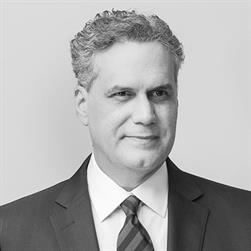
José Antonio Vera, a columnist for the Spanish newspaper La Razón, accused Prime Minister Pedro Sánchez of mishandling a monthlong migration crisis in the North African enclave of Ceuta, writing that the government's newly announced reconstruction plan would likely come to nothing, just as previous plans had after the La Palma volcano eruption, the COVID-19 pandemic, deadly flooding and recent wildfires.
Morocco has asked Spain to return all of its nationals who crossed into Ceuta, including minors, while the European Union has said all of the migrants involved should be sent back. According to Vera, Sánchez does not appear convinced by that position.
Torres named to lead the crisis response
Vera wrote that Sánchez had finally decided to act by putting Ángel Víctor Torres, the government's minister for territorial policy and a former president of the Canary Islands regional government, in charge of the response. Vera predicted this would make the situation worse rather than better, saying Torres had never been known for his management or coordination skills.
Vera pointed to Torres's involvement in the Aldama and Koldo-Ábalos affairs, corruption cases that implicated a former aide to the government and a former transport minister from Sánchez's Socialist Party. He said Torres was more likely to repeat the government's talking points, blaming criminal smuggling networks, describing Morocco as Spain's best ally, and pinning responsibility for poor management on Juan Jesús Vivas, the president of the autonomous city of Ceuta.
Rejecting the smuggling and outside-interference narrative
Vera rejected the idea that criminal smuggling networks were behind the crossing, arguing that such networks charge migrants for passage, while those who crossed the border on the 30th and 31st had not paid. He said authorities in Rabat had deliberately allowed them through to pressure Sánchez.
He also dismissed government suggestions blaming a far-right international network and Russian President Vladimir Putin, calling the claim outlandish. Vera argued Madrid was avoiding any confrontation with Morocco, which continues to claim that Ceuta and Melilla belong to it, a position he said Washington and Tel Aviv have accepted while Brussels looks the other way.
Ceuta is a Spanish autonomous city on the North African coast bordering Morocco, and along with Melilla forms one of Spain's two land frontiers with Africa. Rabat has long disputed Spanish sovereignty over both territories.
Criticism of border security and messaging
Vera criticized Sánchez for rejecting assistance from Frontex, the European Union's border and coast guard agency, and said little had changed to secure the frontier since an earlier mass crossing, which he said left Spain relying on an old fence and a small police presence as its only deterrent.
He said the government was trying to present the situation as normal when it was neither calm nor secure, drawing a comparison with the phrase "new normality" that Sánchez used to describe Spain's exit from pandemic lockdowns.
Calls for repatriation
Vera called for what he said were around ten thousand migrants still in Ceuta to be repatriated through exceptional measures, meaning Moroccan nationals should be taken directly to the border and handed to Moroccan gendarmerie, as he said Rabat had requested and Brussels supported. He said waiting for standard immigration procedures could take up to a year, according to estimates attributed to Vivas.
Vera closed by saying government ministers were trying to cast Vivas in the same position as Carlos Mazón, the president of the Valencia region who faced heavy criticism over his administration's handling of deadly flooding in 2024, effectively making Vivas a scapegoat for Ceuta. He argued this framing would not hold up, since Ceuta has no powers over border or immigration matters, which remain under the control of the central government. The only person who could accurately be blamed for Ceuta, he wrote, was Sánchez himself.