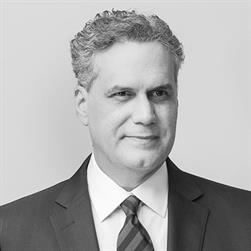
Dominican Republic Ombudsman Pablo Ulloa has urged agricultural producers in Valverde province to shift focus toward water efficiency and market competitiveness.
Writing from Santo Domingo, Ulloa said the northwestern region must move beyond high production volumes to maximize the economic value generated from its water and land resources.
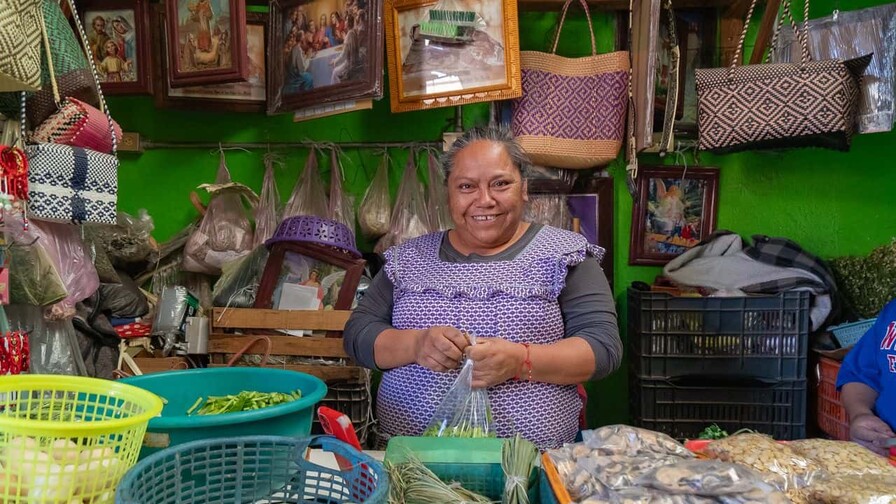
Valverde province sits in a relatively dry climate zone in the Dominican Republic. It includes the key municipalities of Mao, Esperanza, and Laguna Salada.
Mao was elevated to a municipality in 1882, while Valverde was formally established as a province in 1958 and named after General José Desiderio Valverde.
The region transformed dry land into a national farming hub by harnessing water from the Yaque del Norte river and its tributaries. This irrigation infrastructure expanded farming for major crops including rice, bananas, and plantains.
Ulloa explained that Valverde demonstrated how comparative economic advantages are not merely natural gifts. Instead, communities can build economic advantages through infrastructure, organization, knowledge, and hard work.
Banana Production and Export Challenges
Banana production has become a central economic pillar for the province. In 2023, bananas accounted for approximately 75 percent of all exports from Valverde.
The broader Northwest region has concentrated more than three-quarters of total Dominican banana production for several years, connecting local farmers directly to global markets.
Ulloa warned that increased harvest volumes have sometimes coincided with export difficulties. Higher production costs, strict market quality demands, global competition, and unpredictable weather conditions have squeezed farm returns.
He stressed that producing more without selling better represents a fundamental productivity flaw. Productivity cannot be measured solely by counting boxes of bananas or quintals of harvested rice.
True productivity measures the economic value generated per land unit, per cubic meter of water, per peso invested, and per hour worked. When input costs outpace harvest growth, farm profitability drops.
In addition, value created on the farm is easily lost before reaching consumers if product quality degrades during packaging, transport, or marketing.
The High Mao Irrigation Project
To address water management, the Dominican Republic is launching the High Mao Irrigation Project. The initiative involves an investment of nearly 257.5 million dollars across approximately 11,214 hectares.
The project will directly benefit 2,274 farmers and more than 52,000 local residents. Plans call for converting nearly 9,400 hectares from open irrigation systems to a pressurized network, while incorporating 1,759 hectares into irrigation for the first time.
Ulloa noted that measuring the project's success requires looking beyond infrastructure statistics like pipe kilometers or added hectares. Officials must track yield increases, reduced water losses, lower costs, and new commercial opportunities.
He proposed a simple benchmark for progress: measuring the exact economic value obtained from every cubic meter of water used.
This perspective also clarifies the relationship between Valverde's main crops. Rice production strengthens national food security, while banana cultivation brings in foreign currency from international trade.
Rather than pitting these crops against each other, Ulloa advocated analyzing their respective costs and yields to allocate land, water, technology, and capital efficiently.
Port Logistics and Manzanillo Access
Logistics forms the next critical link in the provincial supply chain. Valverde holds a strategic location near the port administration of Manzanillo on the northern coast.
In 2023, bananas and plantains made up roughly 82.8 percent of exports handled through Manzanillo. The port accounted for around 41.7 percent of the total national export value for those agricultural products.
Ulloa emphasized that physical distance between farms and shipping ports directly affects productivity. Cutting transportation times, cargo losses, and logistics expenses can boost economic returns as much as increasing crop yields.
Taking full advantage of port proximity requires modern packing facilities, cold storage chains, official quality certifications, product traceability, and reliable transport systems.
The organized private sector plays an essential role in building this commercial structure. The Chamber of Commerce and Production of Valverde, led by president Ramón Peralta, can turn individual business concerns into a unified provincial competitiveness plan.
Ulloa pointed out that business groups reduce hidden coordination costs. Linking production, processing, financing, trade, logistics, vocational training, and market access amplifies the benefits of major projects like High Mao.
Municipal Leadership and Civic Efficiency
Provincial development also requires effective municipal leadership. In Mao, Mayor Yohendy Jiménez Bonilla and Deputy Mayor Estefany Frías have promoted local governance centered on strategic planning, civic engagement, and urban efficiency.
Ulloa observed that municipal governments do not need to resolve agricultural issues directly to support farm productivity. Instead, city halls must create functional environments where businesses can operate smoothly.
Well-maintained roads, reliable municipal services, waste management, sound urban planning, public spaces, and transparent public finances form a vital part of the economic ecosystem.
Investors examine local institutions alongside power grids and roads, just as farmers require functioning civic infrastructure alongside water and credit lines.
Ulloa argued that Valverde's key assets must operate as an integrated system rather than isolated elements. Combining water resources, farm producers, urban centers in Mao, productive land in Esperanza and Laguna Salada, the Chamber of Commerce, and the port of Manzanillo creates a cohesive growth strategy.
Performance Metrics and Constitutional Mandates
Moving from volume-based farming to high-value agriculture requires tracking key performance indicators. Ulloa urged officials to monitor water losses, yield per land unit, transport costs, product rejection rates, net farmer income, and retained local value.
He highlighted that unmeasured operations cannot be improved. The Dominican Constitution explicitly mandates the promotion of scientific research and technology transfer to enhance agricultural output and guarantee food security.
Ulloa stressed that fulfilling this constitutional duty requires regional leadership and institutional coordination, not just national policies.
More than a century ago, Valverde succeeded in bringing water to dry soil. The next challenge is transforming production into long-term competitiveness by coordinating technology, producers, businesses, markets, and public institutions into a single system.