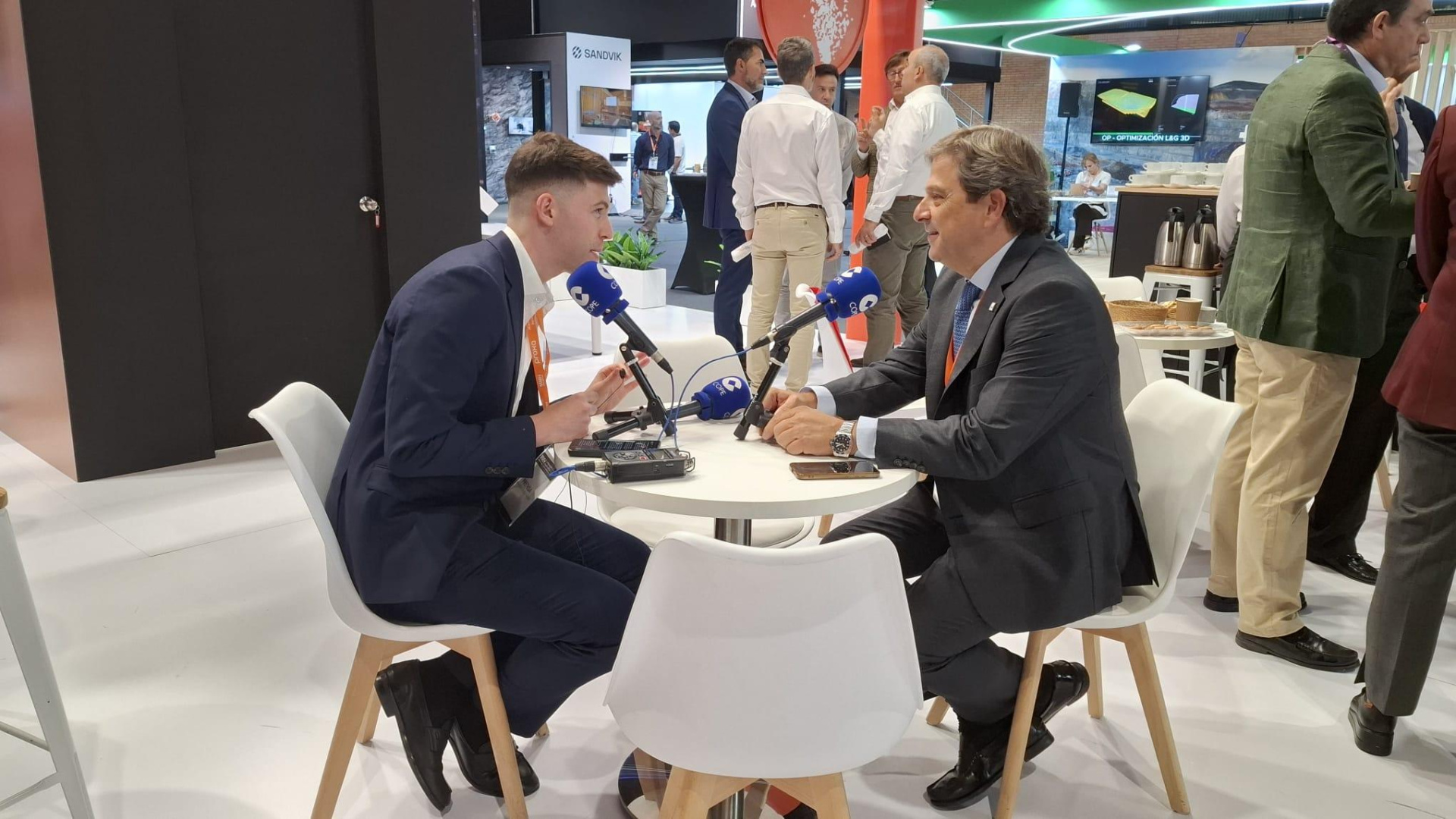
Spanish opposition leader Alberto Núñez Feijóo has hardened his stance against Morocco while promising to maintain friendly relations if he becomes prime minister.
The leader of the conservative Popular Party, known as the PP, spoke during his second visit to the autonomous Spanish enclave of Ceuta in North Africa following a major border incident on July 30.
Feijóo said that his desire is to maintain the best possible relationship with Morocco based on friendship and neighborliness. However, he emphasized that neighborly relations must rest on two non-negotiable conditions of mutual respect and reciprocity, asserting that Spanish territorial integrity in Ceuta, Melilla, and Spanish waters is not open to question.
Addressing the movement of tens of thousands of people across the Ceuta border on July 30, Feijóo accused Moroccan authorities of instrumentalizing citizens through action or omission. He stated that Spain does not seek conflict or enemies, but declared that the country will not accept threats or blackmail.
Feijóo also criticized recent statements by Morocco's justice minister questioning Spanish sovereignty over Ceuta and Melilla, noting that such remarks do not help foster trust and loyalty between the two nations.
Criticism of Secret Diplomacy
Feijóo leveled severe criticism at Spanish Prime Minister Pedro Sánchez of the ruling Socialist Workers' Party, or PSOE. He claimed that Sánchez has engaged in years of secret diplomacy with Rabat, leaving Ceuta as the visible result of government foreign policy.
He described it as unacceptable that Sánchez had outsourced security on Europe's southern border to Moroccan goodwill. Feijóo stated that European security cannot depend on a foreign nation, especially one that uses its own citizens like playing cards in a political game.
His comments mark a sharpening of tone from earlier statements by PP defense spokesman Fernando Gutiérrez Díaz de Otazu. Speaking in the Senate during the non-appearance of Defense Minister Margarita Robles, the former Commanding General in Melilla accused Moroccan authorities of promoting, permitting, or deliberately ignoring unfriendly actions aimed at harassing normal life in Ceuta and Melilla.
Unresolved Western Sahara Stance
Despite the heightened rhetoric, Feijóo maintains that his first official institutional trip abroad as prime minister would be to Morocco. This would restore an unwritten democratic tradition followed by previous Spanish leaders until Sánchez broke it by visiting France first.
However, uncertainty remains over how a PP government would handle the disputed territory of Western Sahara. Sánchez previously made a historic shift in Spanish policy by backing Moroccan sovereignty over the former Spanish colony, a move heavily criticized by the PP leadership at its headquarters in Génova.
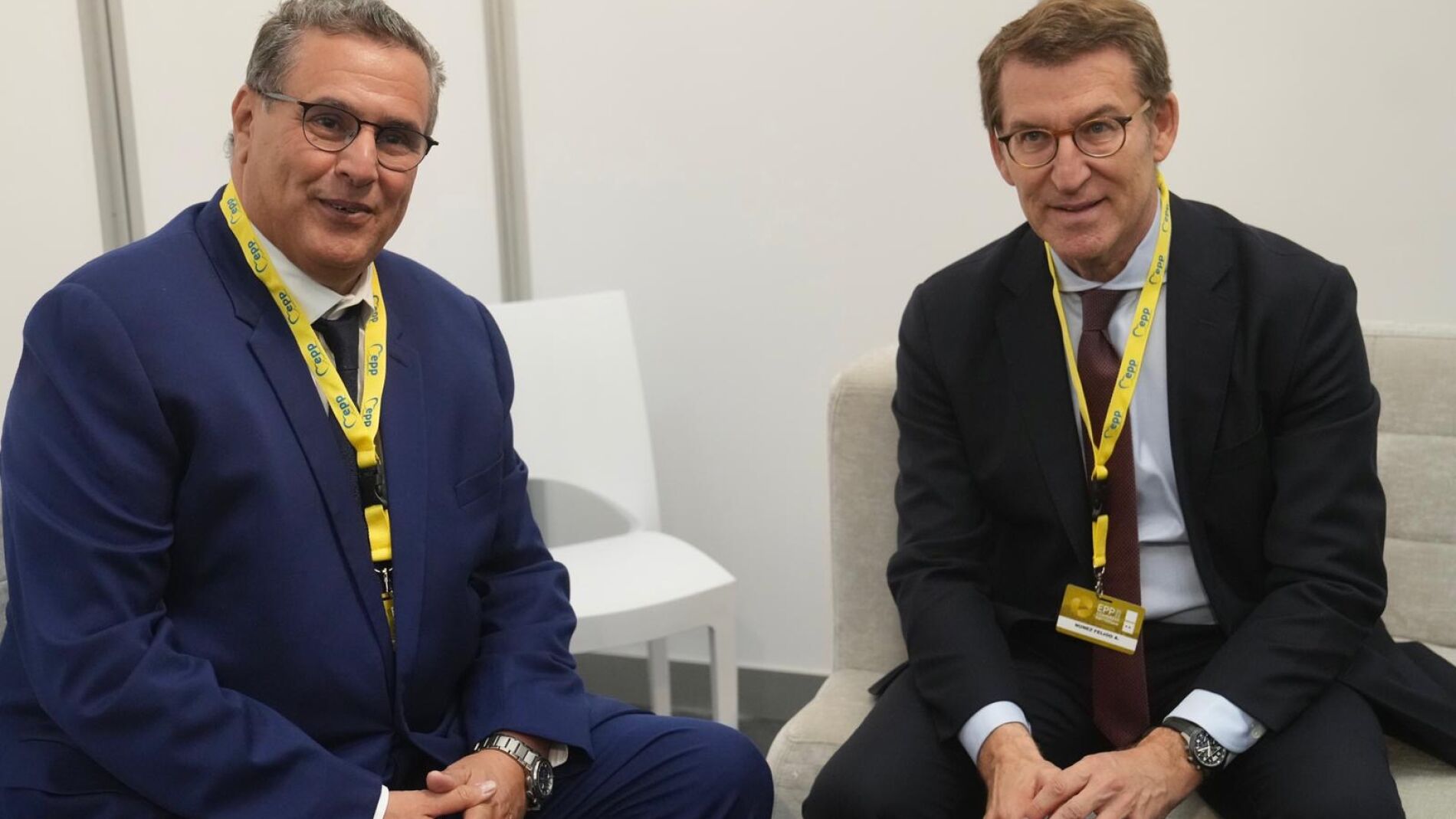
In the summer of 2025, Feijóo revealed details of his May 2022 bilateral meeting in Rotterdam with Moroccan Prime Minister Aziz Akhannouch during a European People's Party congress. Akhannouch had invited Feijóo to visit Rabat to deepen ties, an invitation Feijóo accepted but has not yet fulfilled.
When Akhannouch asked about the PP's future position on Western Sahara, Feijóo demurred. He told the Moroccan leader that his primary principle was not to lie, explaining that he did not know what commitments existed because the Spanish government kept them secret. Feijóo said he could not commit to agreements whose scope he did not know, though he noted Akhannouch was under no obligation to explain them.
Diplomatic Friction and Party History
That 2022 meeting ended in an ambiguity that persists today. While the PP has supported parliamentary resolutions favoring international law regarding Western Sahara, Feijóo caused friction with Rabat just over a year ago by inviting Abdullah Al-Arabi, the Polisario Front representative in Spain, to the PP national congress.
Moroccan media outlets aligned with the regime reacted angrily to the invitation, accusing the PP of a hostile and hypocritical attitude. The Moroccan newspaper Goud published an editorial warning that the Spanish conservative party was playing with fire.
Relations between the PP and Morocco carry historical tension dating back to the administration of former Prime Minister José María Aznar. In July 2002, a military standoff occurred over the land invasion of Perejil Island, an uninhabited islet off the North African coast, leading to a Spanish military intervention.
Although the subsequent PP administration under Prime Minister Mariano Rajoy passed without major diplomatic conflicts, the Moroccan regime has continued to view the party with caution. PP leaders maintain that maintaining good relations with Rabat remains essential, noting that no country wants bad terms with its neighbor.