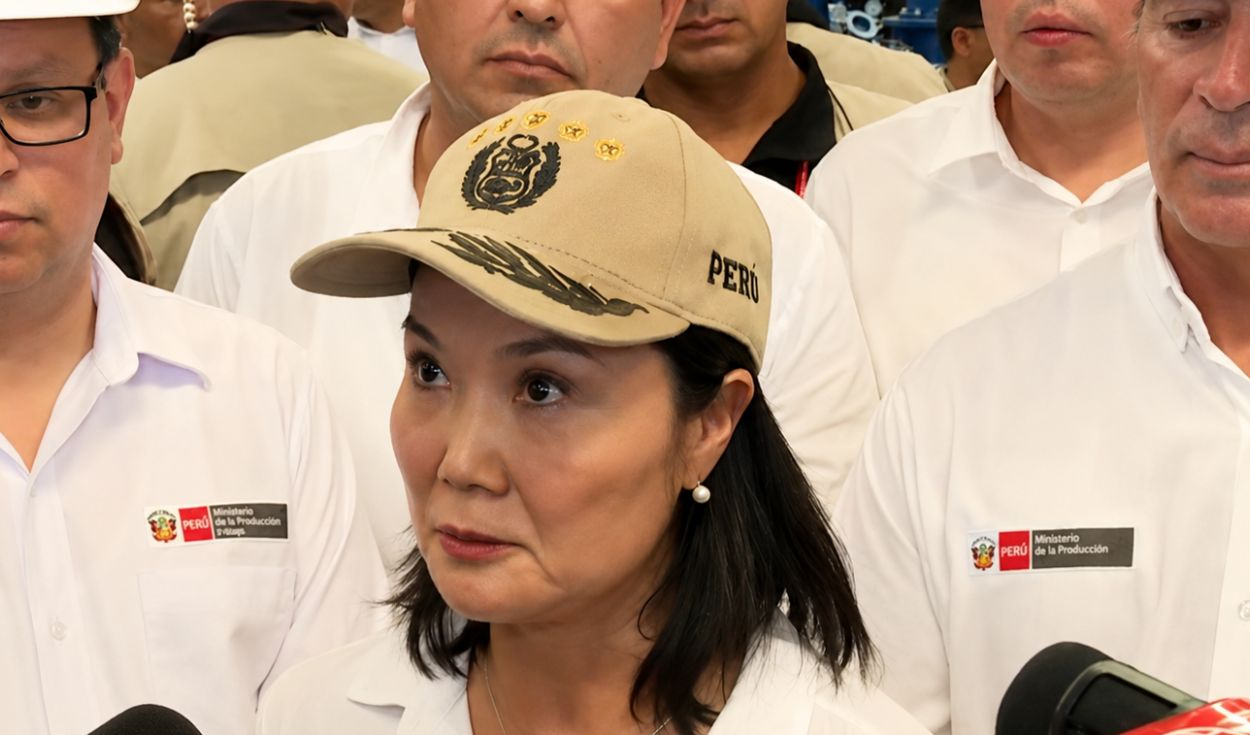
The government of Peruvian President Keiko Fujimori faces a political crisis after the kidnapping of mining executive Jenss Lara and four murders in Trujillo exposed conflicting accounts within the executive branch and police.
Contradictory statements between cabinet ministers and the National Police of Peru regarding an alleged ransom payment and the arrest of five suspects have drawn heavy criticism across the country.
Trujillo, a major coastal city in northwestern Peru, has seen growing violence from organized crime networks that regional officials say the central state has failed to contain.
Conflicting claims over ransom and release
Disagreements over how the kidnapping of Jenss Lara ended emerged almost immediately between senior officials. Defense Minister Rafael Belaúnde stated that the businessman's family delivered money to the kidnappers while police monitored the transaction to trace the funds and locate the perpetrators.
However, Interior Minister César Astudillo avoided confirming whether a ransom was paid, stating that the release could have been brought about by a payment or because the kidnappers felt surrounded by law enforcement.
Police General Víctor Revoredo stated that he was unaware of any payment and noted that statements made by the victim's family were being respected. The National Police of Peru later issued a statement asserting that police pressure forced the release and denied that a ransom had been paid.
The family of Jenss Lara strongly disputed official accounts of law enforcement involvement. His father, Eleuterio Lara, stated that his son was freed through independent efforts by the family and their contacts, despite reports alleging that a $1 million ransom had been paid to the captors. The businessman's brother stated that the police did nothing to secure the release.
Presidential statements and interrogation photo
President Keiko Fujimori further fueled the controversy during public remarks on Wednesday. Fujimori stated that Defense Minister Rafael Belaúnde did not take part in any interrogation of the suspects, asserting that police handled all questioning.
Her statement directly contradicted photographs published from the proceedings showing Belaúnde standing alongside National Police General Commander Óscar Arriola during official inquiries.
Fujimori also addressed the absence of Interior Minister César Astudillo from Trujillo, explaining that he was away due to a personal matter and that she personally authorized Belaúnde to travel to the La Libertad region in his place.
The president claimed that the five suspects detained in connection with the crime had already confessed and signed formal documents admitting involvement. However, leaked audio revealed an interrogation conducted directly by General Arriola, in which a suspect stated that the order had been to kill the miner for defecting to a rival gang known as La Jauría.
Prosecution doubts over five suspects
The National Police of Peru initially presented five individuals as suspected members of the Los Pulpos criminal organization, linking them to the kidnapping and quadruple homicide. Investigators hypothesized that four of the suspects participated directly in the attack while the fifth provided logistical support.
Superior Prosecutor Jorge Chávez Cotrina publicly challenged that conclusion, stating that authorities do not currently have sufficient evidence to confirm that the five detainees are the actual perpetrators. Prosecutors have established a 15-day period to conduct formal investigations.
A forensic anthropologist will compare the facial features, physical build, and height of the suspects against recorded video footage of the crime. Investigators will also verify the suspects' locations during the attack and conduct ballistics tests on seized weapons.
Criminal defense lawyer Mario Amoretti stated that if the suspects' participation is proven, they could face severe prison sentences as co-perpetrators or accomplices. Meanwhile, relatives of the detainees denied their involvement, asserting that they were inside their homes during the attack and alleging police misconduct during their arrests. A defense lawyer for one suspect stated that his client was resting at home on the day of the murders.
Police uniforms and cloned government plates
Details regarding the operation used by the criminals have raised additional security concerns. Video footage of the incident showed Lara's Ford Bronco Raptor being tailed by a Toyota Hilux before armed men wearing uniforms similar to those of the national police executed the abduction.
Further controversy arose over the license plate EPF-176 on the getaway vehicle. Initial filings showed the pickup truck was registered to the Ministry of the Interior, but police denied ownership, stating that the criminals used a cloned license plate.
Interior Minister Astudillo acknowledged the seriousness of the breach, stating that authorities have not ruled out investigating whether individuals inside the ministry or police facilitated access to official gear and registration details.
Requests for legislative powers and regional demands
President Fujimori defended her administration's request for delegated legislative powers from Congress to address the crisis. She stated the powers are necessary to strengthen intelligence capabilities, designate criminal groups as hostile organizations, reinforce prison control, and increase penalties against organized crime.
Local authorities in Trujillo expressed frustration with the central government's response. Joana Cabrera, the regional governor of La Libertad, stated that the region urgently requires expanded police presence, advanced technology, specialized intelligence work, and stronger measures inside penitentiaries.
Cabrera called on Fujimori to travel directly to Trujillo and lead a national strategy against violent crime, which she noted has claimed hundreds of lives across the region.
Loss of state credibility and territorial control
Former government officials severely criticized the administration's handling of the incident. Former Interior Minister Wilfredo Pedraza stated that the lack of a unified command and public communication based on unconfirmed details undermined the credibility of the police, cabinet ministers, and the presidency.
Former Interior Minister Carlos Basombrío stated that the contradictory claims regarding the ransom, arrests, and ministerial roles demonstrated improvisation and internal disorder. Basombrío also criticized Fujimori for prematurely framing the police intervention as a major success before facts were established.
Political analyst Luis Benavente stated that the case reflects a broader erosion of state authority, noting that government institutions have lost territorial control to criminal gangs that have expanded across Trujillo over several years.
The investigation now moves forward under strict prosecutorial review, while public safety remains a dominant concern. Data from the National Institute of Statistics and Informatics showed that 82 percent of Peru's urban population perceived widespread insecurity between September 2025 and February 2026.