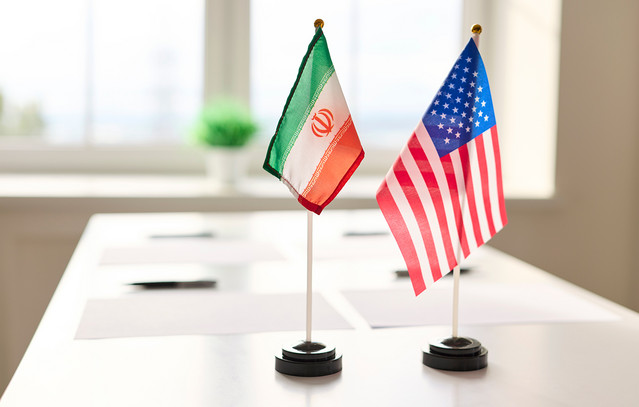
President Donald Trump warned Iran on Monday that American forces are prepared to launch powerful new strikes following a resumption of direct military confrontation between the two nations. In comments broadcast by Fox News, Trump stated that there would be retaliation and that US forces were capable of hitting Iran hard after nearly a month of scaled-back military operations.
The warning followed the first American air strikes against Iranian targets since late July. US Central Command announced that bombers hit two missile launchers on Larak Island, located in the Strait of Hormuz, after Iranian forces were observed preparing to launch missiles loaded with naval mines into international shipping lanes.
Iranian media reported that three people were killed and seven others were injured in the strikes on Larak Island. Central Command, the unified combatant command of the US military responsible for operations across the Middle East, stated that the strikes were carried out to prevent disruption to global energy transport. Larak Island sits at the narrowest section of the Strait of Hormuz, making it a key strategic location for coastal missile defense and maritime monitoring.
Iranian Retaliation and Regional Escalation
Tehran retaliated by launching attacks using missiles and strike drones against American facilities in Jordan and the United Arab Emirates. Jordanian military authorities announced that their air defense forces shot down eight missiles after they crossed into the kingdom's airspace. The United Arab Emirates reported detecting an unmanned aerial vehicle over its territorial waters and condemned the intrusion as a dangerous escalation.
The Iranian armed forces warned neighboring countries that any future American attacks launched against Iran from their territories would draw a far stronger military response. Jordan and the United Arab Emirates both host American military personnel and infrastructure. In a separate announcement, the Islamic Revolutionary Guard Corps stated that its air defense units shot down two US drones over the Strait of Hormuz.
Commercial shipping in the region also faced immediate threats during the early morning hours. The United Kingdom Maritime Trade Operations reported that a commercial tanker was hit by three unidentified projectiles while exiting the Strait of Hormuz. The information service, operated by the British Royal Navy to monitor merchant shipping security in the Middle East, issued an alert to vessels navigating the area.
The naval forces of the Islamic Revolutionary Guard Corps claimed that a large commercial tanker struck two naval mines while attempting to navigate the strait illegally. US Central Command disputed the Iranian report, describing the claim as deliberate disinformation. The Revolutionary Guards operate as Iran's ideological military force alongside the country's conventional army, maintaining independent naval and air capabilities.
Oil Prices and Economic Warfare
The renewed clashes centered once again on the Strait of Hormuz, a vital maritime corridor connecting the Persian Gulf to the Gulf of Oman. Prior to the outbreak of the war, approximately one-fifth of the world's daily petroleum supply passed through the narrow waterway. Iran has maintained a de facto closure of the strait since the conflict began on February 28 following a joint US-Israeli military attack against the country.
News of the renewed military strikes caused immediate price spikes across global energy markets. Brent North Sea crude oil, the international benchmark price for global oil purchases, surged past the threshold of 90 dollars per barrel. Market analysts monitor Brent crude closely as a leading indicator of global economic pressure resulting from Middle East supply disruptions.
In response to Iran closing the waterway, Washington has imposed a naval blockade on Iranian ports in the Persian Gulf while attempting to clear sea mines from international shipping routes. As the armed conflict enters its seventh month, the Trump administration has placed greater emphasis on economic warfare. The war has proven unpopular among American voters as midterm congressional elections approach, leading Washington to focus on financial sanctions.
US Treasury Secretary Scott Bessent reaffirmed the policy on Monday at the start of meetings with G20 counterparts in the United States, stating that Washington would continue to exert pressure on Tehran. The G20 serves as a primary international forum for finance ministers and economic leaders from major advanced and emerging economies to coordinate global fiscal policies.
Diplomatic Deadlock and Summit Meetings
Despite the military exchanges, Iranian President Masoud Pezeshkian stated that Tehran does not wish to continue the war. Speaking in Kyrgyzstan while attending the summit of the Shanghai Cooperation Organisation, Pezeshkian estimated that a prolonged conflict was not in the interest of Iran or any other nation in the region, adding that he was continuing efforts to find a diplomatic agreement.
Pezeshkian met with Pakistani Prime Minister Shehbaz Sharif during the summit to discuss mediation efforts between Washington and Tehran. Chinese President Xi Jinping and Russian President Vladimir Putin were also expected to attend the gathering in Kyrgyzstan, a Central Asian nation that hosts the regional security bloc. The Shanghai Cooperation Organisation is a Eurasian political and security alliance established to foster regional cooperation.
Iranian Foreign Minister Abbas Araghchi stated that resolving the conflict required the United States to honor the commitments it previously accepted. Araghchi noted that if Washington adhered to its obligations under the Islamabad memorandum of understanding, conditions would return to normal. The diplomatic memorandum was signed by the presidents of both nations in mid-June but collapsed within less than a month, leaving formal negotiations in a total deadlock.