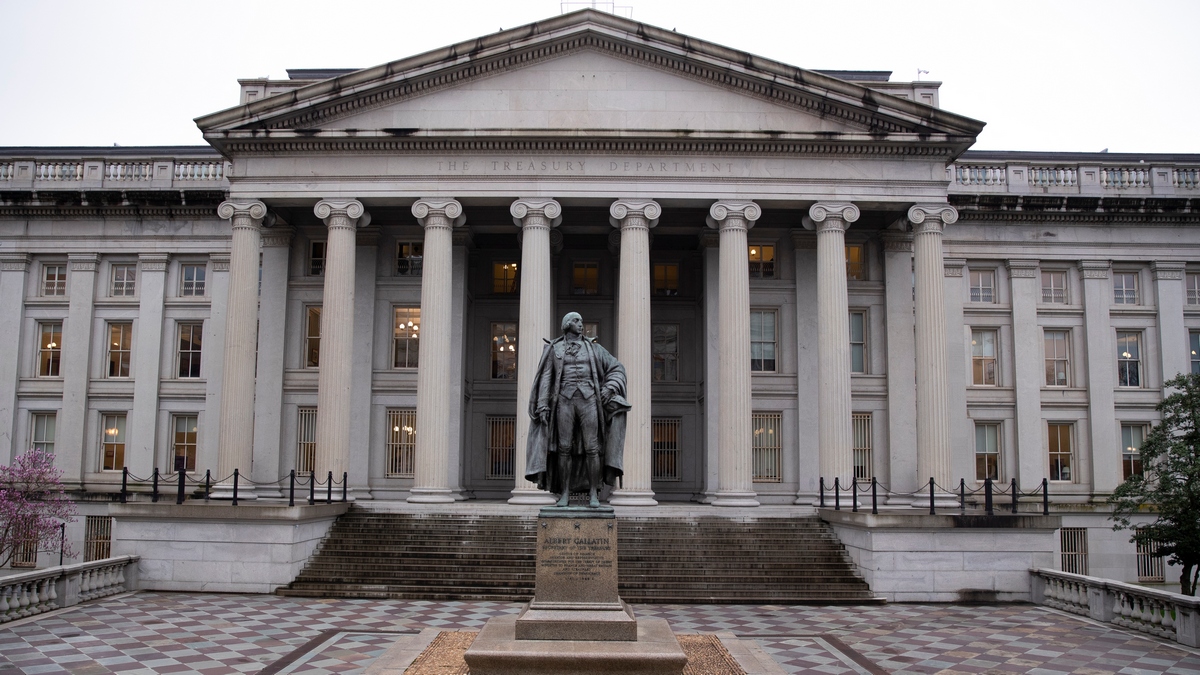
The United States has moved to cut off the United Arab Emirates branch of Egypt's Banque Misr from the American financial system.
According to a report by news outlet Al Jazeera, American authorities accused the overseas office of conducting business with the government of Iran.
Banque Misr, founded in 1920 and headquartered in Cairo, is Egypt's second-largest bank. The state-owned institution operates an extensive network across North Africa and the Middle East, including commercial operations in the United Arab Emirates. Access to correspondent banking in the United States allows foreign institutions to process dollar-denominated payments and settle international trade through American banks.
The Financial Crimes Enforcement Network, an agency within the United States Department of the Treasury that monitors illicit transactions, proposed a rule that will deprive the United Arab Emirates branch of Banque Misr from using U.S. correspondent banking services. An assessment by the U.S. Treasury Department found that between January 2024 and June 2026, the branch processed 1.8 billion dollars in transactions for 103 companies that potentially belong to Iranian shadow banking networks.
Allegations of Shadow Banking Transactions
U.S. officials stated that clients of the Banque Misr branch in the United Arab Emirates included front companies used by Iran's Ministry of Defense and the Islamic Revolutionary Guard Corps. According to the U.S. Treasury, these shell companies were deployed to circumvent American sanctions and launder money on behalf of Iran's Supreme Leader Mojtaba Khamenei.
The Islamic Revolutionary Guard Corps is a branch of the Iranian Armed Forces designated by the United States as a foreign terrorist organization. Shadow banking networks operate through offshore shell companies and multi-layered financial intermediaries to conceal sovereign funding streams, facilitate defense procurement, and evade global economic restrictions.
U.S. Treasury Secretary Scott Bessent stated on August 28 that the Treasury Department had pledged to close all remaining economic avenues to Tehran and end the threat posed by the Iranian regime. He warned that any institution facilitating Iranian activities would no longer be permitted to use the U.S. dollar or access the global financial system.
During the week prior to the announcement, the Treasury Department introduced additional sanctions against nearly 60 individuals and legal entities. U.S. authorities said those targeted had assisted Iran in securing oil sales revenue, acquiring military weaponry, and conducting cyber operations.
Broader Sanctions Targeting Iranian Sectors
The enforcement measure follows a statement by U.S. President Donald Trump on August 20 announcing unprecedented restrictions against Iran. On August 24, Bessent confirmed that the United States had initiated a broad economic campaign targeting Iran and entities aiding its efforts to bypass sanctions.
As part of that initiative, the U.S. Treasury Department designated five key sectors of the Iranian economy subject to expanded sanction risks: digital assets, technology, gold, aviation, and shipping. These industries represent vital conduits for international commerce, asset transfers, and state transportation networks.
Banque Misr Response and Enforcement Timeline
Banque Misr stated on August 29 that it was reviewing the formal notice issued by the U.S. Treasury Department. The Egyptian lender noted that regulatory measures of this nature involve an official administrative period to receive and evaluate comments before authorities make a final decision.
The bank added that it treats the regulatory proposal, as well as the underlying data and assessments, with the utmost seriousness and attention, and is conducting a detailed examination of the allegations.
The proposed U.S. government penalty is expected to take effect 30 days after the end of the public comment period. American officials clarified that the restriction will apply solely to Banque Misr's branch in the United Arab Emirates and will not extend to the bank's other domestic or international branches.