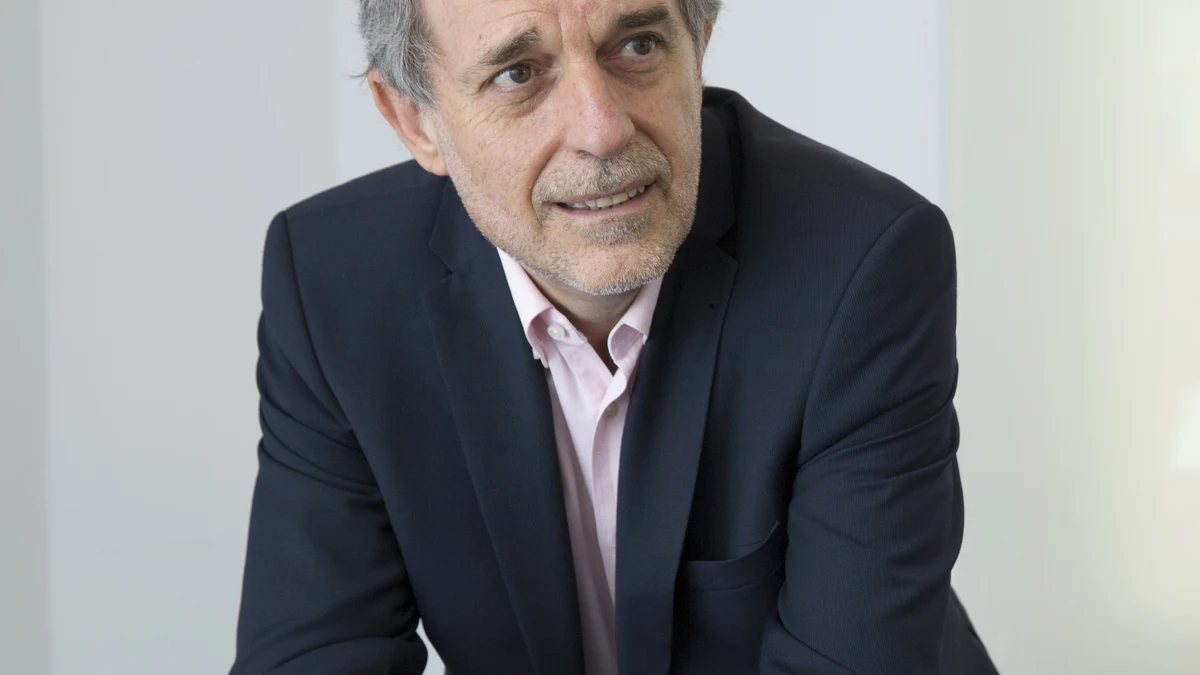
Spain's public pension system is facing growing strain from an aging population, according to Juan Fernández Palacios, director of the Centro de Investigación Ageingnomics at Fundación Mapfre, who said reducing pressure on the public system requires finding additional sources of income for retirees.
Fernández Palacios was speaking to LA RAZÓN as the sustainability of Spain's pension system became a central issue ahead of general elections. He cited a report by Fundación Mapfre and Mapfre Economics, titled "Análisis demográfico y su impacto en el sector asegurador," which found that Spain will go from having 2.7 working-age people for every person over 65 to just 1.4.
An aging population
Fernández Palacios pointed to a study published months ago by Spain's Oficina Nacional de Prospectiva y Estrategia, which reports to the prime minister's office. It modeled two scenarios. If current immigration levels are maintained, Spain's population would reach 55 million within a few decades. If migration flows fell by 30%, the population would shrink to 40 million within 50 years. In both cases, he said, the population would skew older with fewer young people.
Even under the scenario with higher immigration, he said, the workforce would not grow over the next 25 years, and under lower immigration it would shrink.
The role of artificial intelligence
Fernández Palacios said artificial intelligence introduces major uncertainty. In an optimistic scenario, AI could ease labor shortages by substituting for workers. In a negative scenario, AI could take over jobs before shortages even develop, pushing people out of work. He said it remains highly uncertain which outcome will prevail.
Why Spaniards save so little for retirement
Spain ranks at the bottom of the OECD in supplementary retirement savings. Fernández Palacios attributed this partly to confidence in the public system, which offers one of the highest replacement rates in Europe, the ratio between a pension and a worker's final salary, near 80%. That confidence, he said, has led people to overlook savings vehicles that need their own incentives.
He also pointed to weak financial literacy and the reduction of tax incentives for individual retirement savings in Spain in recent years. Efforts to channel savings through company pension plans, he said, have not worked as intended. He argued that people need to be made aware of the length of retirement and given short-term rewards to save.
A mixed system, not a private replacement
Fernández Palacios said there is near-unanimous political and public support for keeping the public pension system intact. He said moving toward a "mixed system" does not mean replacing the public pension with private savings, a misunderstanding he said he has heard before, but rather encouraging people to build complementary private savings, mainly through pension plans, alongside the public pension.
Retirement age and flexibility
Spain's retirement age will reach 67 in 2027, while Denmark has approved a progressive increase to 70. Fernández Palacios said surveys show most Spaniards prefer not to delay retirement, partly because current rules generally require people to stop earning income once they start collecting a pension.
He said tools allowing people to combine work and pension income, such as active retirement, partial retirement and flexible retirement, remain underdeveloped. Rather than raising the retirement age for everyone, he argued the system should let each person choose when and how much to work based on their needs, and noted that in some sectors people may need to retire earlier rather than later.
Immigration's role
Fernández Palacios said immigration is necessary given the risk of labor shortages created by Spain's demographic shift, and some economic activities already depend on immigrant labor. He said immigration should be managed in an orderly, peaceful and sensible way, without exposing migrants to life-threatening risks at sea, and public services should adapt to a growing population.
On pensions specifically, he said immigration helps in the short and medium term because most new arrivals work and contribute to the system. In the long term, however, those same people will also be entitled to pensions that must be financed. He described immigration as a temporary relief rather than a substitute for pension reform, alongside the need for private, complementary savings.
Senior workers as net contributors
Fernández Palacios said the growing senior population, once assumed to be solely dependent on pensions and public assistance, is proving to be vital and economically active. According to Fundación Mapfre's senior consumer barometer, 51% of people over 55 provide financial support to their families. He added that 42.7% of all citizen contributions to Spain's public coffers come from that generation, calling seniors net contributors rather than a drain on resources.
Healthcare spending outlook
Asked about healthcare spending, Fernández Palacios said the central scenario points to a significant increase, driven by more people reaching older ages with associated illnesses. A more optimistic view holds that people aged 70 to 75 are in notably better physical condition than decades ago, which could delay the final stage of life and the spending that comes with it. Still, he said the central forecast remains one of considerable growth in healthcare costs.
What happens next
Spain's retirement age is set to rise to 67 in 2027, as Denmark has already approved a gradual increase of its own retirement age to 70.
Test yourself
How will Spain's ratio of working-age people to those over 65 change, according to the Fundación Mapfre report?
What share of all citizen contributions to Spain's public coffers comes from the senior generation, according to Fernández Palacios?
When will Spain's retirement age reach 67?
Have your say
Should Spain do more to encourage private, complementary retirement savings?
Where it happened
Madrid, Spain