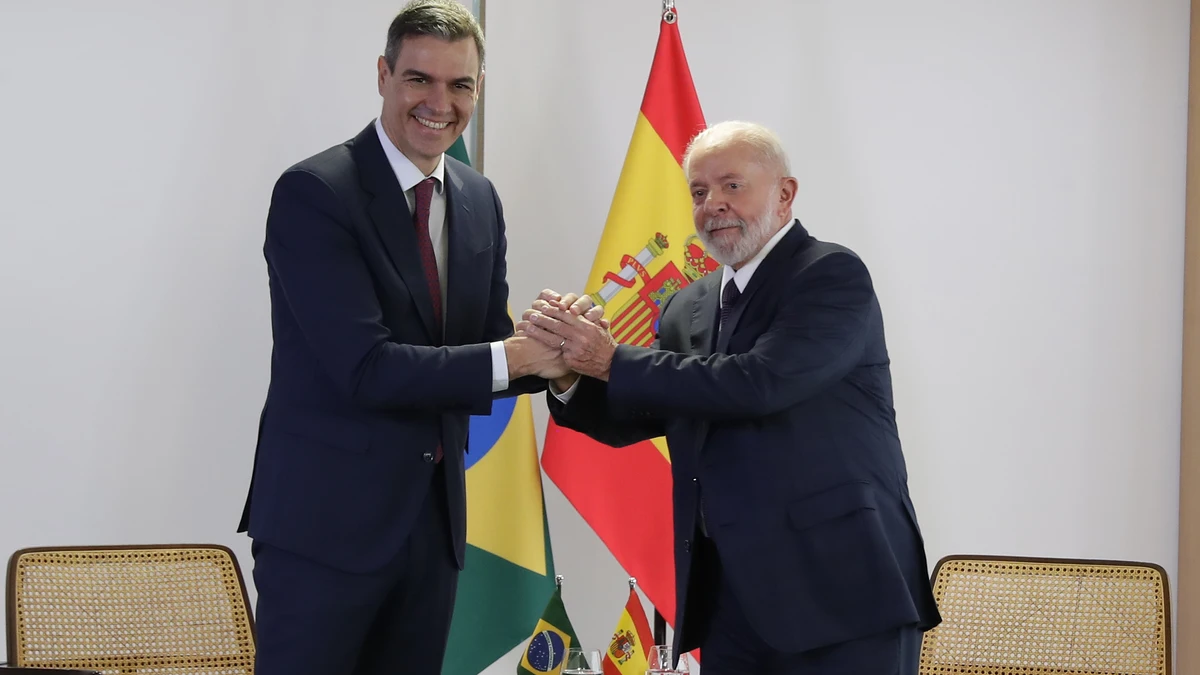
Spanish Prime Minister Pedro Sánchez and his strategists are urgently exploring Brazilian digital campaign tactics after the Urda train crash wrecked his electoral plans.
Advisers at the Moncloa Palace have reached out to Brazilian federal deputy André Janones, the digital architect credited with driving Luiz Inácio Lula da Silva to victory in Brazil, to examine whether his aggressive messaging methods can be replicated in Spain.
The strategic shift follows the railway collision in Urda, a municipality in the central province of Toledo, which derailed the growing momentum Sánchez had generated against conservative opposition leader Alberto Núñez Feijóo. Sánchez had been campaigning to defeat Feijóo in both the popular vote and parliamentary seats, initially relying on a festive, upbeat appeal before the rail disaster upended the contest.
The crisis for the governing Spanish Socialist Workers' Party worsened with the resignation of Transport Minister Óscar Puente, who stepped down in what was described as an inevitable and theatrical departure. Puente, a former mayor of Valladolid who oversaw Spain's national railway infrastructure, has stepped away from the front line with the aim of returning to office in the future.
The Brazilian digital playbook
Confronted with collapsing poll expectations, advisers inside Moncloa, alongside former party figures seeking to reclaim influence, have turned their attention to the populist left in Latin America. They are studying the political comeback of Brazilian President Luiz Inácio Lula da Silva, whose digital ground game was analyzed on Thursday by Michael Pooler and Dan Clark in the Financial Times.
Lula won his third presidential term in a tight runoff in October 2022 against incumbent Jair Bolsonaro, relying on a digital mobilization drive that defied early forecasts. A central figure behind that operation was Janones, a social media influencer and federal lawmaker representing Minas Gerais, who took charge of a WhatsApp network called Lula's Army.
Janones operated as the general of the network, overseeing an operation that surged from 50,000 participants in the first round of voting to nearly 11 million users by the runoff three weeks later. The strategy relied on an overwhelming, round-the-clock stream of motivational content and assigned tasks to supporters, treating members as digital soldiers tasked with sharing campaign materials and winning over skeptical voters.
Expansion across Latin America
The messaging formula quickly spread beyond Brazil. On the night of the presidential election victory in Argentina, local Peronist activists established a similar WhatsApp group named the Army of Peronism, bringing Janones to Buenos Aires to help direct campaign strategy for the Argentine movement.
Across Latin America and Spain, encrypted messaging platforms like WhatsApp function as the primary channel for private communication, allowing campaign organizers to bypass traditional media coverage and deliver partisan content directly to voters. In Spain, grassroots supporters have already launched a pro-Sánchez WhatsApp group called The Power of the People, or El poder del pueblo.
Membership in the Spanish network grew sixfold in a single week to reach 50,000 users. Organizers view that expansion as merely the opening stage of a broader drive to build a defensive online network for the prime minister ahead of national voting.
Diplomatic hurdles and party doubts
Despite the interest within the prime minister's circle, bringing Janones into the Spanish campaign faces significant diplomatic barriers. Relations between Sánchez and Lula are currently strained, and Janones has indicated that he will not assist the Spanish government without the personal approval of the Brazilian president.
Moncloa aides have nevertheless refused to rule out an arrangement as they seek a breakthrough against Feijóo's People's Party in Spain's 350-seat Congress of Deputies. Strategists pointed to William Shakespeare's observation in the comedy All's Well That Ends Well, noting that while high hopes often fail when expectations are greatest, political fortunes can also revive when confidence is at its lowest ebb.