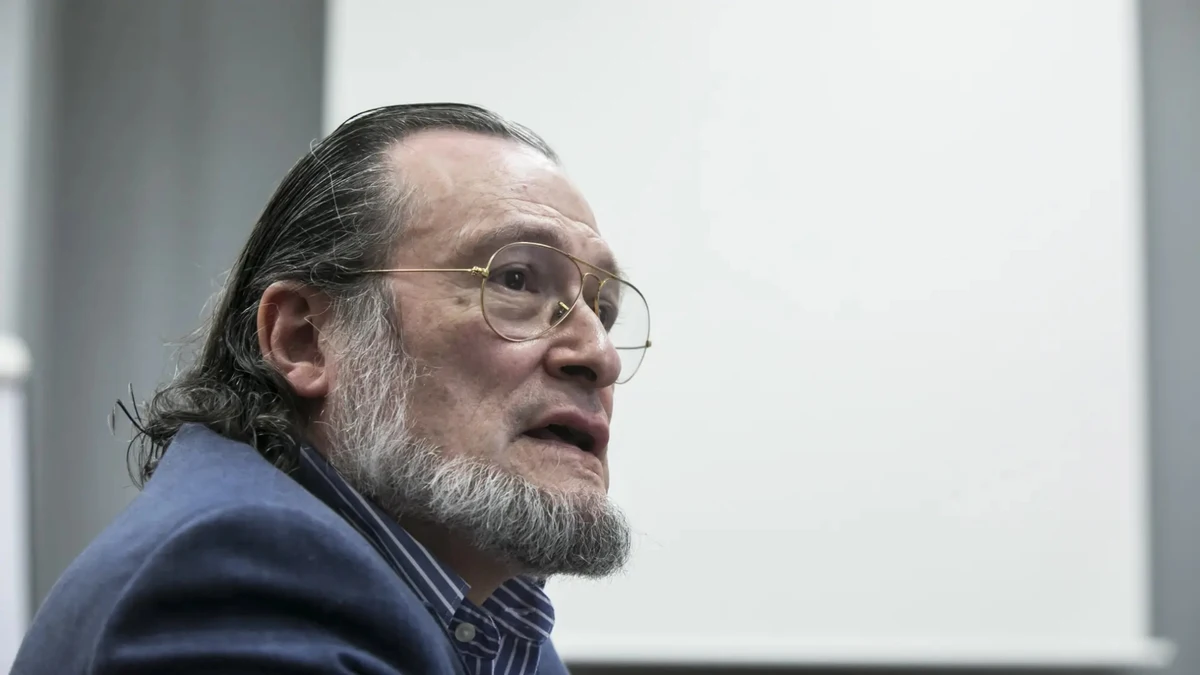
Pablo Hernández de Cos, the Spanish economist chosen to succeed Christine Lagarde as president of the European Central Bank (ECB), is known for favouring a less restrictive monetary policy, one that seeks to contain inflation without sacrificing the economy through interest rate increases.
De Cos will take over from Lagarde in February 2027. His appointment comes at a time when inflation is running high because of an energy crisis triggered by the war in Iran, which has already pushed the ECB to raise its key interest rates twice this year. Lagarde's successor is an economist whose outlook is more permissive when it comes to reining in prices.

A dove rather than a hawk
Central bankers are commonly sorted into "hawks" and "doves" depending on whether they favour more aggressive interest rate rises or softer policies that avoid damaging economic growth and employment. De Cos falls into the second camp, in contrast with the Dutch central banker Klaas Knot, a hawk who was also considered for the ECB presidency.
From Madrid to Basel
De Cos was governor of the Bank of Spain between 2018 and 2024. Since July 2025 he has been general manager of the Bank for International Settlements, the Basel-based institution often described as the bank for central banks, where governments and monetary authorities coordinate policy and hold reserves.
After eight years in which the ECB's leading figures carried a political profile, a reference to Lagarde, a former French finance minister and head of the International Monetary Fund, and to the outgoing vice-president Luis de Guindos, the incoming president is being seen as a more technical figure.
Warning on inflation
In a recent interview, de Cos said it was necessary to contain the current rise in inflation. He said the initial hope that the war would end soon, and that energy prices would consequently fall, had not materialised. He added that policymakers needed to remain vigilant about the risks to inflation.
What happens next
De Cos will not formally take charge of the ECB until February 2027. In the meantime, analysts expect the institution to raise its key interest rates again around the middle of December, to 2.75%, as it continues to respond to the energy-driven inflation pressures stemming from the war in Iran.
What happens next
De Cos takes over as ECB president in February 2027, while analysts expect the ECB to raise its key interest rates again around mid-December, to 2.75 percent.
Test yourself
Who will succeed Christine Lagarde as ECB president?
What role did Klaas Knot play in this story?
What is driving the current rise in inflation mentioned in the article?
Have your say
Should the ECB prioritise softer interest rate policy to protect growth and jobs, or keep raising rates to fight inflation?
Where it happened
Frankfurt, Germany