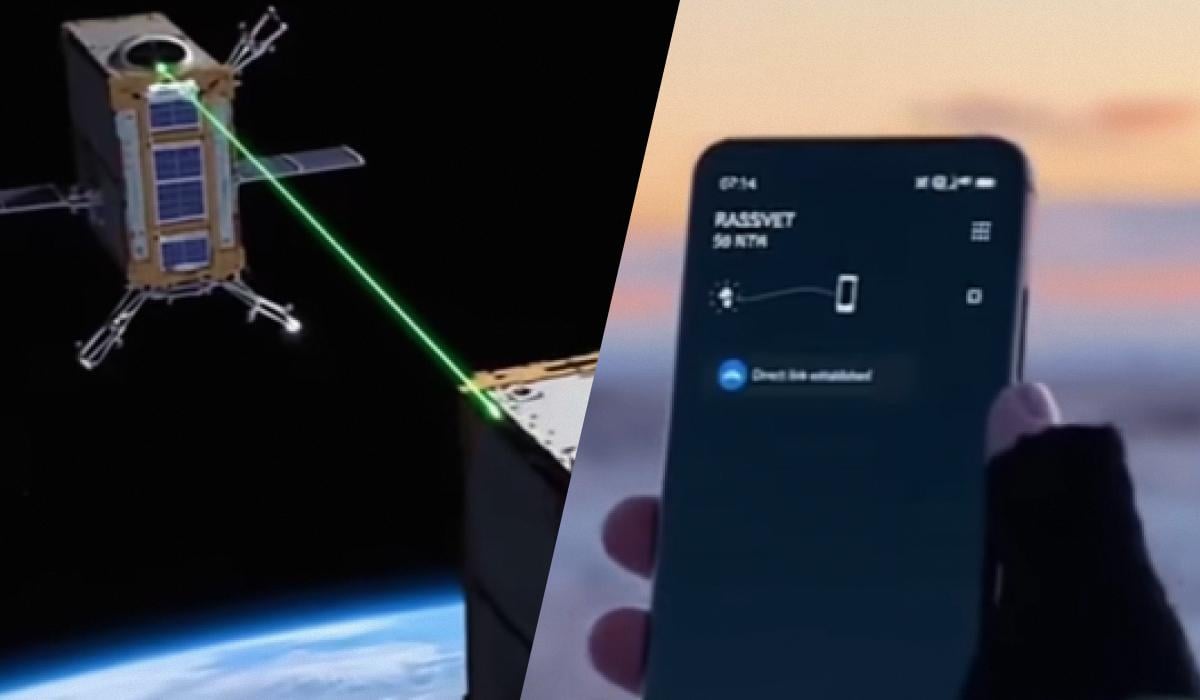
Russian company Bureau 1440 is advancing its Rassvet satellite internet network, launching new batches of satellites to challenge Ukraine's battlefield communications advantage. The project launched its first batch of 16 operational satellites into orbit in March, followed by a second batch in July, with plans to orbit hundreds of satellites by next year.
While Bureau 1440 brought the Starlink-style system to market for civilian use, Russian President Vladimir Putin directly linked it to military operations. During a Kremlin meeting with military personnel on June 12, Putin stated that work on the Starlink analogue was progressing at a good pace and expressed hope that troops would soon feel its impact.
China, the European Union, and several other nations are also developing Starlink alternatives. Modern armed forces depend heavily on high-bandwidth communications, making satellite constellations essential for data transfer in conflict zones.
Ground station vulnerability
Space systems engineer and former British serviceman Ian Muirhead stated that older satellite networks relied on single spacecraft tens of thousands of kilometers from Earth, causing connection delays. Starlink operates in layers at altitudes of 550 and 350 kilometers, providing faster data transmission through large constellations.
Muirhead noted that the Russian network will not match Starlink, which operates over 10,000 satellites for millions of paying customers. However, he stated that any low Earth orbit deployment will expand Russian military command and control capabilities.
Muirhead highlighted a critical security difference in ground stations, which are large, fixed antenna arrays connected to physical internet networks. Because ground stations emit electromagnetic signals, they are difficult to conceal from enemy strikes.
Starlink users in Ukraine rely on ground stations located in Poland, Lithuania, and Turkey. All three nations belong to NATO, meaning Russian attacks on those facilities risk triggering a military response from the United States.
In contrast, any Rassvet ground stations built on Russian territory would face potential long-range drone strikes from Kyiv. Muirhead noted that while Russia cannot destroy NATO-protected Starlink stations, Ukraine could target Russian ground stations even if located in Siberia.
Drone control and intelligence concerns
Ukrainian radio technology specialist and presidential advisor Serhiy Beskrestnov warned that a fully deployed Rassvet network would enable Russian forces to guide drones online across all of Ukraine. He noted that Ukrainian defense forces cannot currently use Starlink for online drone control over Russia, making electronic warfare development against Rassvet an urgent priority.
Major General Vadym Skibitskyi, deputy chief of the Main Directorate of Intelligence of the Ministry of Defense of Ukraine, reported that Russia is deploying Rassvet faster than expected. Skibitskyi stated that Moscow aims to build a constellation of 292 satellites by 2027 and expand it to 924 satellites by 2035.
Skibitskyi explained that the system currently operates fragmentarily as individual satellites pass overhead, but full deployment will provide continuous service similar to Starlink. Ukrainian officials are actively discussing methods to counter the system.