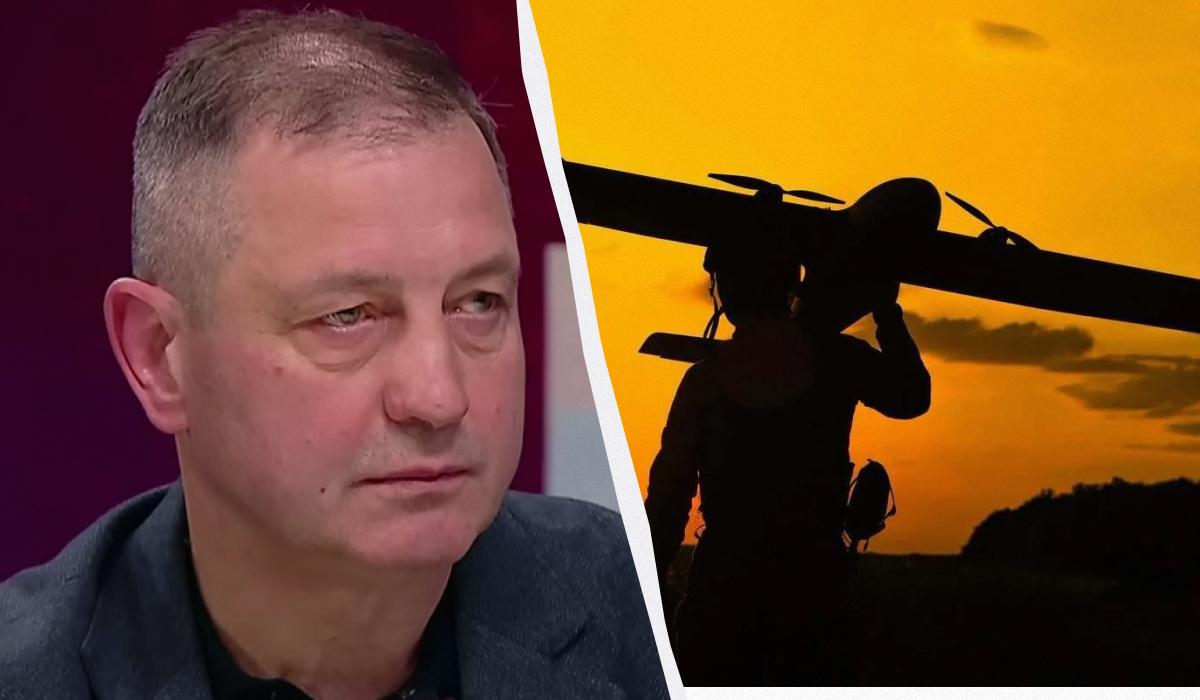
Russia is expanding its military drone capabilities faster than Ukraine despite Ukrainian successes in long-range and medium-range strikes, defense analyst Valentyn Badrak told media outlet LIGA.net.
Badrak, the director of the Kyiv-based Center for Army, Conversion and Disarmament Studies, stated that unmanned systems represent one of the primary areas where Russian forces are building up military capacity with the greatest speed.
Ukraine achieved near parity in long-range deep strike drones at the start of 2026 and began surpassing Russian forces at tactical depth in middle strike attacks up to 300 kilometres. However, those Ukrainian advantages have become increasingly less noticeable since the middle of the year.
The diminishing advantage comes despite battlefield parity between zero and 50 kilometres in the deployment of fibre-optic drones. It also comes despite higher Ukrainian efficiency when operating interceptor drones and bombers.
Russian Drone Production and Units
Badrak explained that Russian forces have demonstrated an ability to learn by creating dedicated unmanned systems forces within the Armed Forces of the Russian Federation in November 2025, essentially copying the structure used by Ukraine.
In July 2026, Russia deployed the 50th UAV Brigade Varyag, which analysts have already referred to as an analogue to the Rubicon unit. Parallel military units named Delta and Eskadron are also operating.
Russia plans to produce more than 15 million drones and associated ammunition in 2026. Badrak noted that while Russia copies Ukrainian solutions, the Russian military scales those innovations much faster.
Russian developers are giving special attention to creating artificial intelligence kamikaze drone swarms, extending strike ranges through drone carriers, and rapidly upgrading Shahed drones to autonomously bypass air defense systems. Badrak identified these efforts as key development directions for the Russian military.
Aborted Moscow Airport Drone Plan
Ukrainian strikes inside Russian territory previously included a planned large-scale operation in early 2026 using artificial intelligence drones to block airport operations in Moscow, Ukrainian news agency UNIAN reported, citing information published by American magazine The Atlantic.
The planned operation, code-named M&Ms, involved drone attacks targeting airports in Moscow and near the Russian capital. The strategy relied on massive strikes to force international airlines to suspend flights into Russia.
One source estimated that overcoming Russian air defenses for the operation could have required up to 1,000 drones in a single night.
Ukrainian President Volodymyr Zelenskyy expressed serious concerns regarding the proposal, fearing that an attack could strike a civilian airliner and cause deaths among passengers or flight crew.
Impact of Ukrainian Strikes
British observer Owen Matthews expressed the view that while Ukrainian strikes inside Russia increasingly affect daily life and the Russian economy, they have not produced a noticeable drop in public support for the war.
Matthews suggested that the strikes could potentially strengthen the Kremlin's position, as the Russian government can use the attacks to convince citizens that the country faces an existential threat.
According to Matthews, the increase in anti-war sentiment expected by authorities in Kyiv has not occurred. However, he acknowledged that Ukrainian strikes have undermined confidence among Russian citizens in the ability of Russian authorities to protect the population.