Russia has expanded its long-range attack drone infrastructure with ten active bases and 59 launch platforms near Ukraine and Belarus, open-source satellite tracking confirmed.
Satellite imagery reveals that Russian military forces are rapidly constructing larger launch platforms and logistics sheds capable of storing hundreds of uncrewed aerial vehicles. At the Tsymbulova facility in Russia's western Orel region, a site previously considered minor has been upgraded with multiple long launch rails and storage halls to support multi-axis swarm operations.
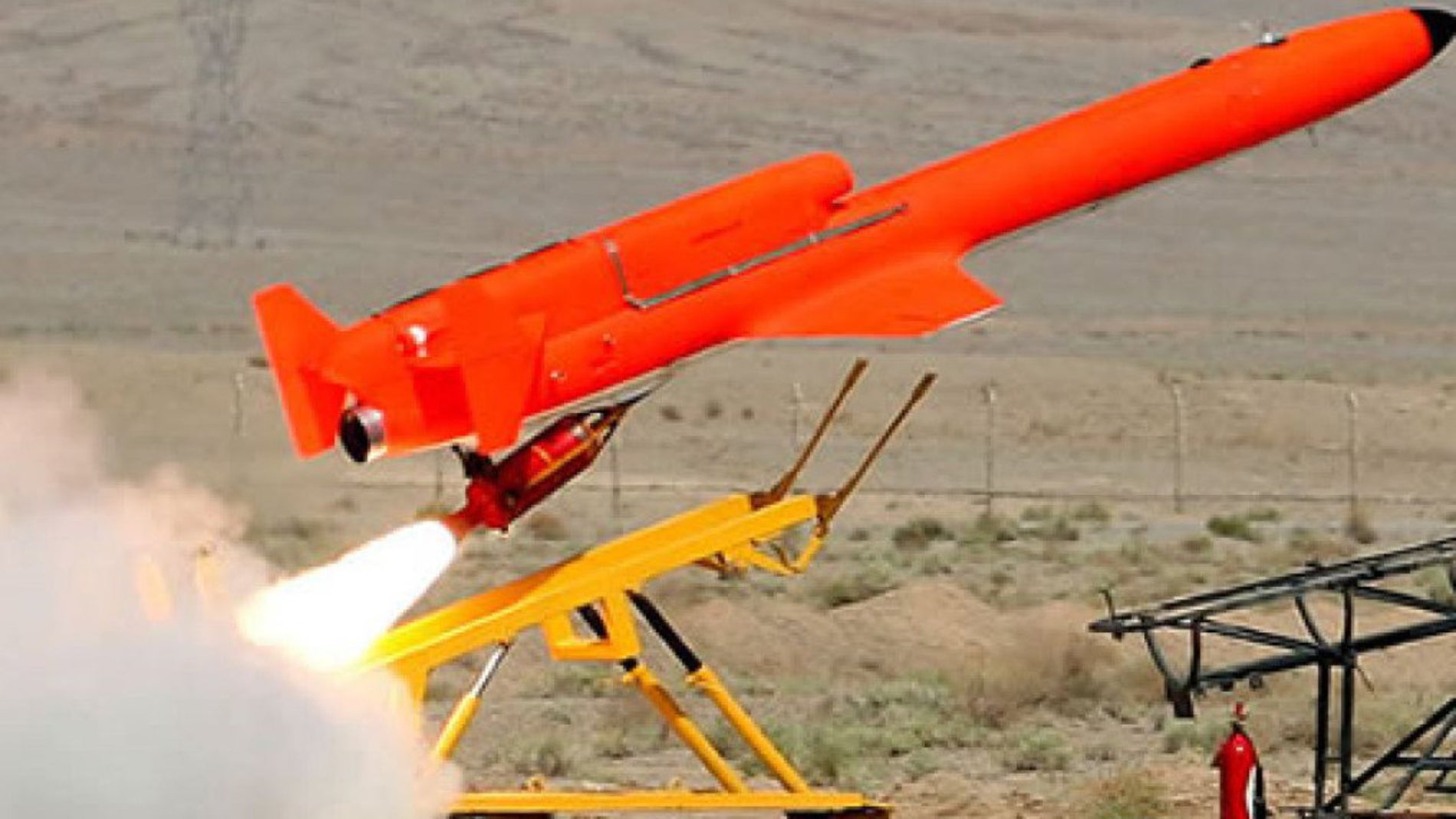
The construction of extended launch rails indicates a technical shift toward larger, jet-powered attack drones. Military analysts note that Russia's new Geran-5 model effectively blurs the boundary between a kamikaze drone and a cruise missile.
Jet-powered Geran drones
Open-source intelligence tracking indicates that the longer launch rails are designed to accommodate the new Geran-4 and Geran-5 drone variants. These models abandon the traditional propeller propulsion used on the Shahed-136 in favor of jet engines, allowing them to reach higher speeds and altitudes while better withstanding short-range anti-aircraft guns and defensive systems.
Although jet engines reduce the effective flight range of the Geran-4 and Geran-5 to approximately 1,000 kilometers, defence experts note that this radius easily covers the entire Ukrainian operational area. In return, the jet drones carry significantly heavier explosive warheads, allowing Russian forces to destroy protected infrastructure without expending more expensive and harder-to-replace cruise or ballistic missiles.
The earlier Shahed-136 delta-wing aircraft, originally designed in Iran and adapted by Moscow under the Geran moniker, relied on piston engines for long-range strikes. Upgrading to jet propulsion gives the newer Geran models missile-like performance while maintaining lower production costs than standard missiles.
Mass production at Alabuga
Industrial complexes across Russia, including the major assembly facility at Alabuga in the Special Economic Zone of Tatarstan, have sharply increased production speeds. Industry projections suggest that Russian assembly plants are preparing to build tens of thousands of attack drones annually to sustain prolonged military operations.
This industrial expansion has driven a fundamental change in Russian military tactics. Operational planners have shifted from sporadic probing strikes to launching massive swarms designed to saturate radar coverage.
The swarm tactics force Ukrainian defensive forces to launch expensive and scarce anti-aircraft missiles to intercept low-cost uncrewed aerial vehicles. This dynamic places heavy strain on Western-supplied air defence stockpiles while preserving Russia's inventory of high-end precision missiles.
Threat to NATO eastern flank
By establishing the ten expanded launch bases close to Russia's western frontier and inside Belarusian territory, the theoretical strike range of the drone network extends beyond Ukraine into NATO member states. All three Baltic nations, Estonia, Latvia, and Lithuania, along with eastern Poland now fall within the operational reach of the system.
Security analysts emphasize that while an immediate strike against a NATO nation is not expected, the infrastructure gives Moscow a potent pressure tool in grey-zone hybrid warfare. The multi-axis launch setup allows Russia to project military intimidation along the alliance's eastern boundary.
An investigation by The Telegraph, cited by former Ukrainian official Anton Gerashchenko, confirmed that several of the ten new launch bases are already operational and targeting Ukrainian locations. The report highlighted that these installations also pose a persistent, long-term threat to European NATO allies.
In the event of an open military escalation, military strategists assess that Russian forces would not use the Geran drones to replace hypersonic or ballistic missiles. Instead, the jet-powered swarms would function as an initial wave of attrition, intended to saturate and blind NATO's eastern flank air defences before heavier strike weapons are deployed.