Peruvian legal expert César Azabache has warned that legislative powers delegated to the executive face an unprecedented crisis after 45 years of continuous use. Writing in an analysis of state governance, Azabache stated that executive decree packages have served as an institutional adjustment valve in Peru since 1980.
He noted that incoming governments have historically used delegated authority to differentiate themselves from previous regimes or signal the start of a new political cycle. However, he warned that the two main pillars of this system, national security and the economy, now suffer from severe deterioration.
In Peru, Congress can delegate specific legislative authority to the executive branch, allowing the president and ministers to issue legislative decrees with the force of law. Azabache explained that after more than four decades, the mechanism must be recognized as an established institutional tool, though its success has varied widely across administrations.
Early legislative decrees after military rule
The first major package of delegated legislative decrees in modern Peruvian history was authorized by Congress in December 1980. That authorization produced 209 decree texts published between January and June 1981 under President Fernando Belaúnde Terry.
Belaúnde took office in July 1980 for his second presidential term following 12 years of military rule. The legal framework at the time had been shaped by military decree laws representing a political stance radically opposed to Belaúnde's party, Popular Action.
Furthermore, Belaúnde operated under a new Constitution drafted without input from him or his party. Azabache observed that given these legal and political constraints, the extensive 1980 legislative package was clearly necessary for the incoming administration.
Security decrees and the 1992 constitutional crisis
Subsequent presidential administrations followed contrasting institutional paths when wielding delegated powers. President Alberto Fujimori enacted 117 legislative decrees between June and November 1991, dividing them into two distinct tracks covering state modernization and internal security.
These dual tracks formed the foundation upon which Fujimori's governing regime was constructed. Tensions escalated when Congress reviewed the package and repealed or modified 28 decrees, including 14 measures from the internal security block. Azabache wrote that this legislative clash became a primary driver of the political crisis that led to Fujimori's April 1992 coup.
Trade agreements land rights and presidential resignations
During his second presidency, Alan García Pérez issued 99 legislative decrees between March and June 2008. These measures were tied to requirements under the Free Trade Agreement between Peru and the United States, which entered into force in February 2009.
García's package contained five instruments regarding communal lands, two of which Congress repealed in September 2008. Azabache pointed out that those land decrees were directly linked to the conflict in Bagua in June 2009, which resulted in a heavy loss of life.
President Pedro Pablo Kuczynski similarly relied on delegated authority, publishing 112 decrees between October 2016 and January 2017. Congress repealed 14 of those decrees in May 2017, converting the legislative package into a major source of political friction that ultimately contributed to Kuczynski's resignation in March 2018.
Negotiated delegations and parliamentary majorities
Azabache observed that Peruvian presidents rarely resorted to massive legislative delegations when they held strong congressional majorities or when political differentiation was unnecessary. García did not need large emergency delegations during his first presidency because his party controlled Congress, and Fujimori enjoyed a similar parliamentary majority in 1995.
Likewise, President Alejandro Toledo did not seek extensive delegated powers upon taking office in 2001. Toledo succeeded the interim transition government of Valentín Paniagua, which had already coordinated post-1990 legal adjustments directly with Parliament, eliminating the need for political differentiation.
President Ollanta Humala adopted a strategy of continuous negotiation with Congress rather than confrontation. Over five years in office, Humala requested four thematic delegations that generated 150 legislative decrees without triggering major political crises between the executive and legislative branches.
Recent presidential clashes and decree volume
Executive reliance on decree powers shifted again during the administration of President Martín Vizcarra. Congress authorized delegated powers in July 2018, leading to the publication of 85 legislative decrees between August and September 2018 during the same month that severe political conflict erupted between the branches.
President Pedro Castillo experienced what Azabache described as probably the worst parliamentary relations of any president since 1980. Castillo minimized the use of decree powers, publishing only 29 legislative decrees between December 2021 and March 2022 after Congress significantly narrowed his initial request.
Four decree packages under Boluarte and Jeri
In contrast, President Dina Boluarte and government official Jerí operated similarly to regimes backed by a stable parliamentary majority. Between March 2023 and February 2026, the administration deployed delegated legislative powers across four distinct phases.
The administration published 27 decrees between March and May 2023, followed by 47 decrees between October and December 2023. A third tranche yielded 74 decrees between August and October 2024, and a fourth tranche produced 45 decrees between January and February 2026.
Azabache characterized this gradual sequence as a functional administration of legislative authority managed by a congressional majority acting in complete harmony with a government established by that same majority.
Economic decay and the future of Fujimorismo
Addressing the current political outlook, Azabache raised questions about whether the ongoing governing cycle truly differs from its predecessor. He noted that much of the prospective executive agenda involves matters previously legislated by Congress in directions contrary to institutional best practice.
While delegated powers could potentially mark the start of a differentiation cycle from the governing coalition, the underlying areas of economic policy and public security face unprecedented decay. Azabache concluded that the central unresolved question is whether Fujimorismo will differentiate itself from its own past record within a newly configured Congress, calling it an enormous dilemma.
Legal career of analyst Cesar Azabache
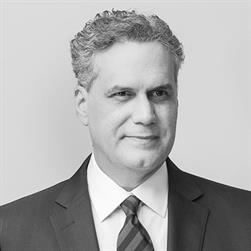
César Azabache Caracciolo is the director of the law firm Azabache Caracciolo Abogados and a practicing attorney specializing in criminal litigation. He previously taught law at the Pontifical Catholic University of Peru and the Academy of the Magistracy.
In addition to his legal practice, Azabache hosts the analytical news program En Coyuntura on LRTV and Encuentros Muleros on the La Mula web portal. He serves on the editorial board of the legal magazine Gaceta Penal and has published numerous essays on criminal justice reform.