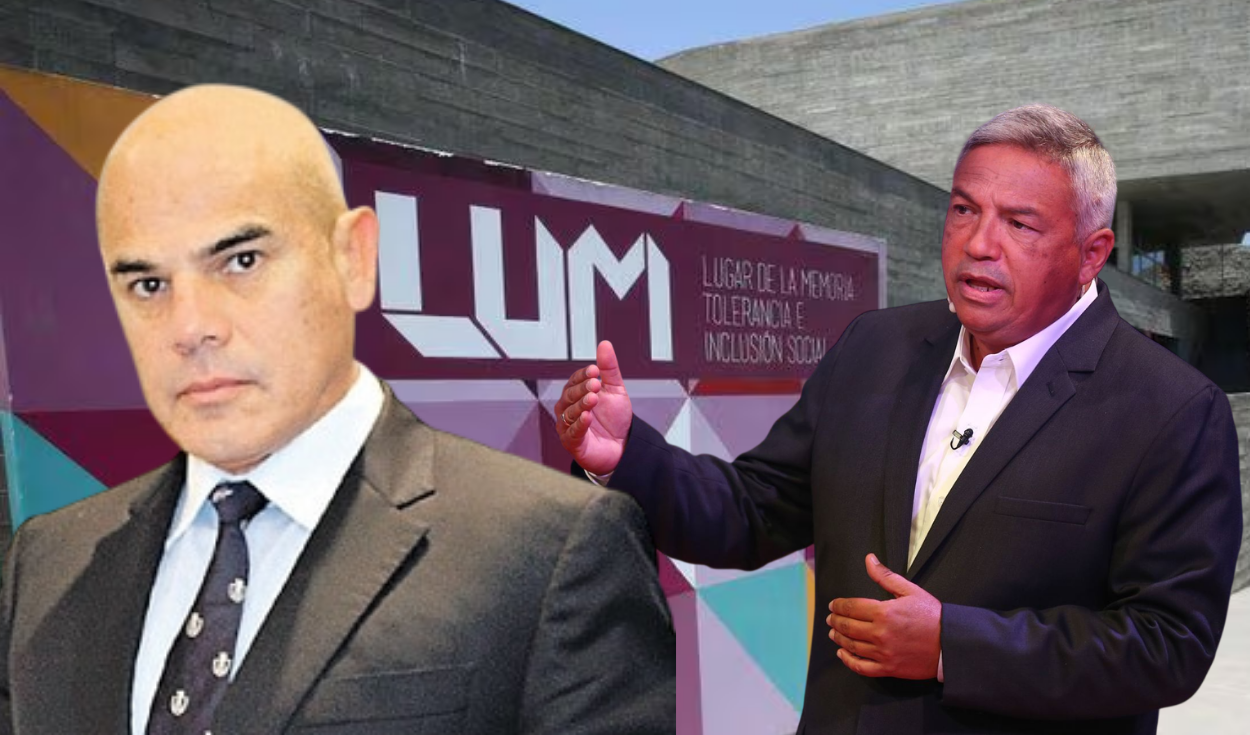
Peruvian Culture Minister Alberto Beingolea has rejected a proposal by Justice Minister Ernesto Álvarez to transfer control of the Place of Memory museum to the Ministry of Justice, declaring that all Peruvian museums fall strictly under his department.
The dispute has sparked visible tension within the cabinet of President Keiko Fujimori over the administration and narrative of the national memorial center.
Speaking at a public event on August 18, Beingolea described the transfer proposal put forward by his cabinet colleague as a mere opinion and stated that he had nothing further to add on the matter. He said that the situation was not a question of yielding ground but simply respecting different views, emphasizing that museum management remains an essential function of the Ministry of Culture and insisting that there is no rift in the government.
Proposed Transfer of Memory Museum
The controversy centers on the Place of Memory, Tolerance and Social Inclusion, known as the LUM. Located in Peru, the museum documents the period of internal armed conflict from 1980 to 2000, including the dictatorship of Alberto Fujimori and personal accounts from families of victims of the violence.
Álvarez had previously pushed for the institution to be moved under the authority of the Ministry of Justice. In an interview with the Peruvian news magazine Caretas, the Justice Minister questioned why the museum remained within the culture sector, stating that the fight against terrorism was not a cultural matter.
Álvarez also argued that the museum has an obligation to maintain a moderate narrative serving the entire nation rather than any specific political group.
Calls for Executive Action and Legal Reform
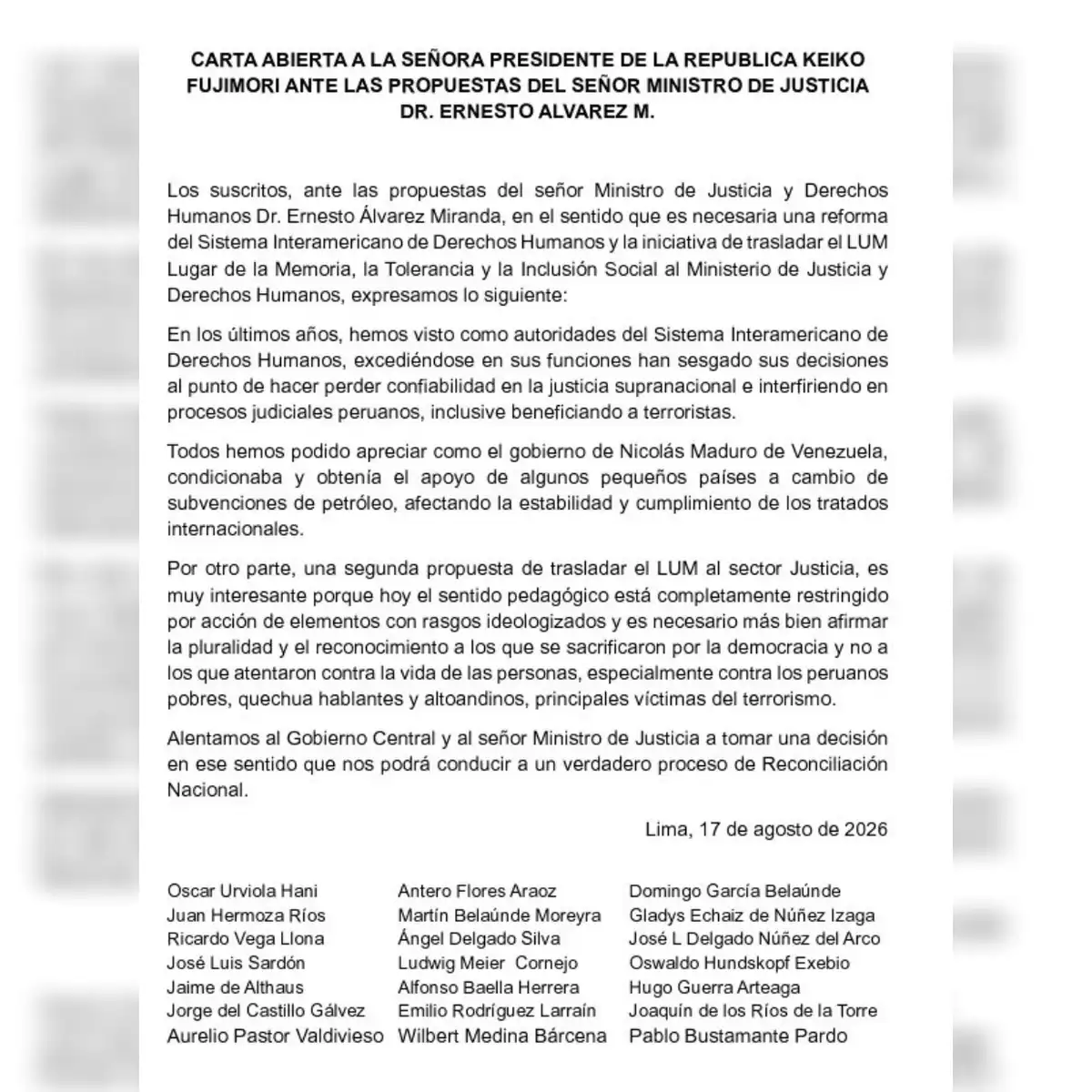
Public pressure on the executive branch intensified on August 17 when Álvarez shared a statement on his account on social media platform X, formerly Twitter. The document, signed by various jurists and political figures, called directly on President Fujimori to order the transfer of the museum to the Justice Ministry.
The signatories called the transfer proposal very interesting, arguing that the educational mission of the site is currently restricted by elements containing ideologized traits. They advocated reinforcing political plurality and recognizing those who fought and sacrificed for democracy, rather than individuals who attacked human life.
The document urged the government and the Ministry of Justice to adopt a decision allowing the country to move toward a true national reconciliation process. In addition, the signers proposed a broader reform of the Inter-American Human Rights System and compared the national situation to the dictatorship of Nicolás Maduro.