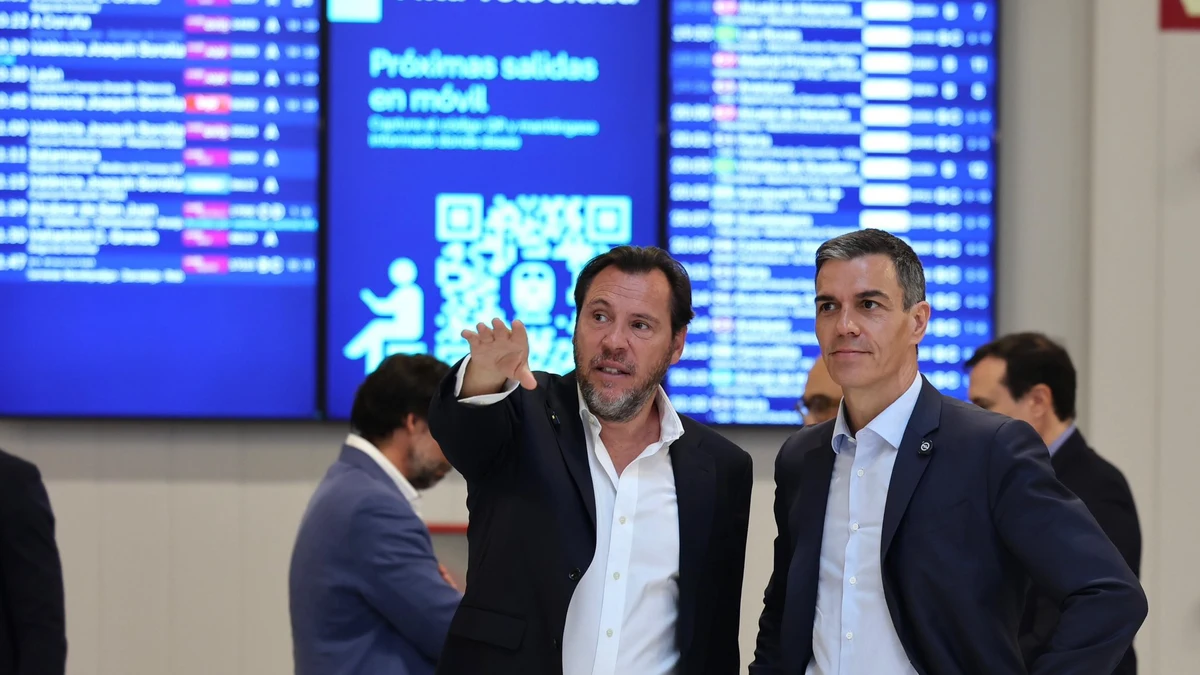
Spanish Prime Minister Pedro Sanchez and Transport Minister Oscar Puente face mounting condemnation after a train crash in Urda, Toledo, triggered by systemic safety failures.
The collision follows an earlier crash in Adamuz and exposed a total breakdown across high-speed safety apparatus, while authorities face severe backlash over attempts to scapegoat a junior traffic controller.
Investigators and political commentators pointed out that the controller suffered violations of basic rights when officials tried to deflect responsibility for what was an interconnected sequence of infrastructure breakdowns.
Safety system failures at Urda
Technicians identified failures across multiple core safety mechanisms during the incident. Germany's LZB automatic train protection mechanism failed to function, as did the secondary safety line known as ASFA.
The lateral block system, known as BSL, also failed. Under normal operations, this mechanism authorises train drivers to proceed in on-sight mode at a maximum speed of 40 kilometres per hour when standard signaling fails.
The collapse was compounded by a communications failure in the GSM-R railway radio network, malfunctioning track sensors and a sudden drop in electrical line voltage.
High-speed passenger trains operated by private carrier Iryo have also experienced persistent difficulties synchronising with the German LZB system following stops. The carrier has registered 170 unexpected stops so far this year.
In addition, an artificial intelligence system contracted by railway infrastructure administrator Adif failed to perform. The software had been deployed in a test environment to monitor and test tracks, overhead catenaries, signalling installations, telecommunications and energy systems to anticipate faults and prevent incidents.
Political appointments at Adif and Renfe
The technical disaster in Toledo has ignited intense political controversy regarding the management of state railway bodies. Miguel Angel Uriondo, the former chief of staff to the presidency of Adif, reported that the infrastructure company has suffered politicisation and contempt for technical expertise since Oscar Puente took over the transport ministry.
Critics have highlighted widespread political patronage across Spain's rail leadership, counting around 30 figures linked to the ruling Spanish Socialist Workers Party or its coalition partner Sumar in senior executive posts and board of directors seats across Adif and national train operator Renfe.
Puente appointed a personal friend, who previously served as a city councillor for Mas Madrid, to head Renfe as president. At Adif, up to 12 political appointees were installed to direct an organisation with deeply technical responsibilities.
Scrutiny of government transport management
Spanish commentator Jose Antonio Vera argued that operational rail staff should not carry the blame for the Urda crash, placing responsibility directly on the president of Adif, Puente and Sanchez. Vera stated that Spain's rail system, once considered the pride of the country, now leads the world in accident rates.
The controversy follows wider political criticism of Sanchez during his eight years in office. Sanchez originally came to power following a motion of no confidence debate supported by former transport minister Jose Luis Abalos, and later selected Puente to represent him in parliament during his investiture.
Vera pointed to 12 corruption investigations affecting 5,432 million euros under the current administration, alongside a provisional toll of 500 deaths across recent national crises. That total comprises 115 fatalities on high-speed AVE trains, 234 in the DANA storm disaster, 10 during an electrical power blackout, and 141 in Ceuta, excluding additional victims of volcanic eruptions, forest fires and the pandemic.
Spanish high-speed rail network background
Spain operates one of the most extensive high-speed railway networks in the world, managed by state-owned company Adif and historically operated under the AVE brand by state carrier Renfe. The earliest high-speed corridor connecting Madrid and Seville began operations in 1992 using German LZB cab-signalling technology to ensure safe train separation.
The domestic railway market recently underwent deregulation, allowing private consortiums such as Iryo to compete alongside Renfe on major routes. As judicial and parliamentary scrutiny intensifies following the Urda crash, railway authorities face ongoing demands to address technical vulnerabilities across the national rail infrastructure.