

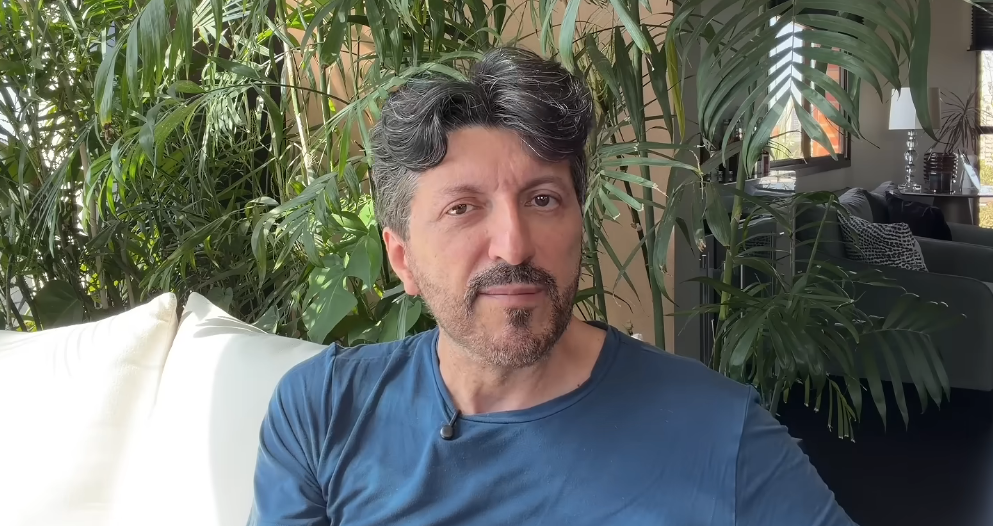
Lito Sousa, a 59-year-old aviation specialist known for creating the channel "Aviões e Músicas," has been diagnosed with Creutzfeldt-Jakob disease. Confirmation of the diagnosis was shared on social media after weeks of neurological investigations.
His case has renewed public interest in what science knows about the condition, which is considered rare.
What is Creutzfeldt-Jakob disease
Creutzfeldt-Jakob disease is a rare, neurodegenerative and fatal brain disorder. It belongs to a group of conditions known as transmissible spongiform encephalopathies, caused by an infectious agent called a prion.
Prions are abnormal protein particles that are highly stable and resistant to conventional physical and chemical disinfection methods. Humans and other mammals normally carry a healthy version of this protein in nervous system cells, known as cellular prion protein, or PrPc, which helps protect neurons from cell death.
For reasons science has not fully explained, these proteins can sometimes form incorrectly, undergoing structural changes that make them infectious and toxic. The presence of these abnormal proteins triggers a chain reaction in the brain, corrupting healthy proteins and causing neurons to die. As the harmful particles build up, brain tissue suffers structural damage that gives it a sponge-like appearance.
Symptoms and rapid progression
Unlike more common progressive neurodegenerative diseases such as Alzheimer's, the psychomotor decline associated with Creutzfeldt-Jakob disease is significantly faster. Cognitive and motor decline happens quickly, and the main symptoms described by medicine include:
- Motor impairment: loss of motor coordination (ataxia) and tremors
- Muscle problems: involuntary muscle spasms (myoclonus) and paralysis
- Cognitive problems: rapid memory loss, acute mental disorder and dementia
- Other dysfunctions: severe visual disturbances, speech difficulties, fatigue and sleep changes
It is currently estimated that 90% of people affected die within a year of the first clinical symptoms appearing. For this reason, medical guidance centers on multidisciplinary palliative support to ease pain and manage the patient's neurological symptoms.
How the disease occurs and its causes
According to clinical investigations, the disease appears in four main forms.
The most common is known as "sporadic," accounting for 85% of cases. In this form, the exact cause of the protein deformation is unknown, and there is no known pattern of transmission or related family history.
The second is hereditary or familial, occurring in roughly 5% to 15% of cases. It stems from specific genetic mutations passed down within families.
Third is the iatrogenic form, which accounts for less than 1% of cases. This occurs through accidental contamination resulting from invasive procedures and the use of infected surgical equipment.
The last is the "variant" form, associated with beef contaminated by bovine spongiform encephalopathy, popularly known as "mad cow disease."
Science also confirms that Creutzfeldt-Jakob disease is not contagious through everyday social contact or airborne transmission.
Search for experimental studies
Because no therapy exists that can reverse or halt the progression of Creutzfeldt-Jakob disease, Sousa's family and supporters have begun a race against time to try to enroll him in experimental studies around the world. One of these is a clinical study at Harvard University.
Harvard University, in the United States, maintains a research line focused on treating patients with the disease. Mila Seidl, Sousa's wife, said the institution had responded to their contacts and that although the trials are currently closed to new admissions, places are expected to reopen on October 20, 2026. Sousa is already on the waiting list.
The other option is with the international pharmaceutical company Ionis Pharmaceuticals, which is developing studies aimed at reducing production of the prion protein (PrP) using oligonucleotides. The genetic engineering strategy focuses on preventing the formation of new proteins that could become defective.
However, the company also recently responded that it is not currently admitting new patients into its experimental clinical trial protocols.
Despite the efforts of specialists, universities and the mobilization the case has generated, the research landscape for Creutzfeldt-Jakob disease remains limited, with few places available for clinical trials globally.
The medical community and Sousa's family hope that the visibility generated by his case can help speed up urgent scientific studies to fight one of the most challenging diseases of the nervous system.



