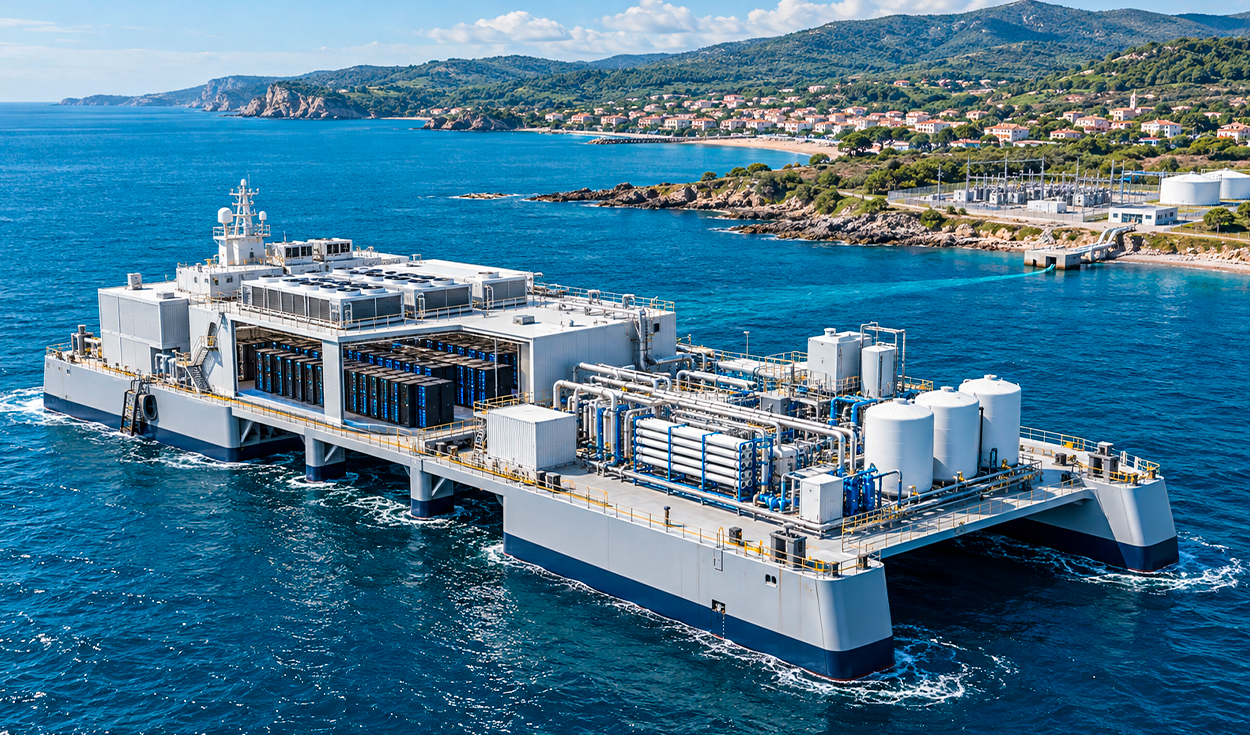
Optimal Transit, a joint alliance formed by InMar Technologies and OptiFuel Systems, has unveiled Kraaken VITAL, an offshore floating platform engineered to simultaneously produce electricity, desalinated drinking water, and artificial intelligence processing power for coastal communities.
Developers estimate that the vessel will supply electricity to roughly 32,000 households in maritime areas that currently lack basic utility infrastructure.
Jeff Kline, president of InMar Technologies, said the primary objective of the multipurpose project is to address the needs of coastal regions that operate without reliable electricity or clean water. The system remains in a conceptual phase and will require full-scale manufacturing following initial engineering work.
Coastal communities in developing maritime regions often face severe utility deficits due to isolated geography, fragile electrical grids, and limited freshwater treatment infrastructure. Mobile offshore utility platforms have emerged in recent years as a potential alternative to land-based infrastructure, allowing power and water generation facilities to be built in specialized shipyards and dispatched directly to coastal ports.
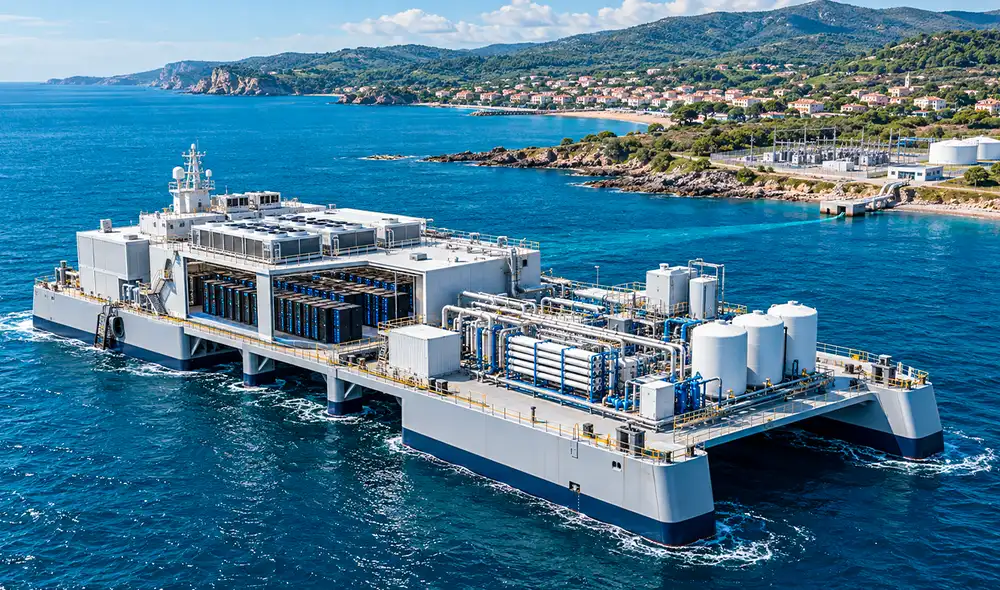
To ensure stability in open sea conditions, the Kraaken project places its data centers atop double-hull Small Waterplane Area Twin Hull vessels, commonly known as SWATH ships. SWATH designs feature two submerged, submarine-shaped hulls connected to the upper structure by narrow vertical struts, significantly reducing wave impact and providing a steady floating foundation for sensitive electronic hardware.
Ocean Thermal Energy Conversion and Processing Power
The platform operates using Digital Ocean Thermal technology, a process that fuses surface ocean thermal energy with cold water drawn from sea depths and waste heat generated by onboard computer servers. Multi-stage Rankine cycles convert these temperature differentials into direct electrical power, substantially reducing the facility's reliance on external energy sources.
Rankine cycles are thermodynamic processes widely used in conventional power plants, where a working fluid is alternately heated to vaporize and cooled to condense, driving turbines to generate electricity. By harnessing ocean thermal gradients alongside server heat, Kraaken seeks to create a continuous, self-sustaining energy loop for its operations.
The 100-megawatt VITAL variant is designed to split its energy output between digital processing and onshore distribution. Up to 40 megawatts of electricity will be transmitted ashore to support local power grids, while the remaining 60 megawatts will be dedicated to powering onboard artificial intelligence computing workloads.
In addition to power generation, the vessel is configured to extract approximately 30 million liters of fresh water daily using vacuum evaporation desalination. Corporate calculations indicate that this daily output would be sufficient to supply water to roughly 150,000 people.
Vacuum evaporation desalination operates by lowering atmospheric pressure inside a sealed chamber, allowing seawater to boil and vaporize at lower temperatures using residual thermal energy. The resulting water vapor is then condensed into potable fresh water, separating it from salt and mineral deposits.
Modern artificial intelligence data centers consume vast amounts of electrical power and generate intense thermal loads from dense arrays of specialized microprocessors. Cooling these facilities on land typically demands significant freshwater resources and grid power, prompting hardware engineers to explore marine environments where deep cold water can absorb heat more efficiently.
The floating digital core houses specialized processors designed for training complex artificial intelligence models. Liquid cooling systems capture the residual heat produced by these high-performance processors and reroute it as operational input back into the platform's thermal energy generation system.
To maintain continuous data transfer with land-based networks and remote facilities, the vessel integrates high-speed optical links and satellite communications antennas. This architecture allows technicians to upgrade and replace digital hardware components over time without disrupting the operational lifespan of the ship.
Development Schedule and Financial Planning
Optimal Transit has placed the Kraaken VITAL proposal in preliminary engineering and financial structuring stages, noting that a functional physical plant has not yet been constructed. In July, the company reported nine consecutive months of development work focused on finalizing technical designs for evaluation by the American Bureau of Shipping.
The American Bureau of Shipping is a prominent maritime classification society established in 1862 that establishes technical rules and safety standards for the design, construction, and operational verification of ships and marine structures.
The developers are currently authenticating the Digital Ocean Thermal unit using a digital twin simulation. A digital twin is a dynamic virtual representation of a physical asset that uses real-time operational data and mathematical models to simulate performance, predict maintenance needs, and verify system safety before physical construction begins.
Future vessel fabrication remains dependent on securing capital through a Series B funding round planned for around 2027. Promoters estimate that the VITAL prototype will require a budget of 587 million dollars and an execution timeline of approximately 36 months once manufacturing commences.
Preliminary commercial deployment plans focus on Sub-Saharan Africa, South Asia, Southeast Asia, and Pacific archipelagos. The company also intends to deploy the mobile vessel to assist coastal communities affected by climate emergencies, reallocating the ship based on regional demand.
Sub-Saharan Africa, South Asia, Southeast Asia, and the low-lying island archipelagos of the Pacific represent regions with extensive coastlines and rapidly growing populations. Many of these areas are particularly vulnerable to extreme weather events, rising sea levels, and climate-induced disruptions that threaten municipal water supplies and power infrastructure.
Optimal Transit clarified that these target regions represent tentative deployment zones, as no specific countries have formally awarded contracts or installations to date. The presentation does not provide real-scale operational data or a firm launch date, leaving the project to demonstrate whether it can achieve its promised energy, water, and financial targets in real-world sea conditions.