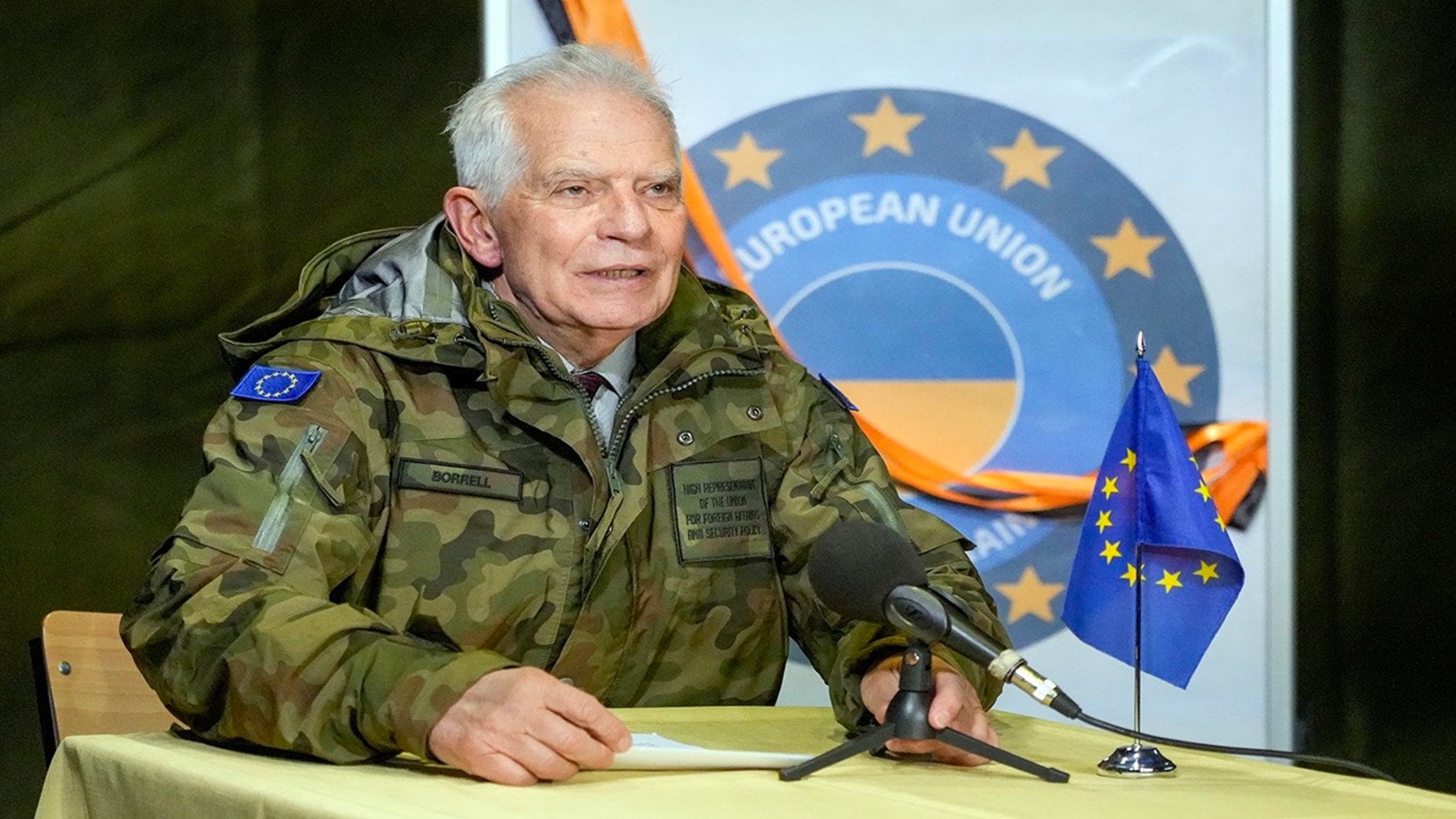
Former European Union High Representative Josep Borrell has demanded a radical transformation of Europe's military industry, warning that defense innovation is critical for security.
The veteran Spanish politician warned the 27 EU member states that failing to advance technologically would result in long-term strategic condemnation for the continent.
Borrell delivered his message as European nations face an ongoing war of attrition near EU territory after experiencing years of severe defense budget cuts and underinvestment.
The High Representative of the Union for Foreign Affairs and Security Policy coordinates the EU's common foreign and security policy. Based in Brussels, the 27-member bloc relies on institutions like the European Defence Agency to foster military cooperation among member states.
Strategic Risks and Technological Dominance
A strategic analysis shared through the European Defence Agency stated that the EU must become a true security provider, an objective impossible to achieve without taking leadership in disruptive technologies.
According to the analysis, member states must decide whether to position themselves at the military forefront or risk falling into international irrelevance.
The analysis emphasized that nations mastering battlefield artificial intelligence and technological standards will dictate the rules of the future global order.
EU leaders have also stressed the imperative need to reduce reliance on third-party nations to defend European borders.
European security relies heavily on NATO, the 32-member transatlantic alliance established in 1949. Retired British General Richard Shirreff, former Deputy Supreme Allied Commander Europe at NATO, warned years ago that Europe could not carry out large-scale operations on its own without the United States.
Industrial Overhaul and Innovation Hubs
To address structural vulnerabilities, Brussels has accelerated the creation of new innovation offices and promoted transatlantic industrial cooperation.
EU institutions are working to lower financial risks for joint defense projects, encouraging private companies to deliver rapid solutions in cyberdefense and autonomous systems.
The crash plan requires unprecedented collaboration between national governments, private defense contractors, and research centers to accelerate armaments production.
Initiatives launched under Borrell's mandate include the Hub for EU Defence Innovation, established within the European Defence Agency. The hub aims to integrate defense technology ecosystems across member states and strengthen technological sovereignty.
Training Challenges and Tank Warfare
Military experts have highlighted the technical challenges involved in modernizing European armed forces.
Retired Spanish General Francisco José Dacoba, former director of the Spanish Institute for Strategic Studies, alerted that training a Leopard battle tank crew member in just a few months is impossible due to the advanced technology involved.
The Leopard 2 is a German-designed main battle tank deployed by several European armed forces, equipped with complex fire control and digital targeting systems. The Spanish Institute for Strategic Studies is the defense ministry's primary analytical think tank in Madrid.

Spanish Defense Readiness and Drone Production
Senior Spanish military figures have raised concerns over their country's current operational readiness and technological capabilities.
Retired General Fernando Alejandre, a former Chief of the Defence Staff, stated that operational readiness within the Spanish Army currently falls below the levels required by NATO allies.
Addressing modern aerial warfare, retired Admiral Juan Rodríguez Garat stated that Spain needs the capacity to produce at least two thousand drones per day, but currently lacks that capability.
Former Chief of the Defence Staff Fernando García Sánchez added that Spain has not yet properly established dedicated remote-controlled vehicle battalions.
The Chief of the Defence Staff, known in Spain as JEMAD, serves as the supreme military commander of the Spanish Armed Forces under the Ministry of Defence.
Global Arms Sales and Regional Security
The urgent push for defense modernization coincides with large-scale military hardware transfers across the international landscape.
The United States authorized a 2.68 billion dollar arms sale to Ukraine, encompassing anti-radar GAM-67 missiles, RPS 202 anti-drone radars, and missile systems based on the Russian S-300 design.
Meanwhile, regional security concerns persist along Europe's southern borders, where Moroccan elections and migration monitoring near the Spanish enclave of Ceuta have kept border forces on high alert.
Borrell warned that developing joint military capabilities demands sustained financial commitment from all member state capitals. Without massive investment in self-defense, Europe risks becoming a passive spectator of its own destiny.