Retired Spanish Army Brigadier General Francisco Jose Dacoba has warned that it is impossible to train a Leopard tank crew member in a few months, pointing to the extreme technological complexity built into modern heavy armor.
Dacoba, who previously served as director of the Spanish Institute for Strategic Studies, stated in an interview with the newspaper 20Minutos that preparing an elite crew to operate a Leopard tank requires a minimum of two years of uninterrupted instruction.
The retired general explained that the technical sophistication of contemporary military hardware collides directly with the compressed timelines of high-intensity conflict. Reaching an optimal operational level requires an investment of training time that ongoing wars rarely grant, dismantling the political belief that simply sending heavy equipment to the front line can quickly alter the balance of power on the battlefield.
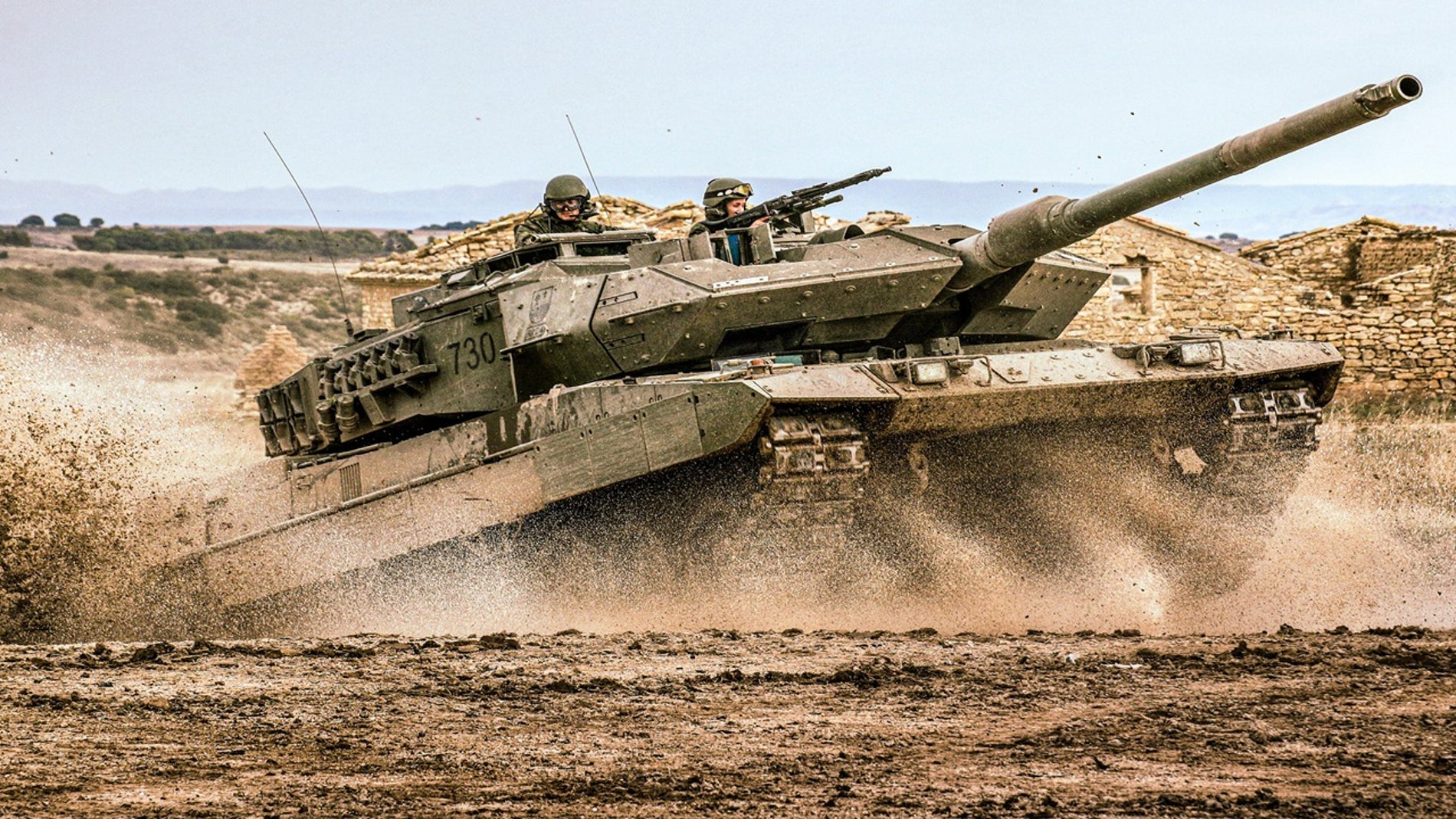
Dacoba urged military analysts and policymakers to step away from political speeches and focus on hard military statistics when evaluating the true operational capabilities of Western armies. Main battle tanks like the German-designed Leopard incorporate advanced fire-control computers, laser rangefinders, thermal imaging systems, and digital battle management networks. Mastering these integrated systems demands long-term technical education and cohesive unit drills before crews can deploy effectively in combat.
European Defense Fragmentation and Interoperability Gap
Beyond individual crew instruction, Dacoba highlighted broader structural deficiencies across the European continent. He warned of an alarming lack of interoperability among European armies during joint military deployments, calling it a historical flaw that severely hampers any attempts to mount a unified defense against large-scale external aggression.
Operational realities on the ground reveal that Allied command and control systems frequently fail to communicate with one another across national borders. In addition to communication blockages, European militaries face severe logistical hurdles in land arsenal supply, as the ammunition fired by the German Leopard tank is incompatible with the main gun of the French Leclerc armored vehicle. This lack of standardization forces armed forces to maintain duplicate supply chains, inflating defense costs and slowing tactical troop movements during joint exercises or operations.
Addressing the broader geopolitical situation, Dacoba issued a direct warning concerning strategic decisions in Moscow. He stated that if Russian President Vladimir Putin perceives clear weakness or division within Europe, the security environment across the entire continent will deteriorate drastically.
Industry Delays and the Long Gap to Future Systems
European Union institutions are currently working to organize continental defense capabilities and reinforce eastern border security against potential escalation. However, Dacoba stressed that major European technological initiatives will arrive far too late to solve pressing current emergencies.
He pointed to the recently published Defense White Paper, which attempts to streamline defense procurement and organizational chaos across member states. Yet key programs remain decades away, most notably the Future Combat Air System, a joint European project to build a sixth-generation fighter plane and uncrewed aerial systems. Dacoba emphasized that the FCAS initiative will not be available for operational deployment until 2040, leaving a dangerous strategic capability gap throughout the coming decades.
Allied Warnings on Operational Dependencies
Dacoba is not the only senior military officer to caution against overestimating European defense readiness. Retired British General Richard Shirreff, former NATO Deputy Supreme Allied Commander Europe, issued a similar warning years ago, stating that Europe acting alone could not carry out large-scale military operations of any kind without the strategic support of the United States.
Domestic military analysts within Spain have expressed matching concerns about national readiness. Retired General Fernando Alejandre noted that current operational readiness within the Spanish Army remains below the performance levels required by Allied NATO forces.
Drone Production Deficits and Unit Structure
Shortfalls in defense readiness are equally apparent in uncrewed technology and autonomous warfare systems. Retired Admiral Juan Rodriguez Garat highlighted Spain's industrial manufacturing deficit, stating that the country needs the capacity to manufacture at least two thousand drones per day, a production threshold that Spanish industry cannot currently achieve.
Commenting on unit organization, former Chief of the Defence Staff Fernando Garcia Sanchez observed that Spain has not yet properly structured its military forces for modern uncrewed warfare. Garcia Sanchez explained that the nation still lacks well-constituted remote control vehicle battalions within its active army units.
International Arms Packages, Aviation Tests, and Border Monitoring
While European defense gaps remain under discussion, international partners are moving forward with major military hardware transfers. The United States authorized an arms sale to Ukraine valued at 2.68 billion dollars, which includes GAM-67 anti-radar missiles, RPS 202 anti-drone radars, and air defense missiles designed as clones of the Russian S-300 system.
In global aerospace developments, China has begun flight testing a new supersonic aircraft engineered by the Tianmushan Laboratory. The aircraft is designed to fly the route between Shanghai and Beijing in just 30 minutes, marking another milestone in high-speed flight research.
Along Spain's southern frontier, security forces maintained a heightened presence as Morocco conducted its national elections under close border monitoring near Ceuta. Local officials reported that the North African enclave experienced a calm morning marked by tranquility following earlier migration tensions along the border line.