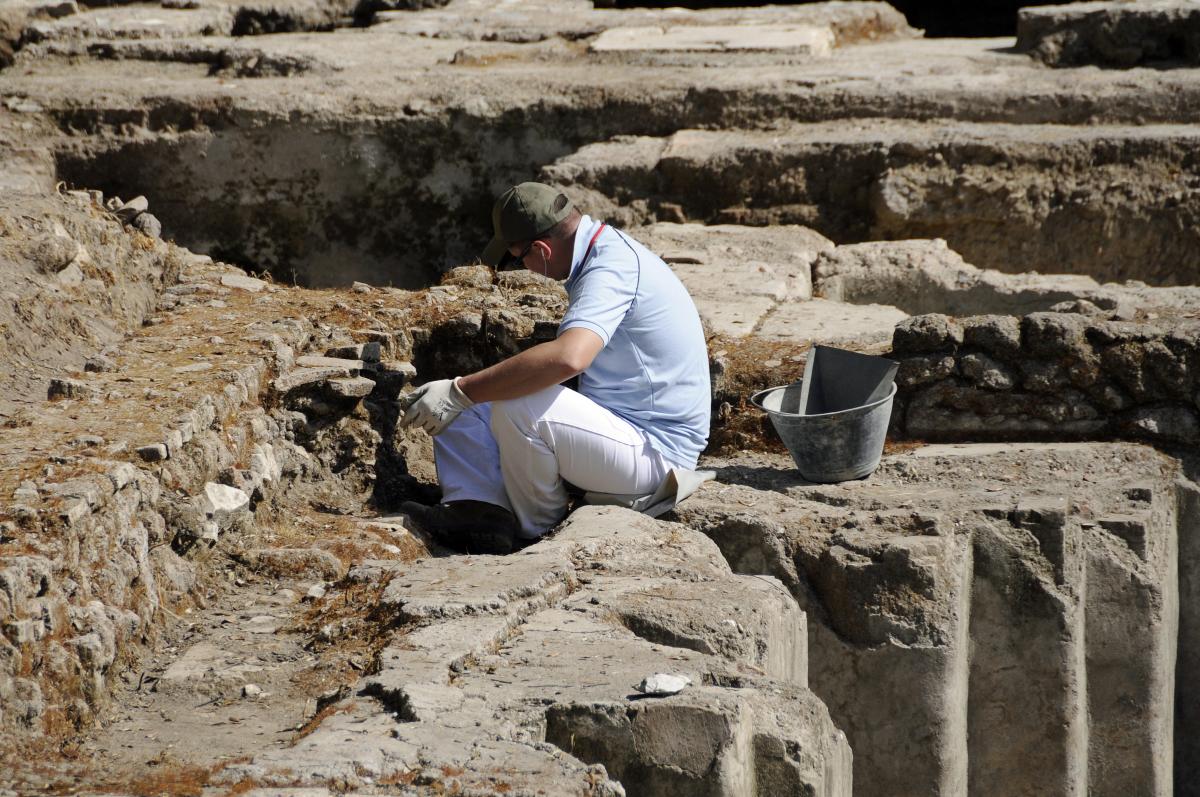
Archaeologists in Sweden have discovered 45 ancient Roman silver coins during an excavation at a military base on the Baltic island of Gotland.
The hoard also included a gold ring and two ancient counterfeit coins believed to have originated in present-day Ukraine, Fox News reported, citing the Swedish Armed Forces.

The discovery occurred during archaeological investigations conducted ahead of planned expansion works at the military base of Sweden's Gotland Regiment. In a statement released by the Swedish military, officials said the silver treasure dated to the second century AD.
Archaeologists made the find while finishing excavations around the foundation stones of an ancient farmhouse. The building dates to the Migration Period, a turbulent era in European history spanning the fifth and sixth centuries AD.
Authorities explained that the team was carrying out a final sweep with a metal detector when the device produced a persistent audio signal near one of the foundation stones. Workers carefully dug into the earth and uncovered a single silver coin, which prompted a wider search of the immediate area.
Imperial portraits and Roman rulers
After gently removing dirt from the surface of the first coin, researchers revealed a minted portrait of the Roman emperor Antoninus Pius, who ruled the empire from 138 to 161 AD. The metal detector continued to sound, signalling that more metal lay buried beside the same stone.
Before the workday ended, the team had recovered 45 coins alongside a gold ring. Officials said all the coins were Roman silver pieces minted during the second century to honour five emperors and four empresses.
The coins depict the emperors Trajan, Hadrian, Antoninus Pius, Marcus Aurelius, and Commodus. They also bear the likenesses of four empresses: Vibia Sabina, Faustina I, Faustina II, and Lucilla.
Silver denarii minted during the second century represented the economic backbone of the Roman Empire. Although Gotland lay far beyond the formal borders of Roman rule, vast amounts of imperial currency travelled north along commercial routes across the European continent, serving as prized bullion and reliable trade currency.
Trade networks and Ukrainian counterfeits
Experts believe the coins first reached Gotland in the fourth century AD and remained in circulation as trade currency for multiple generations. The cache was eventually buried alongside the gold ring around 450 AD.
Two of the 45 coins proved to be ancient counterfeits. Archaeologists determined that these fakes most likely originated from the territory of modern Ukraine, highlighting the expansive reach of trade connections between the Baltic Sea and Eastern Europe during late antiquity.
Tribes outside the Roman imperial frontier frequently produced imitations of Roman coinage to facilitate local commerce. Counterfeiters often cast or struck coins using copper or base metal cores wrapped in thin silver plating, replicating imperial designs to trade with neighbouring communities.
Farmstead abandonment and ritual sacrifice
The farmhouse where the hoard lay hidden was eventually deserted. Scientists noted that the settlement appeared to have been abandoned gradually, suggesting that former occupants may have returned over time to retrieve leftover possessions before moving permanently to a new location.
Per Widerstrom, an archaeologist at the Gotland Museum, suggested that the coins and gold ring were buried as part of a religious sacrifice. In Scandinavian tradition during the period, burying valuables beneath house foundations was a common practice intended to bring protection or favour from higher powers.
Gotland has long been known for its dense concentration of historical hoards, reflecting its centuries as a maritime crossroads in the Baltic. Archaeological work on the site was carried out to document and safeguard historical remains before military contractors break ground on expanded facilities for the Gotland Regiment.