


Spain would require explicit authorization from the Congress of Deputies before drafting civilians into the armed forces during a hypothetical NATO war with Russia.
Although modern defense relies heavily on secure communications networks and cyberdefence capabilities, Spanish legislation establishes strict legal conditions and age limits for military recruitment. Compulsory military service ended in Spain in 2001, though the constitutional obligation to defend the nation remains active through a system of gradual reservist integration.
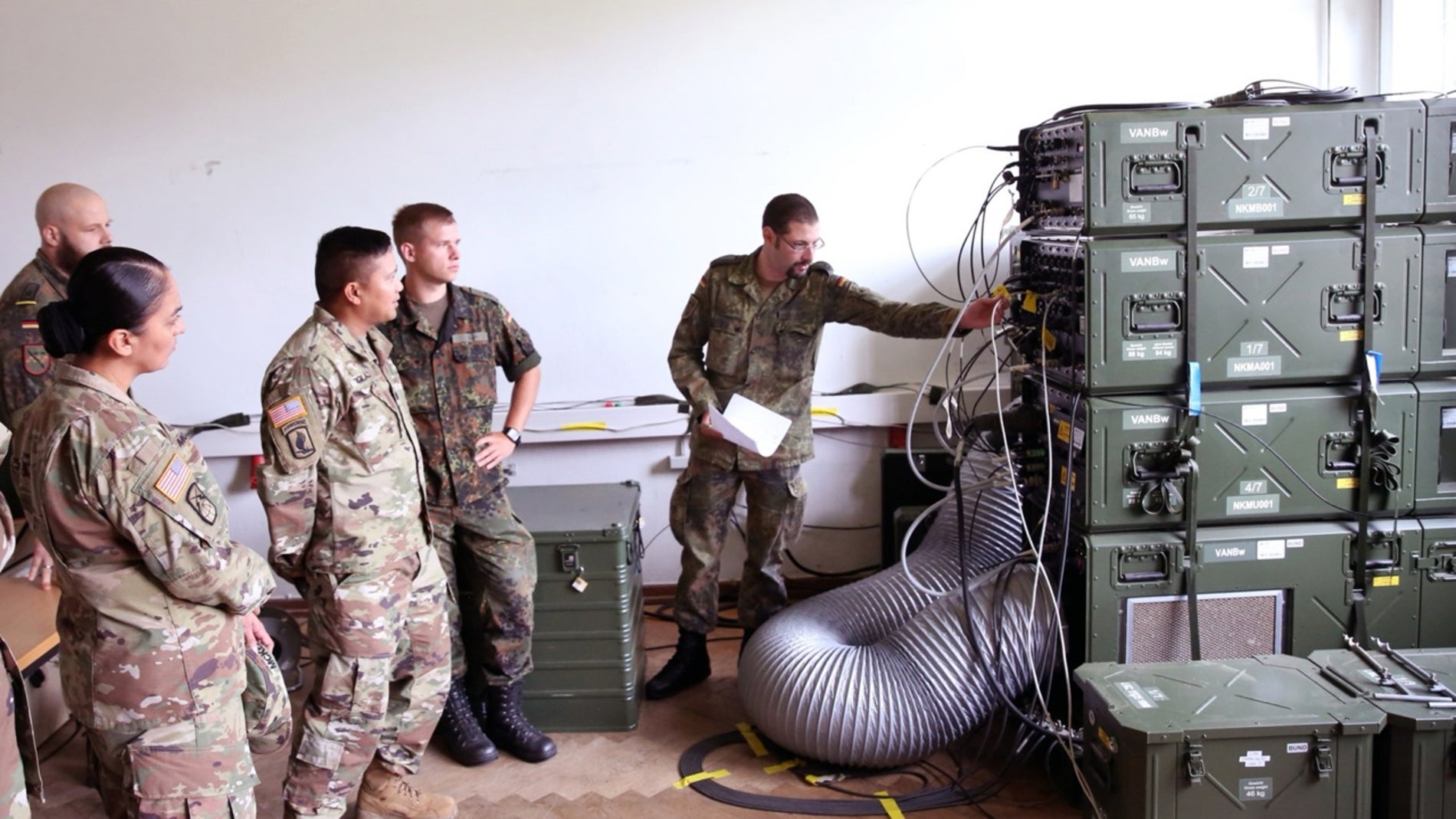
Behind modern military equipment, individuals operate and protect complex communication systems. In a hypothetical armed conflict between Russia and NATO, surveillance drones transmit images, radars send alerts, and command posts must receive critical data on time.
For Spanish civilians, this technological dimension raises questions regarding how professional qualifications would factor into a potential draft call. Spanish law requires a clear distinction between the technical needs of the Armed Forces and the legal conditions governing recruitment. Holding a degree or working in computing or telecommunications does not automatically register a civilian as a reservist.
Technical networks and 5G military applications
Recent Spanish testing with tactical 5G networks demonstrates the specific duties that emerge alongside traditional combat operations. In June 2026, telecommunications company Telefónica documented its participation in a military exercise in Slovakia using systems designed to connect communications and manage user access, permissions, and applications across units.
The primary objective of the exercise in Slovakia was sharing information between teams and military units that operate on different technological infrastructures. Telefónica has also detailed its work on the 5G Cyberdefence Centre, developed in collaboration with the Ministry of Defence.
At the 5G Cyberdefence Centre, specialists conduct testing on communications between drones, radar systems, and other field equipment. The facility also trains military personnel and explores the application of artificial intelligence to detect and counter cyberattacks.
While technical knowledge has concrete military applications, participation in these technological projects does not constitute a civilian draft call. Civilians who wish to contribute their professional expertise can do so voluntarily through the voluntary reserve system.
The Ministry of Defence presents the voluntary reserve as a formal mechanism to incorporate specialized professional capabilities into military ranks. Under Article 133 of military career regulations, voluntary reservists can be assigned to postings consistent with their professional qualifications. Obtaining a voluntary reserve placement requires a selection process and formal training, remaining distinct from any mandatory recruitment.
Congressional authorization and legal mobilization steps
In any crisis, the initial operational response would fall entirely upon professional military personnel. Under Article 123 of Law 39/2007, the Spanish government is authorized to incorporate voluntary reservists and special availability reservists if professional troop levels prove insufficient.
If the government foresees that professional troops, voluntary reservists, and special availability reservists would still be inadequate, it must obtain formal authorization from the Congress of Deputies to declare mandatory reservists.
Following congressional authorization, the executive branch must define the specifics of the call-up. The exact number of troops required, activation schedules, and the maximum length of service form an integral part of the executive decision.
Under the Organic Law of National Defence, any civilian contribution must remain gradual and strictly proportionate to the level of threat, forbidding indiscriminate mobilization during a crisis. Spain currently maintains international deployments with professional personnel, including the United Nations mission in Lebanon.
Each international operation operates under its own specific mandate. A deployment outside national territory does not equate to the activation of the mandatory reserve system.
Age limits and individual recruitment procedures
The Reservist Regulation defines who can be included in a compulsory draft as Spanish citizens, both men and women, who turn between 19 and 25 years old during the corresponding year. Applied to 2026, this potential selection pool encompasses citizens born between 2001 and 2007.
This age bracket represents a potential selection pool rather than an active mobilization call announced for those generations. Under current legislation, a civilian aged 30 or 40 without a prior military connection enabling activation remains outside the scope of mandatory reserve calls.
Expanding the age criteria beyond 25 would require amending existing legislation through parliament. Active military personnel and individuals who already hold reservist status remain subject to their own governing regulations.
If a call-up were declared, incorporation would follow an individualized administrative procedure. Formal notifications, medical examinations, and preliminary training precede any assignment of duties based on personal aptitudes and military requirements. Receiving a call-up notice does not mean a civilian will be assigned to a front-line unit.
NATO treaty obligations and operational roles
Under Article 5 of the North Atlantic Treaty, NATO member states are obligated to assist any ally that suffers an armed attack covered by the treaty. As NATO explains, each member country determines the specific measures it deems necessary to assist the affected ally.
A national response under Article 5 may or may not include military force and must respect national constitutional procedures. Assistance can take various non-combat forms, as demonstrated following the September 11, 2001 terrorist attacks, when allies agreed to share intelligence, grant access to ports and airfields, and enhance surveillance.
Spain's contribution to collective defense includes key military infrastructure, such as the naval base at Rota. Sustaining an active contingent requires ongoing supply operations, relying on logistics vessels like El Camino Español to transport essential equipment.
Alongside communications, military units require continuous maintenance and logistical support. This broad range of functions within military units prevents all assignments from involving direct combat, though civilians cannot be promised a specific assignment based on their civilian profession.
Conscientious objection and legal suspension grounds
The Spanish legal framework contains an explicit guarantee of conscientious objection for mandatory reservists. Civilians can exercise this right by simply declaring their objection, without undergoing any additional recognition procedure.
Individuals who declare conscientious objection can only be assigned to general-interest organizations where weapons are not used, though they may be required to perform non-military service within those organizations.
Reservists may also apply to suspend their incorporation under specific grounds detailed in the regulations. Recognized grounds for suspension include specific health limitations, being the primary financial support of a family, caring for severely ill close relatives, or pregnancy.
Any request for suspension must be documented with supporting evidence and requires a formal resolution from the public administration.
Article 30 of the Spanish Constitution delegates the regulation of military obligations to statutory law and establishes the possibility of creating a civil service. Remaining outside a military call-up does not exempt citizens from civil duties during a national emergency, as civil obligations are governed by separate regulations.



