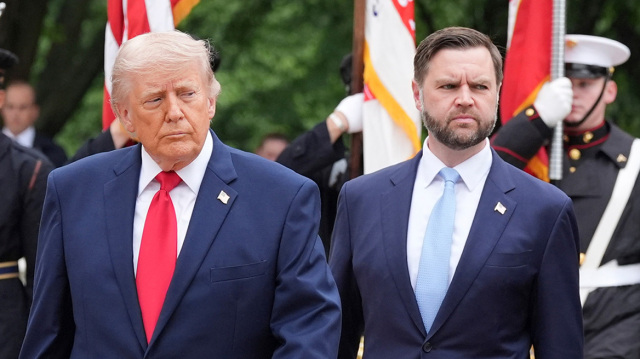
US Vice President JD Vance has sought to downplay escalating military tensions with Iran, asserting during a White House press briefing that the conflict does not amount to a war and claiming that commercial shipping through the Strait of Hormuz is returning to normal.
The Vice President's remarks came as the Wall Street Journal reported that President Donald Trump is considering announcing a formal victory for the United States and declaring an end to armed hostilities with Tehran.
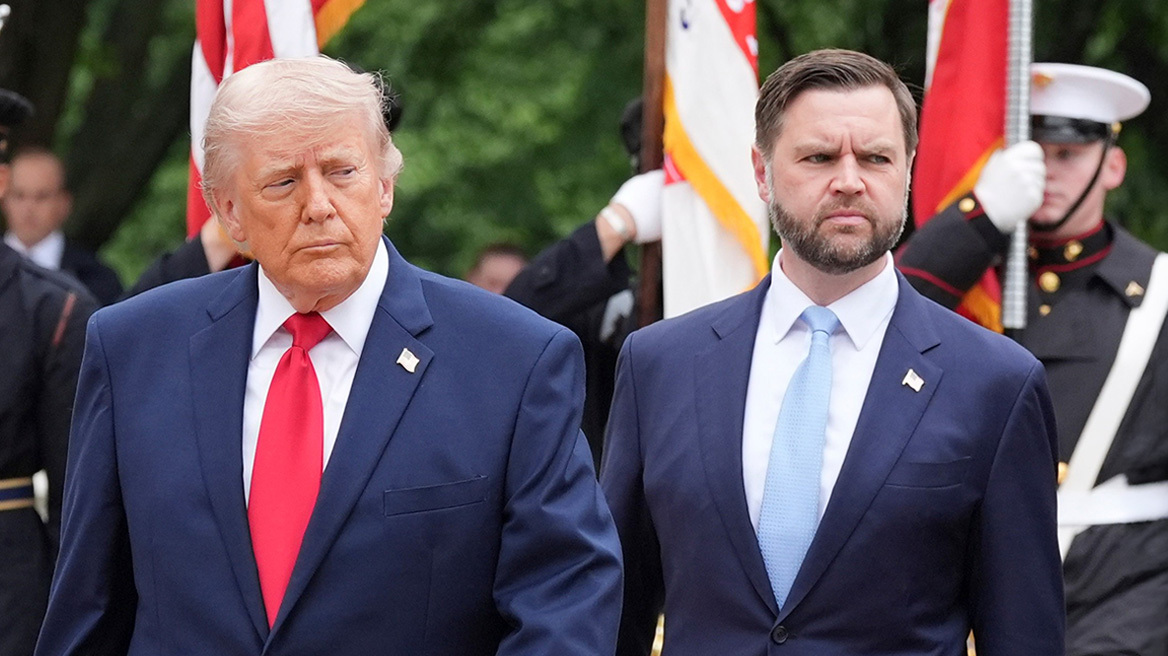
The White House presentation of a controlled situation follows two recent waves of aerial bombardments conducted by the United States armed forces against targets inside Iran.
Addressing reporters in Washington, Vance stated that he would not characterize the military operation as a war, adding that there was currently no active exchange of fire between American and Iranian forces.
White House Defense of Air Strikes
One recent American bombardment, which Tehran has vowed to avenge, resulted in the deaths of four people and left dozens of others injured, including several individuals who were attending a wedding ceremony.
When asked about the civilian casualty figures reported by Iranian officials, Vance questioned the reliability of the claims coming out of Tehran. Vance stated that Iranian state media did not offer an accurate accounting of the conflict so far and expressed deep skepticism regarding their reports.
Vance added that the United States government is conducting an in-depth investigation into the circumstances surrounding the strike.
The 42-year-old Republican Vice President declined to provide a specific timeline for when military operations would conclude. When President Trump launched the military campaign alongside Israel six months ago, administration officials had initially estimated that the operations would last only a few weeks.
The administration took office with an aggressive posture toward Tehran, seeking to curtail Iranian regional influence while securing critical trade routes. Vance, who became Vice President following the 2024 presidential election, has consistently supported the executive branch's national security strategies in the Middle East.
Disputed Shipping Figures in Hormuz
In recent days, the United States administration has repeatedly asserted that maritime traffic through the Strait of Hormuz has experienced a significant recovery. Vance reiterated this position, noting that three months ago, amid heightened Iranian threats, virtually no oil or gas was leaving the waterway, whereas shipping levels have now nearly returned to pre-conflict norms.
President Trump echoed those assertions during an interview with the British conservative television network GB News, stating that the United States maintains strong control over the strategic channel. Trump claimed that American forces ensure between 30 and 40 ships pass through the strait every night.
US Energy Secretary Chris Wright stated that 17 million barrels of oil had recently passed through the maritime channel. Trump also posted a graphic on the social media platform Truth Social indicating that daily oil transport had reached 18 million barrels per day, approaching the pre-war average of approximately 20 million barrels daily.
The Strait of Hormuz is a narrow maritime passage situated between Oman and Iran that connects the Persian Gulf to the Gulf of Oman and the Arabian Sea. It serves as the primary export conduit for crude oil and liquefied natural gas from Persian Gulf producers to global energy markets.
Rise of Unverified Ghost Ships
Independent ship tracking data presents a contrasting assessment of shipping activity in the corridor. An analysis by Agence France-Presse based on data from navigation tracking platform Kpler showed that transits of vessels carrying oil, hydrocarbons, fertilizers, and minerals dropped to an average of just 10 per day after Tehran closed the strait on March 1.
Before the onset of the crisis in February, daily transits through the strait averaged 95 ships per day. A provisional agreement in principle reached between Washington and Tehran in mid-June temporarily raised daily transits to approximately 36 per day as initial talks to end the conflict were explored. However, following a resurgence of active hostilities between July 8 and August 22, daily ship transits fell back to an average of roughly 15 per day.
Shipping analysis from Kpler also reveals that since July 8, approximately two-thirds of all ship transits through the Strait of Hormuz have been conducted by vessels classified as ghost ships. Kpler defines ghost ships as vessels whose movements cannot be precisely verified because they have deactivated their automatic identification transponders, encountered signal jamming, or lack coverage from satellite imagery.
Prior to the escalation of the conflict six months ago, ghost ships accounted for less than 1 percent of total maritime traffic in the strait. The sharp increase in untracked vessels indicates that commercial navigation through the vital strategic waterway remains severely impaired despite assurances from Washington.
Kpler is an international data analytics company that monitors global trade and maritime logistics, while Agence France-Presse is a global news reporting agency headquartered in Paris.