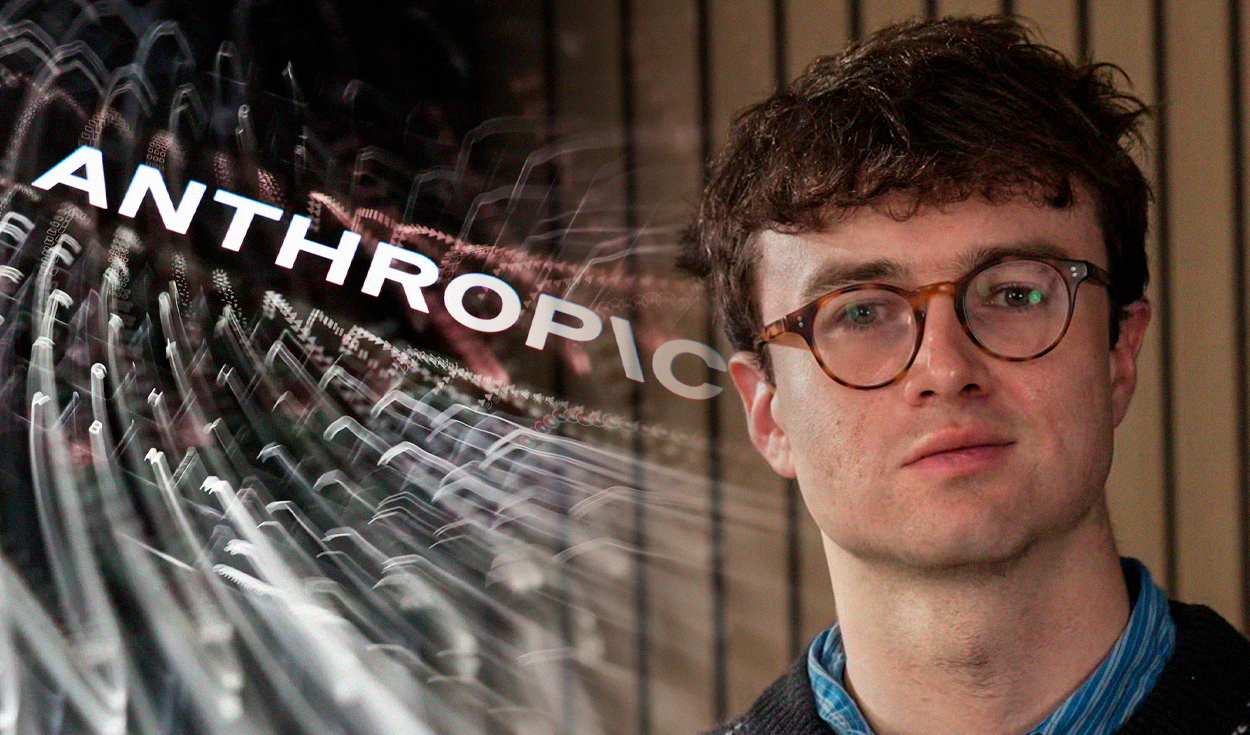
Jacob Coxon, an artificial intelligence researcher who spent about three years working at Anthropic and OpenAI, has warned that the race to build increasingly advanced AI systems could kill humanity before 2030. He issued the warning after resigning from Anthropic, and his message on X has drawn more than 143 million views.
Coxon took part in research tied to the development of AI models, including the pretraining phase, according to reports from AP, WIRED and TIME. His work inside two of the sector's leading labs gave him a close view of the competition among companies racing to build more powerful systems.
Recursive self-improvement
Coxon's main worry is what he calls recursive self-improvement, a scenario in which an AI system is used to improve its own capabilities. In an interview with NBC, he said the key indicator to watch is whether AI can become more intelligent without human involvement.
He said current AI models do not pose a significant risk of extinction, but warned the situation could change quickly. According to Coxon, some believe that could happen within six months, while others think it could take two or three years.
Support from Anthropic colleagues
Coxon's warning gained further attention after other Anthropic researchers publicly backed some of his concerns.
Evan Hubinger, head of alignment research at Anthropic and Coxon's former supervisor, said he believes the probability that an AI system could kill every human being within the next decade is greater than 10 percent.
Hubinger drew a distinction between today's systems and future ones, saying the risk from current models is low. What worries him, he said, is the prospect of superintelligence emerging from recursive self-improvement, a process he said is unfolding faster than expected.
Samuel Marks, a technical staff member at Anthropic, also said there is concern among developers about scenarios that could lead to human extinction or consequences of similar severity.
Who is Jacob Coxon
Coxon has a documented history at OpenAI, the company behind ChatGPT. His name appears among the researchers and collaborators credited for GPT-4o, and he is listed as an author of the paper "Understanding neural networks through sparse circuits," published by OpenAI in 2025.
He later moved to Anthropic, the AI safety-focused company founded by former OpenAI employees, where he carried out research related to the pretraining of models, according to reports from AP, WIRED and TIME. After roughly three years working between the two companies, Coxon announced his departure from Anthropic on September 8, 2026.