

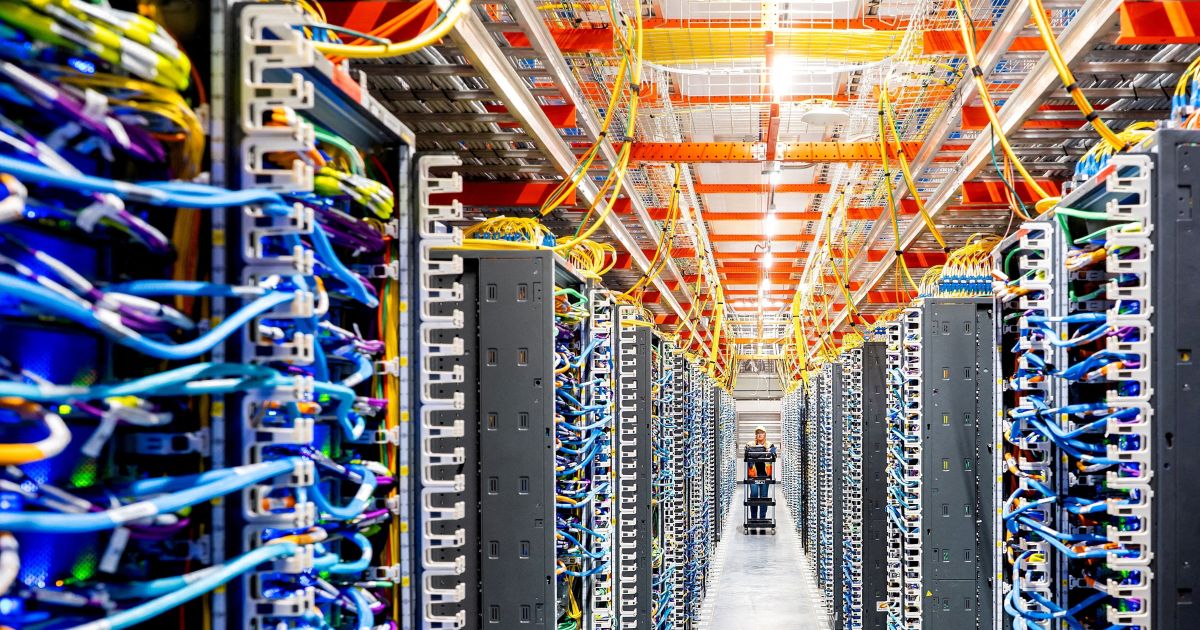
The United Arab Emirates is quietly reviewing plans for a 5-gigawatt artificial intelligence data center project, one of the largest outside the United States, after the war with Iran prompted a rethink of how and where critical infrastructure should be built, six people familiar with the matter told Reuters.
The project was originally conceived as a 26-square-kilometer campus in Abu Dhabi. It will now likely take the form of a network of data centers spread across the UAE, according to four sources who spoke on condition of anonymity.
Authorities are also considering ways to better protect the facilities from drone and missile attacks, including air defense systems and underground structures, the sources said. The likely changes to the project had not previously been disclosed.
The data center project is central to the UAE's global AI ambitions. Plans for the UAE-U.S. AI Campus, built in partnership with American technology companies, were announced during President Donald Trump's visit to the wealthy Gulf state last year.
G42 and the Stargate Deal
The project is led by G42, an AI company controlled by Sheikh Tahnoun bin Zayed al Nahyan, the UAE's national security adviser and brother of the country's president. In exchange for access to Nvidia's AI chips and other advanced U.S. technology, the UAE agreed to cut its AI ties with China and to invest in American data centers under the Stargate initiative, a joint venture between OpenAI, Oracle and SoftBank.
Those who spoke to Reuters included a U.S. official, a Western diplomat and industry executives briefed on the deliberations. Reuters could not determine how close UAE authorities are to finalizing a new master plan, or how much the proposed changes might affect construction costs and timelines.
Construction of the project's first phase, a 1-gigawatt, $30 billion computing cluster known as Stargate UAE, began last year, with the first 200 megawatts of capacity expected to come online this year. Larry Ellison, Oracle's chairman and chief technology officer and a partner with G42 on the project, has said that once complete, it will have enough capacity to connect every UAE government agency and commercial institution to the world's most advanced AI models.
Responding to Reuters questions about possible revisions to the project, G42 said work on the AI campus was progressing as planned. The company said project details were subject to continuous review in line with the security, resilience and operational standards expected of critical infrastructure of this scale, without elaborating further.
OpenAI said it was working with the UAE to realize its AI vision and was making good progress on the infrastructure and adoption priorities needed to achieve it. The UAE's Ministry of Advanced Technology and the project's other American partners, Nvidia, Oracle and Cisco, did not respond to requests for comment. Japan's SoftBank declined to comment.
Iran Targets US-Linked Tech Infrastructure
Sources told Reuters that UAE officials began reviewing their AI infrastructure plans shortly after Tehran started launching missiles and drones at neighboring Gulf countries hosting American forces, in retaliation for U.S. and Israeli airstrikes on Iran.
Two Amazon Web Services data centers in the UAE were damaged in the March attacks, along with one in Bahrain. The company's cloud computing services in the region remain disrupted, according to the latest updates on its website.
In April, Iran's armed forces released a video warning that Stargate UAE was also a potential target. The video included a map purportedly showing where the complex was being built, captioned: "Nothing is hidden from our sight."
Two people familiar with the matter confirmed the location was near Al Dhafra Air Base, a site that was not previously public knowledge. The base, on the outskirts of Abu Dhabi, hosts American troops and has been targeted during the war, which began in February.
An "Economic Earthquake" for the Gulf
Daniel Benaim, who served as U.S. deputy assistant secretary of state for Arabian Peninsula affairs under President Joe Biden, said the conflict represented an economic earthquake for Gulf states that have long presented themselves as safe havens for investment.
Benaim, now a researcher at the Middle East Institute, a Washington think tank, said changes to strengthen critical infrastructure were extremely necessary. He said every country in the region would look at what it could do to reduce risk and reassure international partners and investors.
Underground Bunkers and Mountain Storage
The first phase of construction on the UAE's AI campus is expected to proceed as planned, though with some modifications to protect the site from air attacks, according to an industry executive and another person familiar with the matter. The rest of the project will likely be spread across several locations, they said.
Besides building underground, authorities are considering installing systems that store the most sensitive data, such as that used by the military, inside mountains, the two people said. In the United States, China and Europe, data centers have been built inside decommissioned mines, Cold War-era bunkers and caves.
The UAE, on the southeastern Arabian Peninsula, is largely flat desert territory, though mountain ranges cross parts of the north and northeast in the emirates of Ras Al Khaimah and Fujairah.
Air defense systems are being incorporated into the redesigned project, including drone and missile interceptors and electronic jamming equipment, three sources said. Other likely measures include the use of blast-resistant concrete and the addition of backup power and cooling systems, another source said.


