Instituto MRV&CO, the non-profit private social investment arm of Brazilian residential construction group MRV&CO, has surpassed 51.6 million Brazilian reais in cumulative funding and reached more than one million people directly across Brazil.
The milestone follows the incorporation of the organization's 2025 results, during which the institute deployed 3.23 million reais, served 28,851 people directly, and recorded 2,716 hours of corporate volunteer work.
Founded in 2014, the institute focuses on promoting education and human development for children, young people, construction workers, and teachers in different regions of the country. Over its first decade of operation from 2014 to 2024, Instituto MRV&CO invested more than 48.3 million reais, reaching over 972,000 people directly and roughly 2.9 million indirect beneficiaries.
That indirect reach estimate is calculated using the average household size of Brazilian families as measured by the Brazilian Institute of Geography and Statistics (IBGE), Brazil's federal agency responsible for official census and demographic data.
Social return on investment and ten-year impact
Between 2014 and 2024, the institute supported more than 61 social projects, trained over 353,000 educators, and logged more than 21,000 hours of volunteer service. More than 25 percent of those initiatives took place in areas of high social vulnerability.
To measure whether its spending produces lasting changes in participants' daily lives, Instituto MRV&CO partnered with the technical consultancy SEALL to adopt the international Social Return on Investment (SROI) methodology. The SROI framework converts social and economic benefits into monetary values by mapping a program's Theory of Change and surveying beneficiaries.
In the most recent consolidated assessment of the institute's Educar para Transformar (Educate to Transform) program, every 1.00 real invested generated 3.36 reais in social return, representing a 236 percent return index. The study attributed that gain to wider access to education, higher participant income, and the improved capacity of supported community organizations to raise external funding after receiving management mentorship.
A separate SROI evaluation of the Seu Filho, Nosso Futuro (Your Child, Our Future) program found that every 1.00 real invested generated 2.73 reais in social value, or a 173 percent return index. That calculation accounted for household money saved through free school supply kits as well as lower employee turnover costs for the company.
Four core education and volunteering pillars
Instituto MRV&CO divides its budgets and staff across four primary operating pillars that combine third-party grants, direct execution, and employee volunteering, alongside complementary programs for job-site literacy and community organization support.
The first pillar, Educar para Transformar, funds educational projects carried out by Civil Society Organizations (OSCs) across Brazilian states through public calls for proposals and capacity-building partnerships. Review panels screen applications for pedagogical viability, governance standards, and territorial vulnerability before communities vote on the finalists in a public ballot ahead of grant disbursements and management mentoring.
The second pillar, Seu Filho, Nosso Futuro, is an in-house program focused on the academic development of employees' children and young people in local communities. It distributes annual school supply kits and funds undergraduate university scholarships.
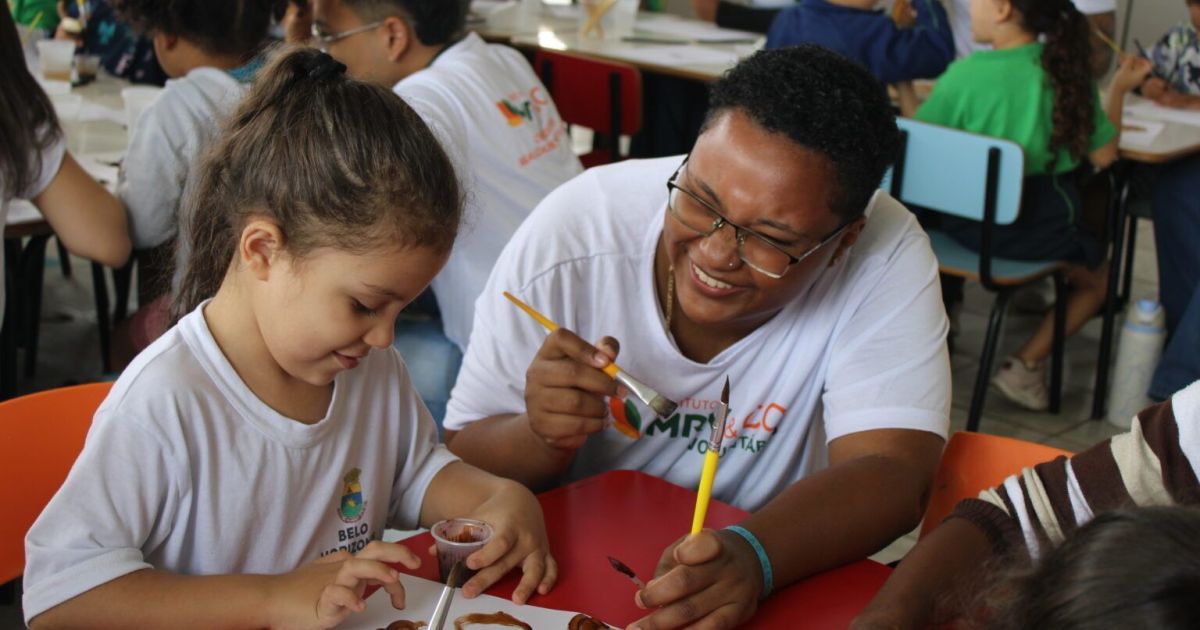
Through the third pillar, MRV Voluntarios (MRV Volunteers), employees across the MRV&CO group can dedicate up to 44 regular working hours per year to community service without any reduction in pay. Staff volunteers lead reading workshops, financial literacy classes, technology training sessions, and library renovations.
The fourth pillar is Instituto iungo, an organization created with MRV&CO's backing to support teachers and school principals as central drivers of educational quality. Instituto iungo connects educators with academic research centers, facilitates peer exchanges, and delivers training programs for teachers nationwide.
Construction site literacy through Escola Nota 10
Beyond its four primary pillars, MRV&CO runs a workplace education program called Escola Nota 10 (Grade 10 School) that has taught more than 7,000 construction workers to read and write across dozens of building sites in Brazil.
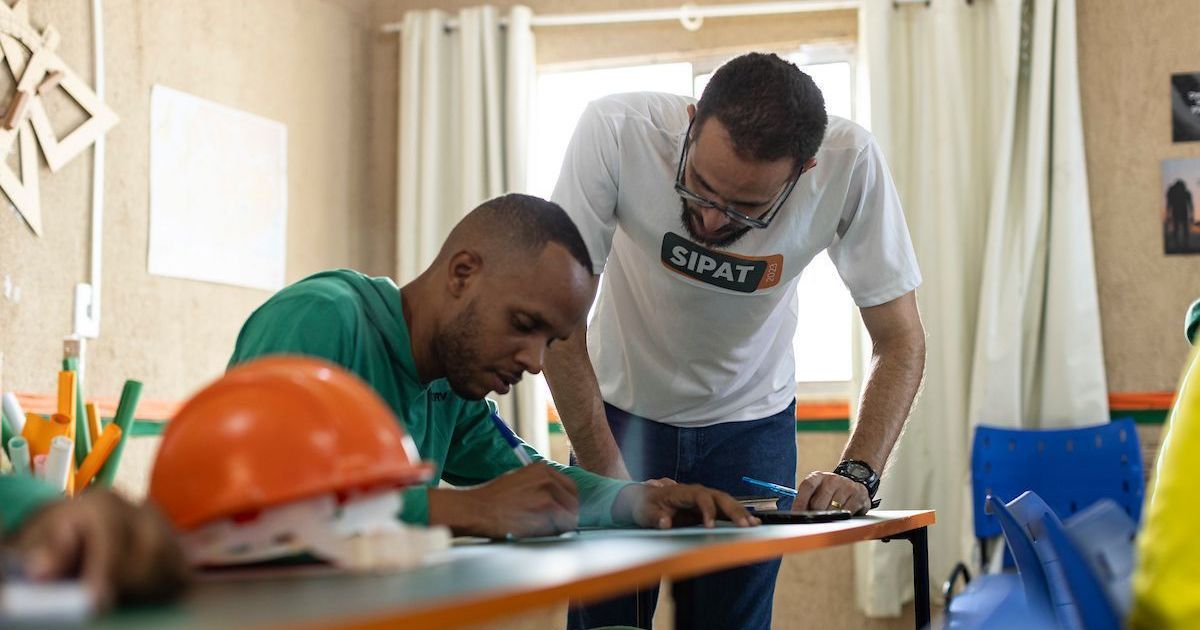
Managed by the group's Sustainability team with operational support from Instituto MRV&CO and developed in partnership with the education company Alicerce Educacao, the program sets up classrooms directly inside active construction sites. Workers attend classes during their regular shifts, receiving instruction in reading and writing, mathematics, vocational skills, and citizenship.
Holding classes on site during paid work hours removes the commuting and scheduling obstacles that frequently prevent adult laborers from returning to school. The curriculum prepares workers to sit for the National Exam for the Certification of Youth and Adult Competencies (Encceja).
Administered by Brazil's Ministry of Education through the National Institute for Educational Studies and Research Anisio Teixeira (INEP), Encceja is a federal exam that allows adults and young people who did not finish primary or secondary schooling at the typical age to earn official diplomas.
Corporate governance and UN 2030 Agenda alignment
Headquartered in Belo Horizonte and listed on the B3 stock exchange in Sao Paulo, MRV&CO is one of Latin America's largest residential real estate developers and homebuilders. Within Brazil's civil construction industry, major corporate groups often operate independent social institutes to keep long-term public-interest programs separate from day-to-day commercial operations.
Operating under the Private Social Investment (ISP) model, Instituto MRV&CO follows a planned, monitored, and systematic process for allocating capital to collective causes. Its stated mission is to drive social transformation in Brazil through education as the foundation of national development, preparing citizens for life and training future achievers.
Unlike one-off corporate donations that typically address short-term emergencies, a dedicated institute enables MRV&CO to establish multi-year targets, verify expenditures through independent audits, and anchor the Social pillar of its Environmental, Social, and Governance (ESG) strategy.
The institute aligns its guidelines with the United Nations 2030 Agenda and prioritizes five Sustainable Development Goals (SDGs): Eradication of Poverty (SDG 1), Quality Education (SDG 4), Decent Work and Economic Growth (SDG 8), Reduced Inequalities (SDG 10), and Partnerships for the Goals (SDG 17).
Test yourself
How much total social investment has Instituto MRV&CO accumulated since its founding in 2014 through 2025?
What social return did the Educar para Transformar program generate for every 1.00 real invested according to the SROI study with SEALL?
How many regular working hours per year can MRV&CO employees dedicate to the MRV Voluntarios program without losing pay?
Have your say
Which area should construction companies prioritize in their corporate social investment programs?