Brazilian companies are increasingly structuring their social spending through dedicated nonprofit bodies rather than one-off giving, with Grupo MRV&CO, one of Brazil's largest homebuilders, offering a clear example. Its Instituto MRV&CO received 1% of the company's net profit in 2025, funded R$3.2 million in programmes and reached more than 86,000 people directly that year, according to the institute.
The model sits within what Brazil's Group of Institutes, Foundations and Companies (GIFE) calls Private Social Investment, or ISP: the planned, monitored and systematic transfer of private financial, technical or human resources to social, environmental, cultural or scientific projects of public interest.
What Private Social Investment Means
Unlike traditional philanthropy, which tends to respond to immediate emergencies through one-off deliveries such as food baskets or isolated campaigns, ISP is guided by medium and long-term goals and continuous monitoring of outcome indicators, according to GIFE's definition.
For medium and large companies, building a dedicated social arm gives initiatives predictability over time and reduces the risk of interruptions during economic downturns or changes in management. A separate entity also professionalises project selection and creates a clear legal and accounting split between a company's budget and the resources set aside for society, strengthening the social, or "S", pillar of its ESG agenda.
Institute, Foundation, Donation or Sponsorship?
The terms are often used loosely, but they describe different legal structures and financial mechanisms. Under Brazil's Civil Code, "institute" is not a specific legal category; it is mostly a name adopted by nonprofit civil associations, governed by articles 53 to 61 of the code. An institute is formed by individuals or organisations around a shared goal, requires no mandatory initial endowment, allows more flexibility in updating its bylaws, and reports mainly to its general assembly, fiscal council and funding partners.
A corporate foundation, covered by articles 62 to 69 of the Civil Code, is instead built on an irrevocable endowment of money, property or other assets set aside by a founder for a specific social purpose. Because of that asset base, a foundation must gain prior approval from, and remains under the permanent oversight of, the state Public Prosecutor's Office, and follows stricter statutory rules.
The financing mechanisms differ by whether anything is expected in return. A donation is the free, voluntary transfer of money, goods or services to civil society organisations or public causes with no requirement for promotional return, and can be made directly or through tax incentives such as Brazil's Children and Adolescent Funds (FIA) and Elderly Funds. Sponsorship, by contrast, is a formal contract in which the backer receives defined benefits such as brand visibility, institutional ties or access quotas.
Guarding Against "Social Washing"
Brazilian homebuilders and developers have been setting up dedicated social arms, such as Instituto MRV&CO, to run continuous programmes in basic education, professional training and development. Having an autonomous institute, with its own tax ID, bylaws and governing board, also helps guard against "social washing", the term used when a company's institutional messaging outpaces what it actually delivers to society.
By separating the technical management of social projects from a developer's commercial side, the organisation can apply objective selection criteria, such as public calls for proposals and participatory assessments with local leaders, which supports transparency in reporting and keeps monitoring focused on indicators of social change.
Instituto MRV&CO's Four Programme Areas
Instituto MRV&CO was created in 2014 as a nonprofit civil association and acts as the private social investment arm of the MRV&CO housing group, focused on education as a tool for human development. It combines executive leadership tied to the parent company with a dedicated operating team, and publishes its bylaws, audited financial statements and annual activity reports on its own transparency portal.
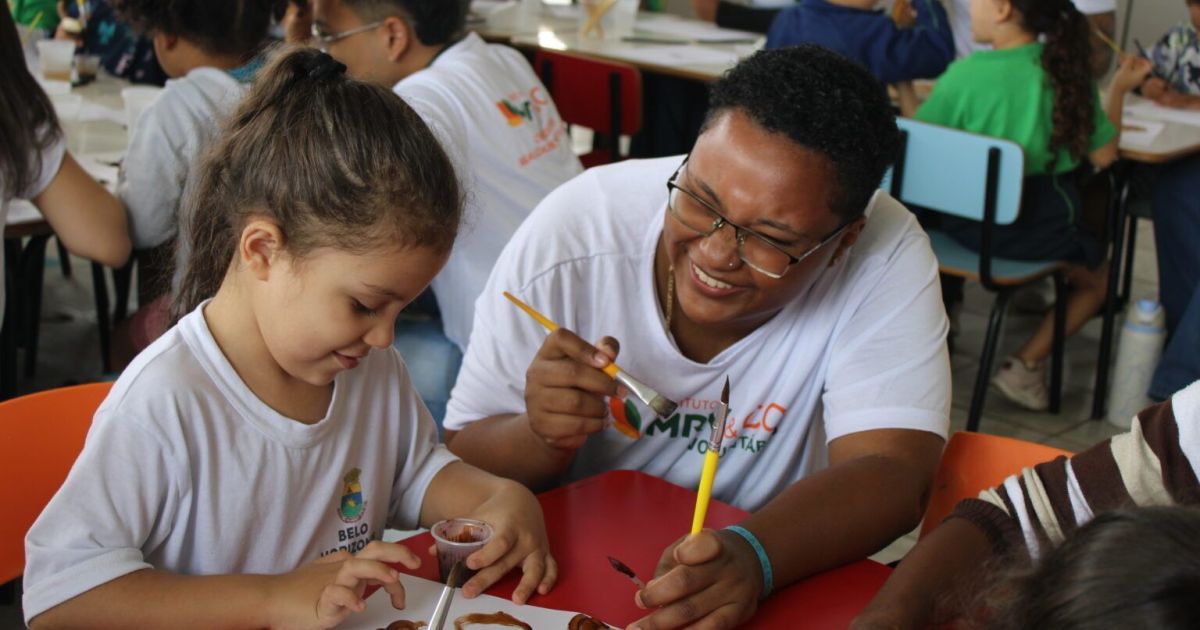
The institute organises its work across four complementary fronts. Through the public call Educar para Transformar, it selects education projects run by civil society organisations with a public vote, and gives partner institutions financial transfers and management mentoring. Its corporate volunteering programme, MRV Voluntários, lets employees dedicate up to 44 working hours a year to activities with different community groups.
The ecosystem also includes Seu Filho, Nosso Futuro, which supports school attendance for employees' children and young people in the community through school kits and scholarships, and Instituto iungo, created with MRV&CO's support in 2020 to provide ongoing training for education professionals. The institute also helps manage the Escola Nota 10 programme, which offers literacy and training to construction workers on site during working hours.
To track the effectiveness of these initiatives, Instituto MRV&CO applies the international Social Return on Investment (SROI) methodology, and recorded a R$3.2 million contribution and a direct reach of more than 86,000 people in 2025.
Test yourself
What share of its net profit did Grupo MRV&CO allocate to its institute in 2025?
What legally distinguishes a sponsorship from a donation in Brazil?
In what year was Instituto MRV&CO founded?
Have your say
Should companies be required to run their social investment through an independent institute or foundation?