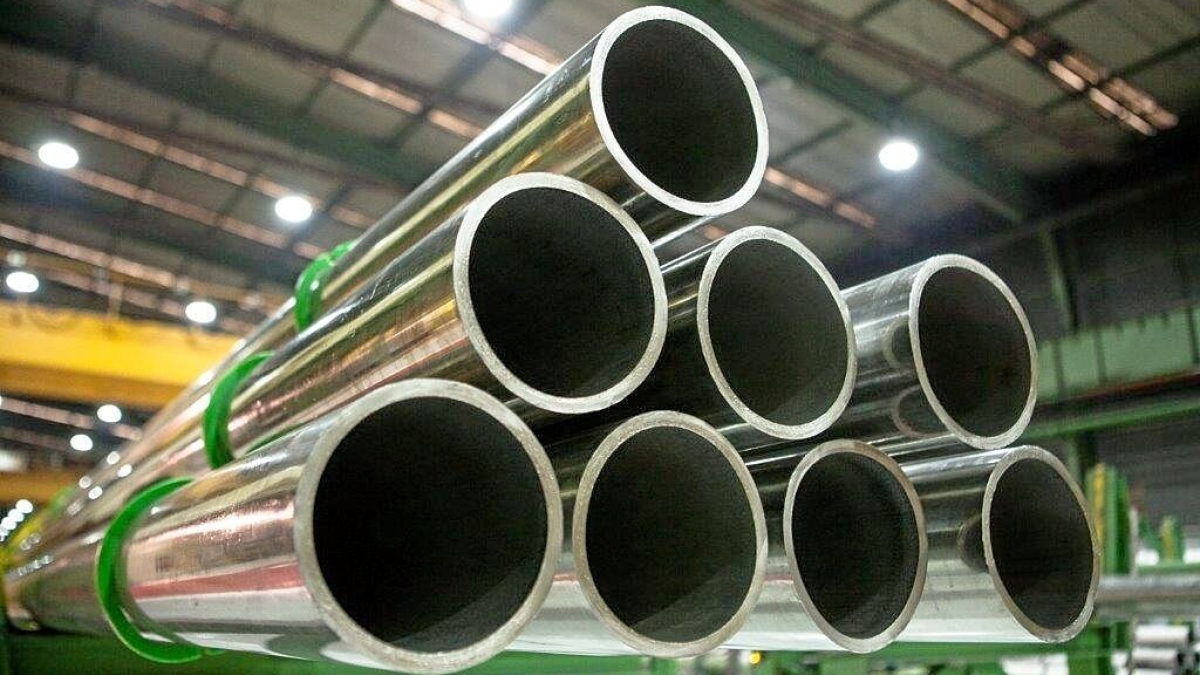
Spanish steelmaker Tubacex has won a new contract to supply subsea umbilical tubes in the Gulf of Mexico, lifting its order book for the segment to 130 million euros.
The award strengthens the company's position in ultra-deepwater oil and gas extraction, a high-value manufacturing niche where global demand is rising. The new agreement adds to a 26 million euro order announced in February and contracts worth more than 80 million euros announced in June.
Those earlier deals covered offshore projects in Guyana, Angola, Brazil, and the North Sea. Together with the Gulf of Mexico award, they bring Tubacex's total backlog in the Subsea, Umbilicals, Risers and Flowlines segment, known in the energy sector as SURF, to 130 million euros.
Headquartered in the province of Alava in Spain's Basque Country, Tubacex is a publicly traded multinational that manufactures seamless stainless steel and high-alloy tubes for the global energy and industrial sectors. The Gulf of Mexico is one of the world's premier offshore oil and gas basins, requiring specialised subsea hardware capable of operating far below the ocean surface.
Ultra-deepwater demand and capacity expansion
The Gulf of Mexico order carries particular weight for the Spanish manufacturer because it forms part of a new generation of ultra-deepwater developments. The project uses technology built to operate under very high pressures on the seabed.
According to the company, the contract consolidates its status as one of the leading global suppliers of this critical offshore component. Only two other companies in the world manufacture subsea umbilical tubes of this kind.
The order also reflects Tubacex's push to diversify its business beyond traditional oil and gas extraction pipes into advanced engineering products. Over the past decade, the company has supplied more than 20,000 kilometres of umbilical tubes to offshore operators worldwide.
To keep pace with growing demand from the offshore energy industry, Tubacex has already expanded its welding and coiling capacity this year. The company is now studying potential further expansions of its manufacturing facilities.
How subsea umbilical tubes work
Subsea umbilical tubes link oil and gas platforms floating at the surface with extraction and control equipment resting on the ocean floor. Because they operate in deep water, they require far more complex engineering than pipes used in conventional onshore wells or shallow marine fields.
In offshore production systems, SURF infrastructure connects seabed wellheads to surface vessels. While flowlines and risers carry oil and gas across the seafloor and up to the platform, umbilicals act as the nerve and control lines for the underwater machinery.
Inside an umbilical unit, the core is divided into multiple specialised conduits. These channels house electrical power cables, fibre-optic communication lines, hydraulic fluids that open and close underwater valves, and chemical injection lines that prevent subsea systems from freezing.
Operating at extreme ocean depths means the tubes must withstand immense external pressures while resisting saltwater corrosion and near-freezing water temperatures. Manufacturers use advanced metal alloys and produce the tubes in very long continuous sections without intermediate welds to simplify offshore installation and eliminate potential weak points.
Long-term SURF strategy and production in Austria
Tubacex chief executive officer Josu Imaz said the company is participating in increasingly demanding offshore projects where expertise in advanced materials, industrial reliability, and execution capacity set suppliers apart. He said the contract represents a natural progression in the group's strategy to grow within high-value technological niches.
Imaz added that the offshore market is shifting toward recurring and replicable technical configurations. Combined with earlier contracting schedules and long-term supply agreements, this trend opens new opportunities for Tubacex to strengthen its position in the SURF market alongside the sector's major international players.
Work on the new Gulf of Mexico order will be shared across the group's European manufacturing network. Tubacex's factories in the Basque Country will handle part of the production workload.
However, the majority of the manufacturing will take place at the group's plant in Ternitz, an industrial town in Lower Austria. The Ternitz facility serves as Tubacex's dedicated centre of competence for umbilical tube production.
What happens next
Tubacex will carry out most of the manufacturing for the new order at its plant in Ternitz, Austria, with its Basque factories taking on part of the workload. The company is also studying potential expansions of its facilities after increasing its welding and coiling capacity this year.
Test yourself
What is the total value of Tubacex's SURF order backlog following the new Gulf of Mexico contract?
Where will the majority of the umbilical tubes for the new Gulf of Mexico order be manufactured?
How many kilometres of umbilical tubes has Tubacex supplied over the past decade?
Have your say
Will deepwater offshore oil and gas projects continue to see rising demand over the next decade?
Where it happened
Alava, Spain