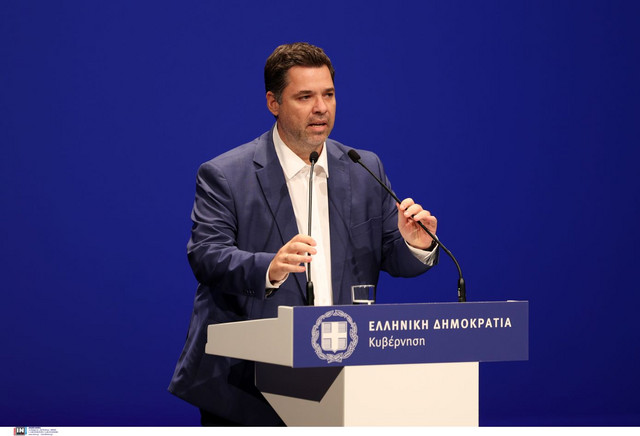
Greek Prime Minister Kyriakos Mitsotakis will announce a four-year economic framework extending to 2030 during his address at the Thessaloniki International Fair on Saturday, Deputy Minister to the Prime Minister Thanassis Kontogeorgis said in a radio interview.
Speaking on Alpha Radio 9.89, Kontogeorgis stated that the forthcoming government announcements aim to allow as many citizens as possible to benefit from ongoing economic policies, building on past economic growth to deliver further fiscal reforms, pension adjustments, and seniority pay increases.
The Thessaloniki International Fair is an annual commercial exhibition held every September in Thessaloniki, Greece's second-largest city. The event traditionally serves as the primary stage for Greek prime ministers to present their annual economic agenda, outline tax policy, and announce major government initiatives for the upcoming year.
Criticism of opposition proposals
During the interview, Kontogeorgis strongly criticized political proposals advanced by former Prime Minister Alexis Tsipras and the Greek Left Alliance, known as EL.A.S., regarding a proposed wealth registry. He said the opposition proposals demonstrated amateurishness and continued a tradition of unfulfilled promises and inflated bills.
Kontogeorgis reiterated government calculations estimating that the EL.A.S. economic program would cost at least 13 billion euros annually. He predicted that when the opposition group submits its platform to the Hellenic Fiscal Council, the independent body will cut the plan significantly.
The Hellenic Fiscal Council is an independent public body created to monitor government budget execution, evaluate macroeconomic forecasts, and ensure fiscal responsibility. Kontogeorgis noted that the government established the council to ensure political debate relies on realistic economic data, adding that the government will also submit its own policy program to the body for assessment.
Economic strategy and agricultural support
Kontogeorgis explained that sustained outperformance in the Greek economy has enabled annual improvements in tax reform, worker seniority pay steps, and pension benefits. He indicated that the government plans to build on this progress with a larger policy step this year and set a long-term horizon aiming to position Greece among the best countries in Europe to live and work by 2030.
Seniority pay increases, locally known as trieties, are statutory wage increments granted to employees for every three years of continuous service. These allowances were suspended during Greece's international bailout programs following the 2008 financial crisis and have been gradually restored as fiscal conditions stabilized.
Addressing the agricultural sector, Kontogeorgis acknowledged that farmers faced a difficult year marked by reduced commodity prices, natural disasters, and protests that strained relations with the government. He emphasized that the primary sector remains a key priority as ministers negotiate the new national budget and discussions continue over the European Union's Common Agricultural Policy.
The Common Agricultural Policy is the European Union system of agricultural subsidies and rural development programs. It represents a substantial portion of the EU budget, providing direct income support to farmers and funding environmental land management initiatives across member states.
Regional projects and election timing
Turning to regional development, Kontogeorgis stated that the government embraces all citizens without geographical distinctions, noting that Mitsotakis presented a progress review and future planning for Thessaloniki and northern Greece a week ago. He added that he and the Prime Minister would visit western Thessaloniki on Thursday to inspect new sports facilities, social infrastructure, and schools that are creating local employment.
Western Thessaloniki comprises several working-class suburban municipalities in the Thessaloniki metropolitan area. Urban regeneration initiatives in these districts focus on upgrading public schooling, expanding green space, and improving local civic infrastructure.
When asked about a potential election candidacy in the Achaia region, Kontogeorgis noted that his family originates from the historic town of Kalavryta and expressed affection for the region, but stated that his current responsibilities cover all of Greece and he has no such plans. He added that while elections may feel near, they remain further off and political candidacy decisions will be made in due course.
Achaia is a regional unit situated in the northwestern Peloponnese, centered around the major port city of Patras. Kalavryta is a mountainous town within Achaia known for its historic significance and agricultural background.
Regarding overall election timing, Kontogeorgis referred to previous statements by the Prime Minister pointing toward spring. He emphasized that Greece is scheduled to assume the rotating presidency of the Council of the European Union on July 1, a key period when member states will negotiate the long-term EU budget that determines European policy priorities for the next decade.
The presidency of the Council of the European Union rotates among EU member states every six months. The presiding nation leads council meetings, shapes legislative agendas, and mediates compromises among member governments on major policy decisions and long-term financial frameworks.
Kontogeorgis concluded by stressing that the Prime Minister in office during that presidency, who he stated should be Mitsotakis, will need strong negotiating capability during the budget discussions, noting that the government has nine months of work ahead before the term begins.