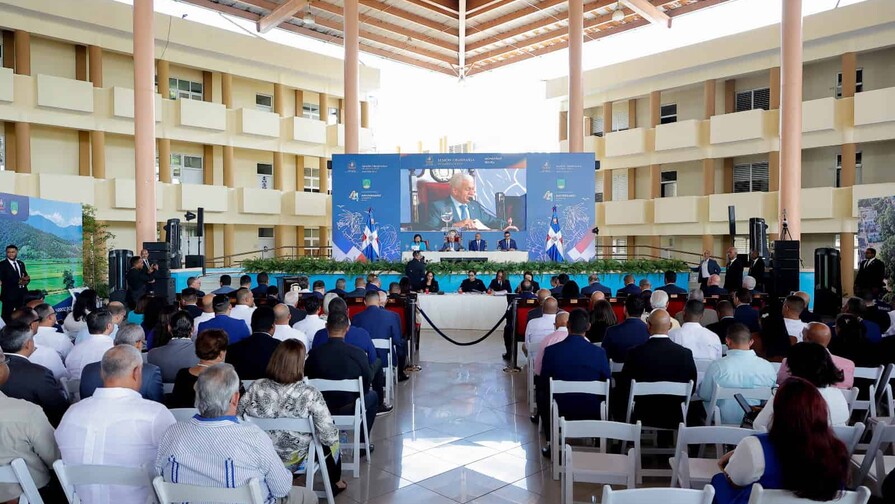
The Dominican Republic Senate has passed urgent legislation prohibiting the importation of goods produced through forced labor, voting unanimously in its final reading during a special legislative session in Monseñor Nouel province on Tuesday.
The bill cleared its second reading with all 27 senators present voting in favor, following an initial vote of 26 to 1, and now advances to the Chamber of Deputies for consideration.
Sponsored by San Juan Senator Felix Bautista and supported by 30 other lawmakers, the measure establishes a formal legal regime to identify, verify, and block imports of products and manufactured goods extracted, processed, or produced wholly or partially using forced labor.
According to the text of the initiative, the framework aims to safeguard fundamental human rights and worker dignity within international trade supply chains while fulfilling the international commitments of the Dominican Republic regarding trade and labor standards.
US Tariff Penalties Drive Urgent Passage
The legislative push comes amid trade enforcement measures imposed by the United States on imports from countries lacking statutory mechanisms to prevent forced labor products from entering their markets. During floor debate, senators noted that the Dominican Republic is currently subject to a 12.5 percent US tariff on certain goods, compared to a 10 percent rate applied to nations with active forced labor import bans.
Bautista stated that passing the legislation would allow Dominican negotiators to request the removal of the extra 2.5 percent tariff from American authorities. He estimated the annual economic impact of the higher tariff at approximately $182 million, adding that the Caribbean nation currently faces some of the highest tariff duties under the US trade program.
The Dominican Republic is a Caribbean nation of 11 million people whose bicameral legislature, the National Congress, consists of a 32-seat Senate and a 190-seat Chamber of Deputies. Under Dominican constitutional law, ordinary legislation must undergo two separate readings in both chambers before being submitted to the president for signature into law. United States trade regulations under federal law prohibit the entry of goods produced with forced labor, prompting foreign trading partners to enact explicit statutory prohibitions to maintain favorable tariff rates and protect export access to American consumer markets.
Cultural Heritage and Regional Development Bills Approved
During the same provincial session, senators also approved a bill declaring casabe, the traditional cassava flatbread, as part of the country's national cultural heritage. The initiative, proposed by Senator Casimiro Antonio Marte Familia, passed its first reading with 27 votes in favor.
Casabe is an unleavened flatbread crafted from bitter cassava root that has been produced across the Caribbean for centuries. Developed by the indigenous Taino population long before European arrival, the durable bread remains a fundamental staple of Dominican culinary tradition and national identity.
Lawmakers additionally approved a seeds bill sponsored jointly by Senators Hector Acosta and Felix Bautista on its second reading. The Senate also passed a single-initiative proposal introduced by Valverde Senator Odalis Rafael Rodriguez to establish a branch campus of the Americas Institute of Technology in the city of Mao.
The Americas Institute of Technology, known locally as ITLA, is a specialized Dominican public institution of higher education offering technical degrees in software engineering, cybersecurity, artificial intelligence, and advanced manufacturing. Mao, the provincial capital of Valverde in the northwestern Cibao Valley, serves as a primary center for Dominican agricultural production, particularly rice and bananas.
Monseñor Nouel Commemorates 44 Years as a Province
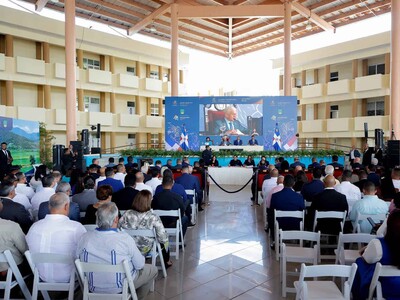
The Senate conducted the voting session away from its permanent chamber in Santo Domingo to mark the 44th anniversary of the creation of Monseñor Nouel province. The Dominican Senate periodically convenes formal sessions in regional provinces to honor local milestones and engage directly with regional communities across the country.
Located in the central Cibao region, Monseñor Nouel was established as an independent province in 1982 after separating from neighboring La Vega province. The province was named in honor of Archbishop Adolfo Alejandro Nouel, a former president of the Dominican Republic and head of the Catholic Archdiocese of Santo Domingo.
As part of the anniversary event, the Senate recognized key local historical figures, including Salvador Gomez Gil, who served as the province's first senator, and local attorney Roberto Artemio Rosario. The body also presented a posthumous honor to Alberto Pena Vargas, the first governor of Monseñor Nouel.
The forced labor prohibition bill now moves to the Chamber of Deputies for review and debate. If approved without amendments by the lower house, the measure will be sent to President Luis Abinader for final executive promulgation.