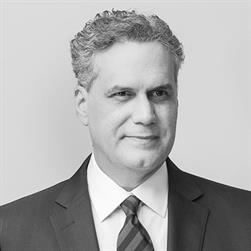
Peru's new government is drafting a bill that would ask Congress for special powers to legislate on labor issues, and the proposal would weaken protections for workers, economist Fernando Cuadros Luque wrote in an opinion column published August 10.
Cuadros, an economist from the Universidad del Pacífico who previously served as Peru's vice minister of employment promotion, said the government announced in the July 28 presidential address that it would raise the minimum wage from 1,130 soles to 1,300 soles. He called the increase a step in the right direction but said it falls short, since technical criteria set by the National Labor Council, known by its Spanish initials CNT, indicated the minimum wage should have reached roughly 1,400 soles as of January 2026. He added that the government has not said when the increase will take effect, nor addressed calls to formally establish the CNT's technical review mechanism as binding through an executive rule, to prevent arbitrary handling of the tool.
Bill would tie labor rights to pay level
According to Cuadros, a preliminary version of the delegated-powers bill has been made public, and it contains measures he argues run counter to workers' interests. Among them, the proposal would let the government create a single new general labor regime in which access to labor rights, including CTS severance pay, bonuses, vacation, working hours, overtime, social security and profit sharing, would be phased in according to how much a worker earns, while protection against dismissal would also become more flexible.
Cuadros said this would mean higher-paid workers gain a greater share of labor benefits than lower-paid ones, calling the approach regressive. In practice, he said, it would cut rights currently held by low- and middle-income workers at medium and large companies, extending the special labor regimes now used for micro and small businesses to bigger firms.
The bill also proposes measures on hiring mechanisms and labor benefits for young workers, citing what the government describes as excessive labor costs, according to Cuadros. He compared these to the now-repealed Law 30288, popularly known as the Pulpín law, passed in 2014, and said this approach of cutting labor benefits as a supposed incentive for formal job creation has failed for the past 36 years.
Oversight agency and dismissal rules targeted
Cuadros wrote that the government also wants legislative power to make the labor oversight agency SUNAFIL adopt a preventive and advisory approach, which he warned could mean neglecting its central role of enforcing labor law, particularly given budget shortages.
The executive branch is also seeking to ease dismissals for objective causes, such as economic, technological or structural reasons, by lowering the current 10% threshold of affected workers required for collective layoffs and even permitting individual dismissals under those causes, Cuadros said. He said this would further tilt bargaining power toward employers and increase precariousness in formal jobs, especially without accompanying limits on temporary hiring and outsourcing, or measures supporting stable employment, unionization and collective bargaining.
Flexible benefits, bonuses and public-sector cuts
The government wants to make rules on benefits such as vacation, overtime, profit sharing, bonuses and CTS payments flexible, allowing employers and workers to agree on their application individually or through collective bargaining, according to Cuadros. He noted that with only 5% of Peru's formal private-sector workers unionized, such agreements would largely be struck individually, giving employers, who hold greater bargaining power, an easy path to impose their terms.
Cuadros wrote that the government also wants to promote productivity bonuses and other performance incentives by stripping them of their status as remuneration, meaning they would no longer count toward calculating labor benefits or contributions to health and pension social security, a change he said would clearly harm workers. The executive also proposes eliminating severance pay for dismissal on grounds of loss of confidence for workers in management or trust positions, which Cuadros called especially damaging given how arbitrarily those job categories are assigned in the private sector.
The government additionally wants to change rules on non-working public holidays to reduce their number, under what it describes as a rationalization criterion, Cuadros wrote. He said the real goal is to avoid the triple pay owed when an employee works a holiday without a compensatory day off, since most formal private-sector workers are in the commerce and services sectors, where holiday work is common. He added that it is false that Peru has more non-working holidays or more vacation days than any other country in Latin America.
Public workers and opposition response
The bill would also let the government offer financial incentives for the "voluntary" departure of public employees, which Cuadros said reveals an intent to shrink the Peruvian state, one he described as already small compared with developed countries. He said Peru instead needs to implement the civil service reform set out in Law 30057 to improve working conditions in the state and the quality of public services, rather than carrying out mass, arbitrary layoffs of state workers.
Cuadros concluded that the government's proposed labor reform would continue cutting labor rights, leave workers less protected, cheapen labor, empower employers, increase precariousness in formal employment and shrink the state, describing it as a continuation of the labor reform carried out in the 1990s under President Alberto Fujimori. He said the opposition bloc, which holds a majority and leads the Chamber of Deputies, should not grant the government powers to legislate against the interests of most citizens, not only on labor matters but also on tax, environmental and internal-order issues.