United Nations expert Jimena Viveros warned that military drone swarms could cause destruction comparable to weapons of mass destruction during an international conference in Vienna, Austria.
Speaking at the Humanity at the Crossroads: Autonomous Weapons Systems and the Challenge of Regulation conference in April 2024, Viveros stated that the destructive potential of drone swarms exists regardless of whether the systems operate semi-autonomously or fully autonomously.
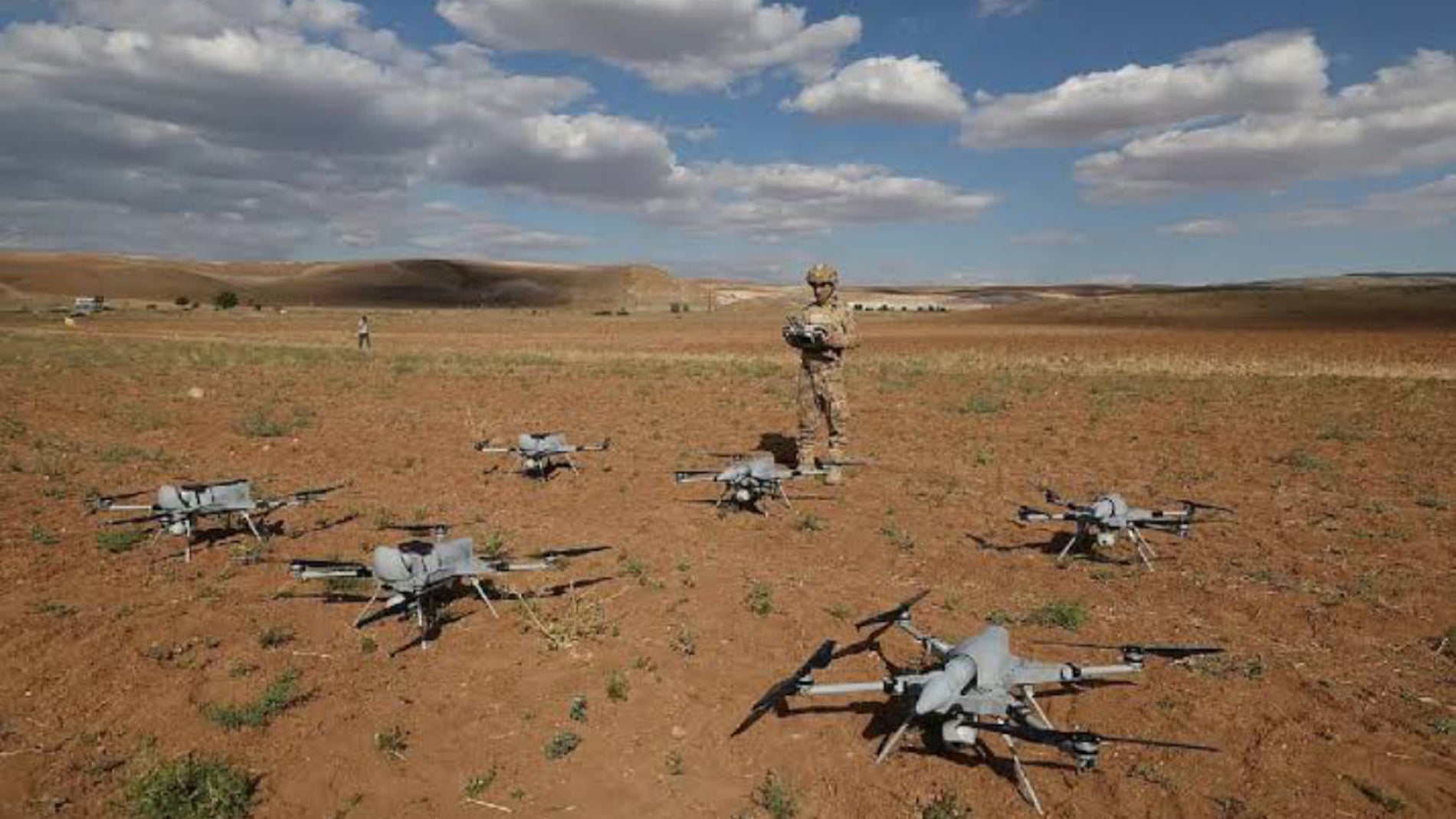
Her warning remains urgent as uncrewed aerial vehicles take on a central role in the war in Ukraine and other ongoing conflicts around the world. The military deployment of artificial intelligence has opened a new operational landscape where automated machines take over functions that previously required direct human intervention.
Viveros stressed that the primary threat does not stem exclusively from total machine autonomy over target selection and the use of force. Instead, specific technological applications capable of multiplying destructive capacity present grave dangers to global security, with coordinated drone swarms standing out as a primary concern.
Risks of Machine Failure and Accountability
Combining multiple drones converts individual units into a unified tool capable of inflicting widespread damage. Viveros warned that these autonomous systems remain vulnerable to unexpected failures because artificial intelligence algorithms depend strictly on the data used to train them.
She explained that autonomous military systems can behave unpredictably and exhibit errors that even their own software programmers cannot easily explain. In battlefield conditions, any technical glitch or algorithmic failure translates directly into human casualties.

Decisions concerning life and death cannot be reduced to automated mathematical calculations, according to Viveros. In armed combat, machines would be forced to evaluate complex principles of proportionality, necessity, and humanity that human military commanders struggle to assess during moments of extreme uncertainty.
Increasing machine autonomy also creates a serious challenge regarding legal responsibility for combat damages. Viveros warned that higher autonomy makes it increasingly difficult to connect human decisions to outcome consequences, creating a dangerous responsibility gap where no person can be held accountable for machine actions.
Calls for International Regulations and Red Lines
To prevent uninhibited military developments, Viveros called on world leaders to establish clear international regulations before autonomous technology advances beyond control. Her proposal includes establishing explicit red lines that prohibit specific military applications while defining strict conditions for acceptable uses.
Technological innovation should not be confused with an absence of regulatory limits, Viveros noted. A drone swarm does not need to be fully controlled by artificial intelligence to represent a major threat, and international safeguards must be enacted before the proliferation of autonomous weapons becomes irreversible.
The United Nations, founded in 1945 to maintain international peace and security, regularly convenes international panels to address emerging warfare technologies. Vienna, the capital of Austria, serves as a primary center for multilateral diplomacy and international treaty negotiations on arms control and non-proliferation.
Escalating Drone Deployments and Global Defense Concerns
The warning comes amid rising global military tensions involving uncrewed aircraft systems. Russian forces have moved drone swarm capabilities closer to territory belonging to the North Atlantic Treaty Organization, relying on 10 bases and 59 launch platforms to deploy Geran drones, including larger and more lethal models.
Defense vulnerabilities have also raised alarm in the United States, where officials acknowledged a critical vulnerability involving hidden drone swarms inside domestic territory capable of attacking before detection systems can react. Furthermore, the United States has reportedly lost 45 MQ-9 Reaper drones in Iran, representing a quarter of its active fleet, at a financial cost exceeding 1.3 billion dollars.
The MQ-9 Reaper, built by General Atomics, is a heavy remotely piloted aircraft used for high-altitude surveillance and strike missions. Geran drones, including loitering munitions, are long-range uncrewed aerial vehicles deployed extensively for targeted infrastructure strikes.