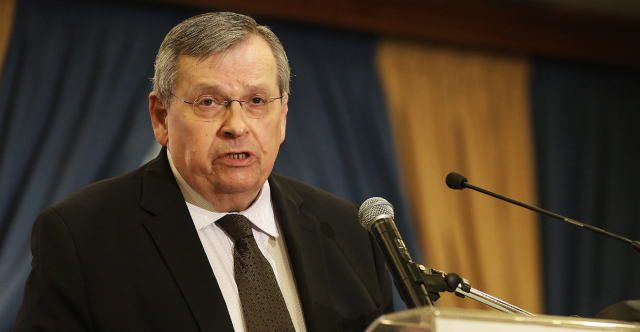
Former Greek minister Stefanos Manos has died at the age of 87, leaving behind a legacy as an unconventional, confrontational, and steadfastly liberal politician. Throughout his career, he connected his name to landmark public works including the Athens Metro, Spata airport, the Rio Antirrio Bridge, and the launch of mobile telephony in Greece.
In his final years, public commentary viewed Manos in two distinct ways. Supporters described him as a stark realist who spoke unvarnished truth and held the political system accountable. Critics viewed him as overly harsh, labeling him a censor of neoliberalism during the nation's severe financial crisis.
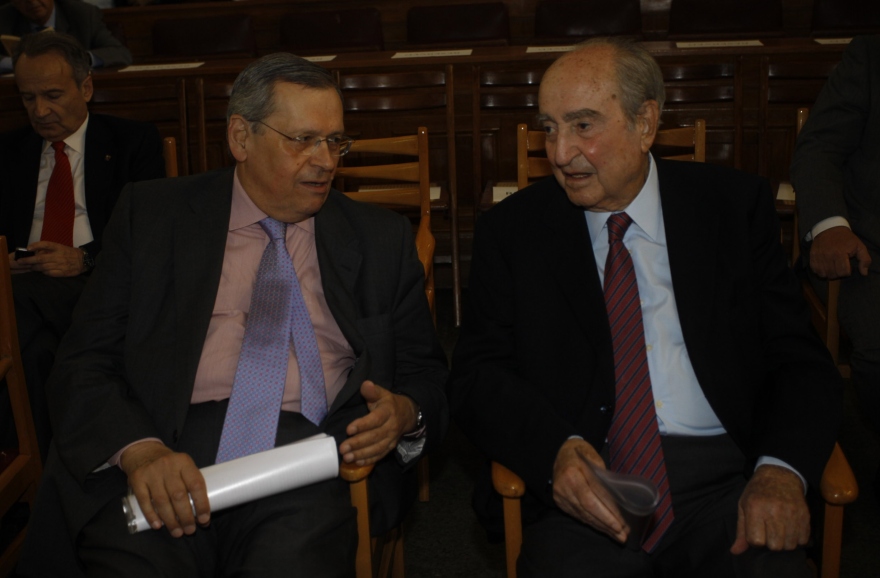
Manos operated as a practical politician who refused to settle for mediocrity or inaction. He acknowledged himself that he was not an easy person, maintaining a strong focus on political outcomes. In 1981, Prime Minister and New Democracy leader Georgios Rallis told Manos that the party could no longer tolerate him. Konstantinos Karamanlis, who persuaded Manos to enter politics in 1977, was also irritated by his frequent interventions, though Karamanlis always sought to hear his views before leaving for the presidency in 1980.
Journalist Aris Portosalte wrote in the introduction to the 2022 autobiography book Break in Inertia, published by Proti Yli, that Manos retained adolescent traits of wanting to overturn things alongside the wisdom of an advisor. The book recorded conversations held in the atrium of his home in Ekali, where Manos served coffee, biscuits, and homemade carrot cake made with almond flour and lemon icing.
From Business Innovation to Public Office
Stefanos Manos was born a few months before Greece entered World War II. He was the son of Alexandros Manos, a prominent doctor at Evangelismos hospital, and Kalliopi Panoutsou, growing up in a comfortable and wealthy environment. He studied at ETH Zurich and Harvard University before returning to Greece to take over the management of Allatini S.A. from his mother.
At the time, Papadopoulos Biscuits dominated the market without competition. Manos introduced packaged biscuits in place of the loose bulk biscuits common in the 1960s, pricing them at double the rate per kilogram of Papadopoulos products. Within three months, Allatini secured 30 percent of the market. Manos explained that the company bypassed wholesalers, building a direct sales network to control product presentation at the final points of sale.
He also introduced self rising all purpose flour to Greece after seeing it in the United States, launching it in a blue package that has remained virtually unchanged for six decades. However, his business background provoked criticism within New Democracy, where party members questioned why they needed an industrialist. Manos responded that he entered politics in 1977 in the Athens A constituency because he was dissatisfied with conditions and wanted to challenge bad practices.


Infrastructure Projects and Market Reforms
Manos shaped major infrastructure projects that transformed Greece and its capital. His initiatives included Spata airport, the Athens Metro, the Rio Antirrio Bridge, pedestrian zones across Athens, and mandatory parking spaces for newly constructed apartment buildings. To combat urban smog, he promoted the scrapping of older vehicles in favor of catalytic cars, while firmly refusing to legalize unauthorized buildings.
As Minister of Public Works, Manos introduced private self financing for large Greek infrastructure projects, amortizing private capital over time through user fees. Miranda Xafa, who worked closely with him in the early 1990s as director of Prime Minister Konstantinos Mitsotakis's Economic Office, recalled his principle that users, rather than taxpayers, should pay for major works.
Manos had originally planned projects such as the Attiki Odos highway and the metro during 1978 and 1979 under the Karamanlis administration. Those plans were canceled when Antonis Tritsis took over the public works portfolio under the PASOK government, but Manos revived them in the early 1990s at the ministry that became known as YPECHODE. Working alongside Tzannis Tzannetakis, he also initiated mobile telephony licensing, while his bill to privatize telecom operator OTE triggered political turmoil that contributed to the fall of the Mitsotakis government in 1993.
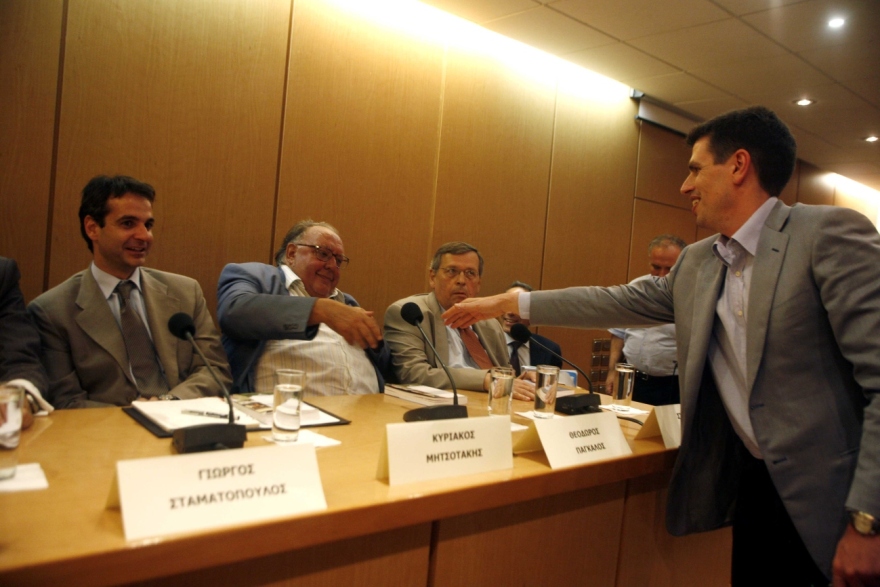
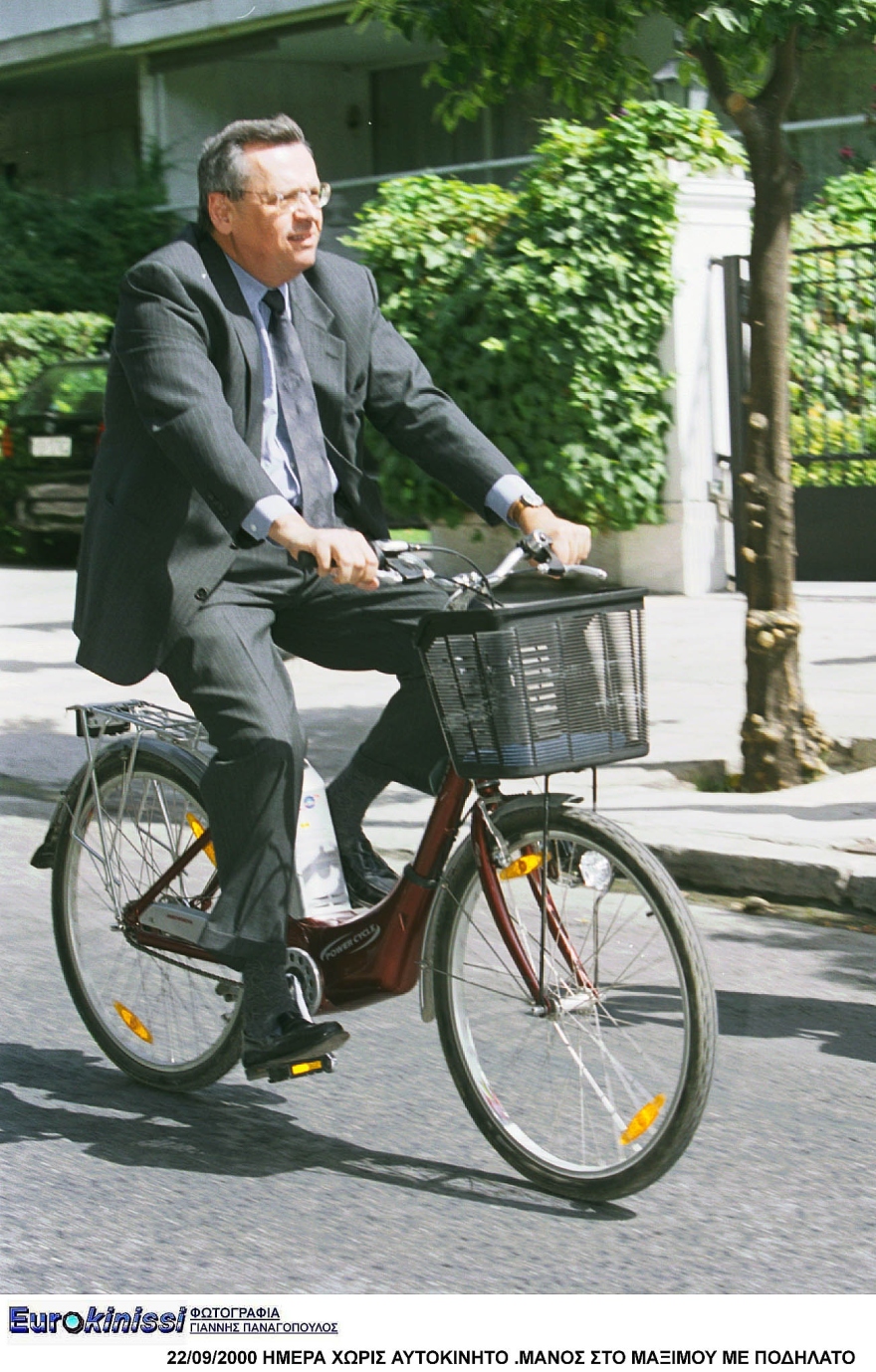
Assessments of Greek Governments and Leaders
In his published discussions with Portosalte, Manos offered blunt evaluations of Greece's post junta governments. He stated that the 1989 to 1990 Zolotas coalition government, facing near national bankruptcy, joined three parties together to grant digital supply contracts to Intracom and Siemens rather than tackling the crisis.
He described the era of Konstantinos Karamanlis as conservative and prudent, matching the European trend of state controlled economies prior to Margaret Thatcher. Manos criticized Andreas Papandreou for wasteful management that corrupted citizens, while praising Costas Simitis for the Helsinki agreement and Cyprus's accession to the European Union, though faulting Simitis for failing to privatize state power company PPC.
Manos noted that Konstantinos Mitsotakis believed in market power but carried old party flaws while leading a party of local bosses opposed to liberal policies. He asserted that Antonis Samaras caused great damage by bringing down the Mitsotakis government in 1993, ending OTE and PPC privatizations that were later canceled by Papandreou to appease trade unionists. Manos added that Kostas Karamanlis left behind a debt fueled bubble that burst during the bailouts, George Papandreou was brave but lacked management ability, SYRIZA set the country back further, and the current Kyriakos Mitsotakis administration speaks more than it acts on privatizations and judicial reform.
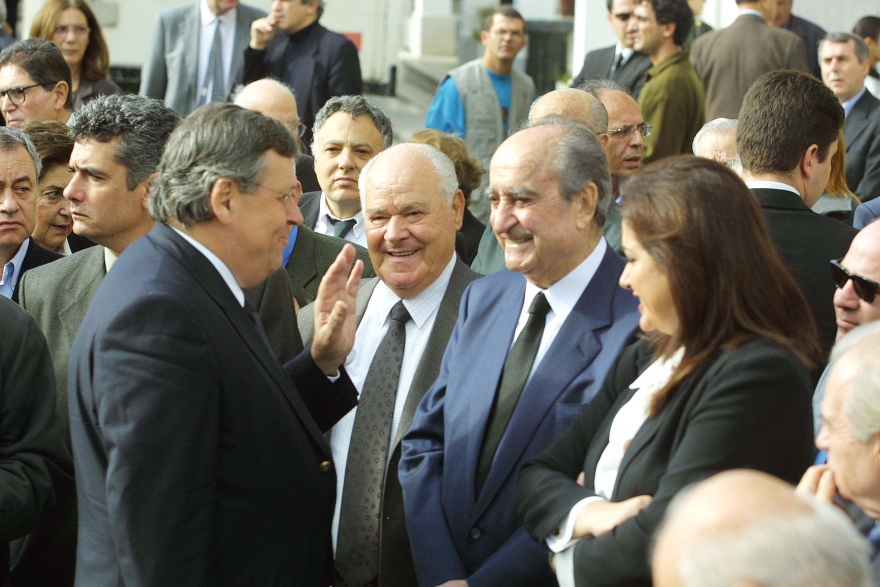
Liberal Politics and Electoral Campaigns
Manos consistently rejected political mediocrity and politicians who set low targets to avoid conflict with interest groups. He disputed the notion that politics is the art of the possible, declaring instead that politics is the art of making possible what currently seems impossible. He argued that deciding in advance that something is impossible serves as a standard excuse to do nothing.
In 1993, Manos intended to run for the New Democracy leadership to represent its liberal wing, later noting that he refrained because he lacked sex appeal. Following growing internal friction, Kostas Karamanlis expelled him from the party in 1998. In 1999, Manos founded The Liberals, known as the Bulls due to their emblem, under the slogan calling for citizens rather than clients. After failing to win seats in the 1999 European elections, the party formed an electoral alliance with New Democracy in 2000, returning Manos to parliament.
In 2004, Manos and fellow liberal Andreas Andrianopoulos joined an electoral alliance with George Papandreou's PASOK, securing seats on the State list alongside former Synaspismos politician Maria Damanaki. In 2009, Manos cofounded the party DRASI with Giannis Boutaris and Vasilis Kontogiannopoulos. DRASI ran in the second 2012 election alongside Thanos Tzimeros's Recreate Greece after unification talks with Dora Bakoyannis's Democratic Alliance failed, leaving both movements short of the 3 percent parliamentary threshold. Manos described himself as an anti-statist who favored individual freedom over state decisions, stating he could never place himself on a traditional left right spectrum.