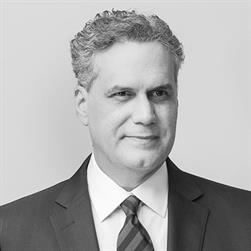
Spanish commentator Julián Cabrera accused Prime Minister Pedro Sánchez's administration of surrendering strategic advantage to Morocco by accepting exceptional border status for Ceuta.
Writing in an analysis published on August 27, 2026, Cabrera argued that international bodies increasingly view Ceuta and Melilla as cases of special delicacy, scoring a key victory for Rabat's long-standing territorial claims.
Cabrera noted that Spain and Morocco operate under vastly different political timelines regarding the enclaves. While democratic governments in Madrid remain bound by short-term electoral cycles, the Alawite monarchy in Rabat acts without party political constraints and uses time to advance its strategic goals.
Moroccan annexation strategy and Spanish government response
The strategy from Rabat involves introducing exceptional circumstances around Ceuta to force future negotiations over the sovereignty of Spain's North African enclaves. Cabrera criticized Moncloa, alongside the Ministry of the Interior and the Ministry of Foreign Affairs, for accepting these exceptional conditions with Franciscan patience and summer apathy.
That passive stance has led the European Union to demand that the Spanish government prevent thousands of people who entered Ceuta illegally from being transferred to the Iberian peninsula. The presence of thousands of migrants roaming the streets of Ceuta, combined with European restrictions on mainland transfers, has established an unprecedented exceptionality over part of a European Union member state.
Royal visit concerns and comparison to Paiporta
Cabrera also criticized Moncloa for failing to schedule an official visit to Ceuta by King Felipe VI. He emphasized that the local population is suffering under the crisis and would benefit from the presence of their head of state, comparing the situation to the monarch's visit to Paiporta following tragic flood disasters.
If the King does not travel to Ceuta, Spain will effectively be surrendering its position in the region, Cabrera warned.
Background on Spain's North African territories
Ceuta and Melilla are autonomous Spanish cities situated on the northern coast of Africa, sharing land borders with Morocco. They have been integral parts of Spain for centuries, though Morocco continuously asserts territorial claims over both enclaves. Under the Spanish constitution, King Felipe VI serves as the head of state and symbol of national unity.