


Jordi Marti, a technical architect, lecturer and science communicator, has warned that the dark green awnings found on balconies across Spain can trap significant heat right outside a home's windows, even though they are meant to block the sun.
Marti raised the issue in a video posted on TikTok. He said the fabric of many awnings absorbs a large share of solar radiation and heats up considerably as a result.
According to Marti, when a dark awning sits too close to a facade with little air circulation, the heated fabric releases that energy into its immediate surroundings. Part of it dissipates into the street, while part reaches the window through radiation and through hot air that builds up underneath the canopy.
Like a radiator by the window
Marti's comparison was deliberately vivid: a very hot awning behaves like a heat source placed directly in front of the window opening. Even so, he said the overall effect is usually still better than leaving a window fully exposed to the sun, because the awning stops direct radiation from passing through the glass and heating floors, furniture and interior walls.
He cautioned against assuming a plain shade is doing its job well just because it exists, noting that any exterior shade positioned correctly tends to reduce the radiation reaching the glass, but some fabrics make far better use of that first line of defence than others.
A white awning is not the full answer
The obvious fix might seem to be swapping a green awning for a white one. A lighter surface reflects more radiation and heats up less, but a thin or only partially opaque fabric can still let some light through.
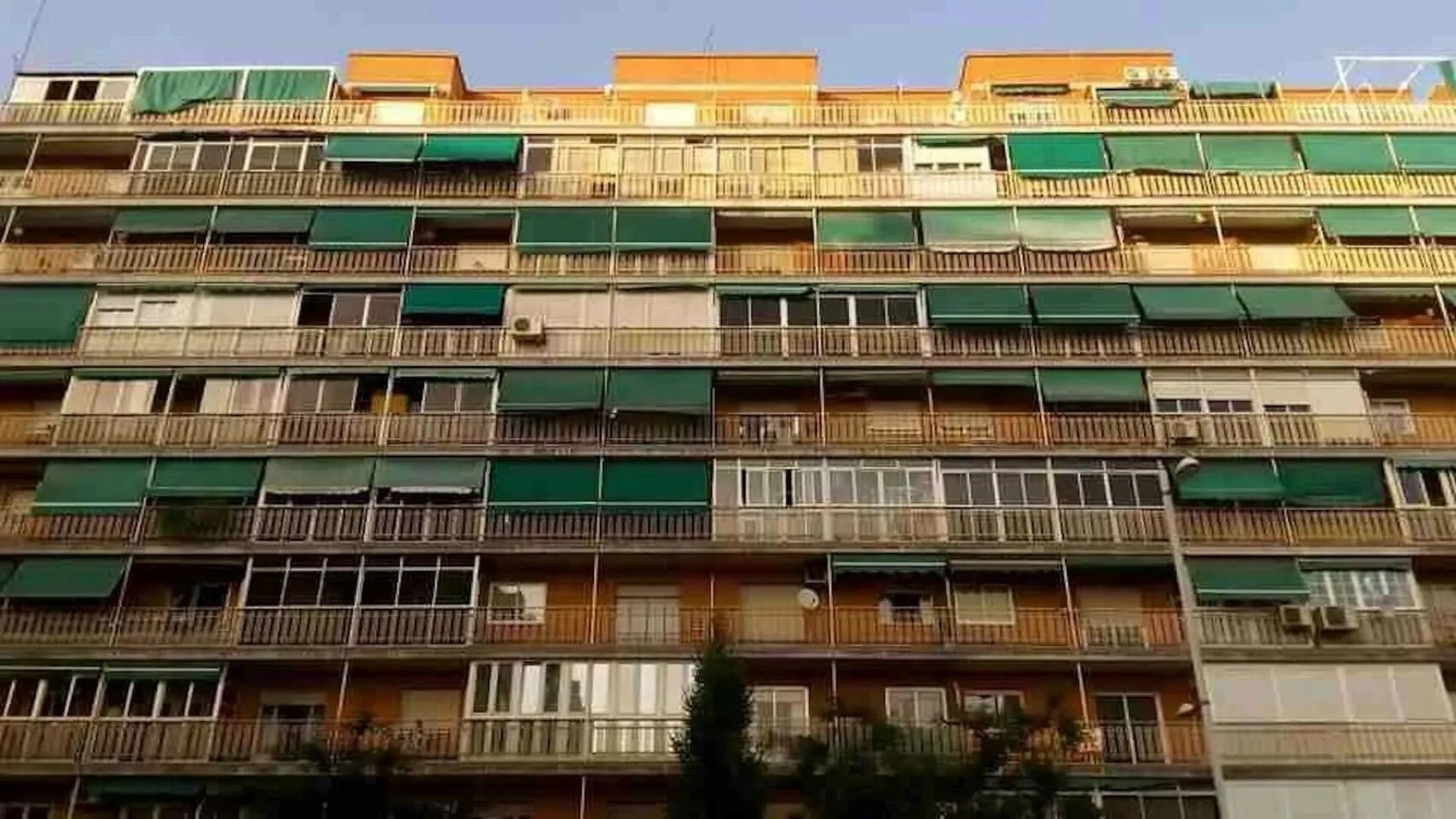
For that reason, Marti argued that awnings would work much better if they were reflective on their upper, sun-facing side, and warned that colour alone does not reveal how well a fabric performs overall.
The better design, according to research
The solution Marti presented draws on studies by architect and researcher Hubertus Poppinghaus into textile shading structures in Spain. The most effective design combines a light or reflective outer face turned toward the sun with a darker inner face facing the ground.
The reflective side sends back much of the incoming radiation, while the dark underside limits glare that could otherwise bounce toward people, the facade or the interior of the home. Where the two layers are separated, air circulating between them also helps carry away accumulated heat.
Marti said the density and opacity of the fabric, its distance from the window, its angle and the gap left for hot air to escape are all important factors. An outer awning that casts shade over the whole window is especially useful on east- and west-facing facades, where the sun strikes at a low angle and horizontal overhangs offer weaker protection.
What to check before buying a new awning
Before purchasing a new awning, Marti recommends checking the fabric's technical specifications rather than relying on the colour sample alone. Protection against solar radiation, light transmission, weather resistance and the ability to ventilate underneath the canopy are more useful indicators than a generic label such as "thermal awning."
How the awning is used day to day also matters, he said. Extending it before the sun reaches the window stops the interior from heating up in the first place, while lowering it only after the glass and the room have already warmed has a much more limited effect. Marti said this is consistent with other advice for protecting a home during the hottest hours of the day and for ventilating only once the outdoor temperature has dropped.
No need to remove existing awnings
Marti concluded that there is no need to immediately tear down an existing green awning, since it remains a useful shield against the sun. The improvement, he said, lies in preventing that protection from turning into a very hot canopy pressed against the glass, and in choosing, when the time comes to replace it, a system that is opaque, reflective on top, dark underneath and well ventilated.



