Japanese watchmaker Seiko is expanding its iconic Prospex Speedtimer sports watch family with four new vintage-inspired automatic models arriving in Spain in September 2026.
The new releases draw aesthetic inspiration from classic Seiko chronographs of the 1970s, combining retro styling with contemporary mechanical movements, scratch-resistant sapphire crystal glass, and two distinct case sizes.
Seiko, founded in Tokyo in 1881, introduced the original Speedtimer line in 1969 as one of the world's first automatic chronographs. The Prospex designation, short for professional specifications, represents the brand's dedicated line of sports timepieces built for demanding environments on land, at sea, and in the air.
The updated collection is divided into two distinct pairs designed to offer different wrist proportions and mechanical capabilities. The HBD001 and HBD002 models are 42-millimetre automatic chronographs, while the HBC003 and HBC004 models feature a smaller 39.5-millimetre case size without chronograph functions to deliver a longer power reserve.
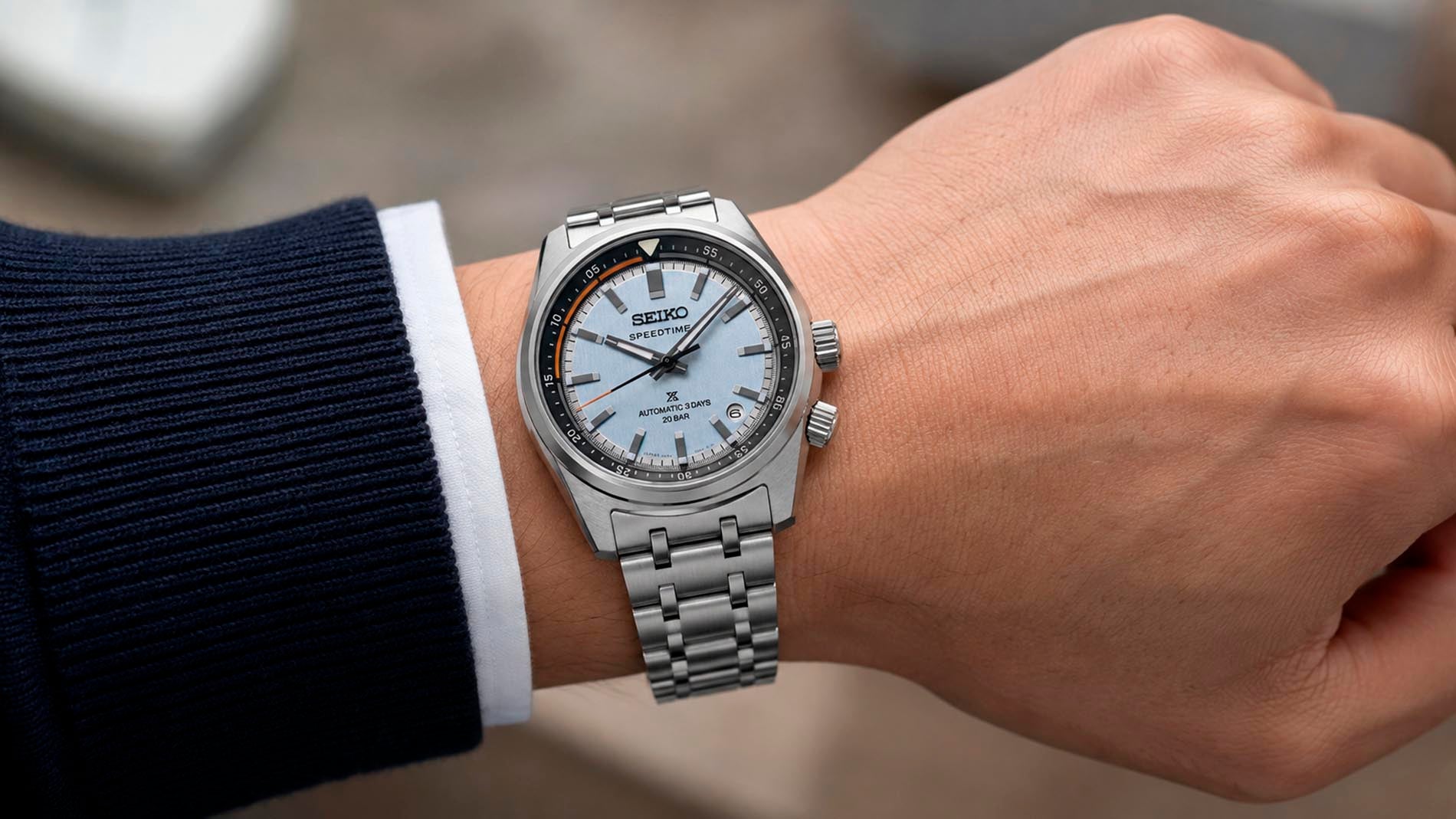
Seiko Prospex Speedtimer 1972 chronograph models
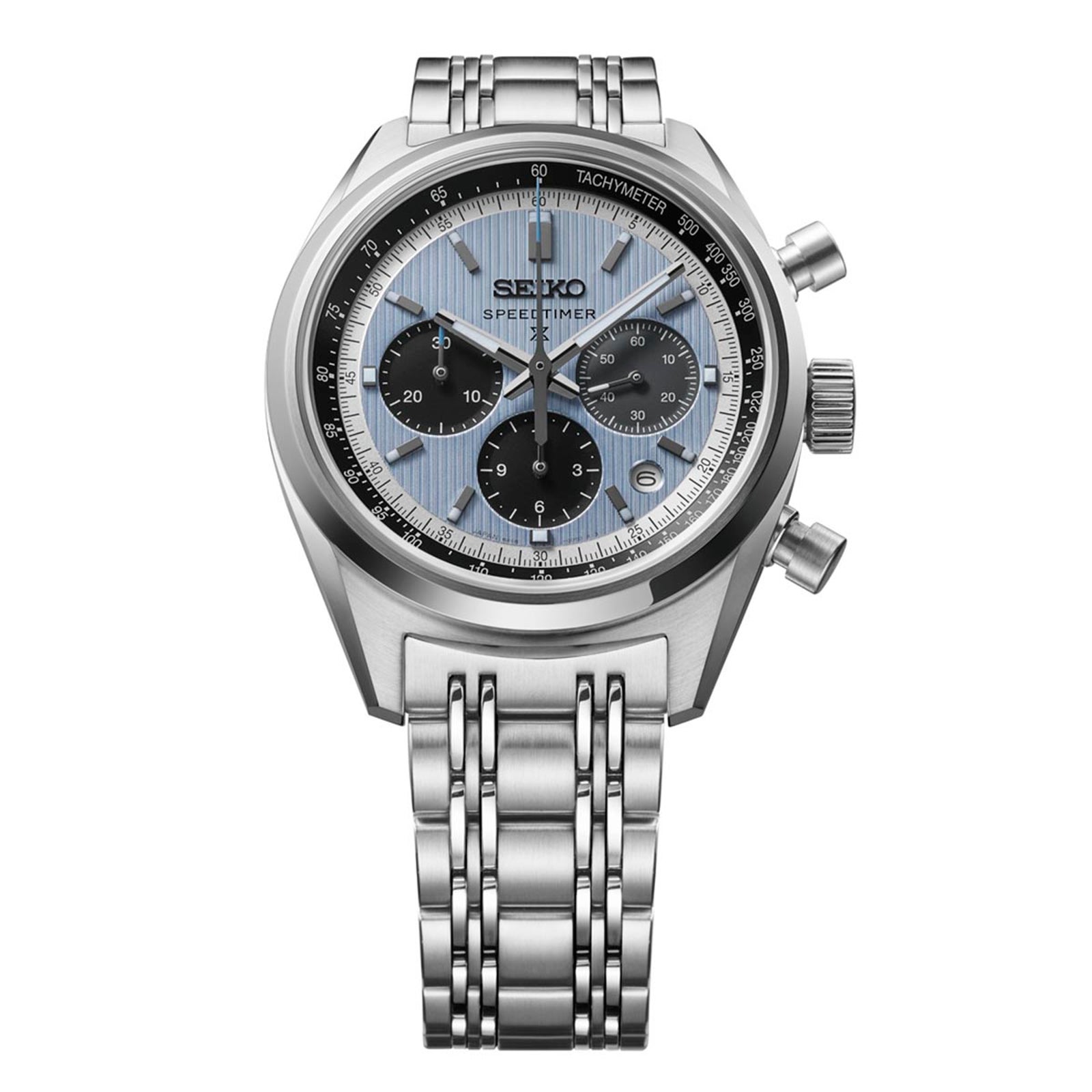
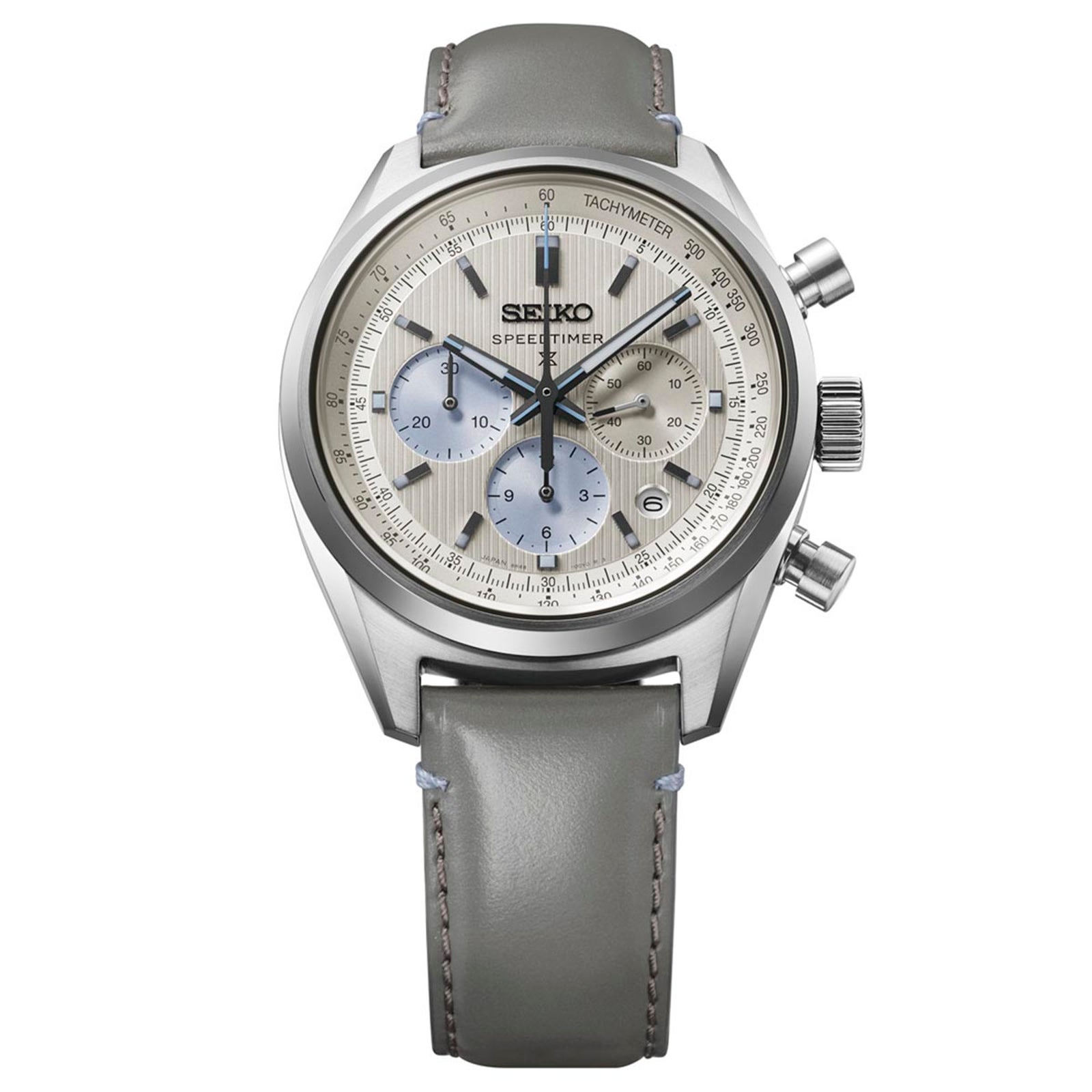
The HBD001 and HBD002 represent the largest and most premium models in the new lineup. Both watches feature a 42-millimetre stainless steel case with a super-hardened coating, measuring 14.6 millimetres in thickness, and offer water resistance equivalent to a pressure of 100 metres depth.
Powering both chronographs is the internal Seiko calibre 8R48 automatic movement, which operates at a frequency of 28,800 oscillations per hour. The movement provides approximately 45 hours of power reserve, supports manual hand-winding, and integrates a chronograph stopwatch, a date display window, and a tachymeter scale for speed calculation over a measured distance.
Visual distinctions differentiate the two 42-millimetre variants. The HBD001 combines a light blue dial with dark sub-dial counters and a stainless steel bracelet. The HBD002 features a silver dial accented with subtle blue details and is paired with a grey leather strap. Seiko designed both references with direct inspiration from its classic 1972 Speedtimer chronographs.
Compact Speedtimer models with extended power reserve
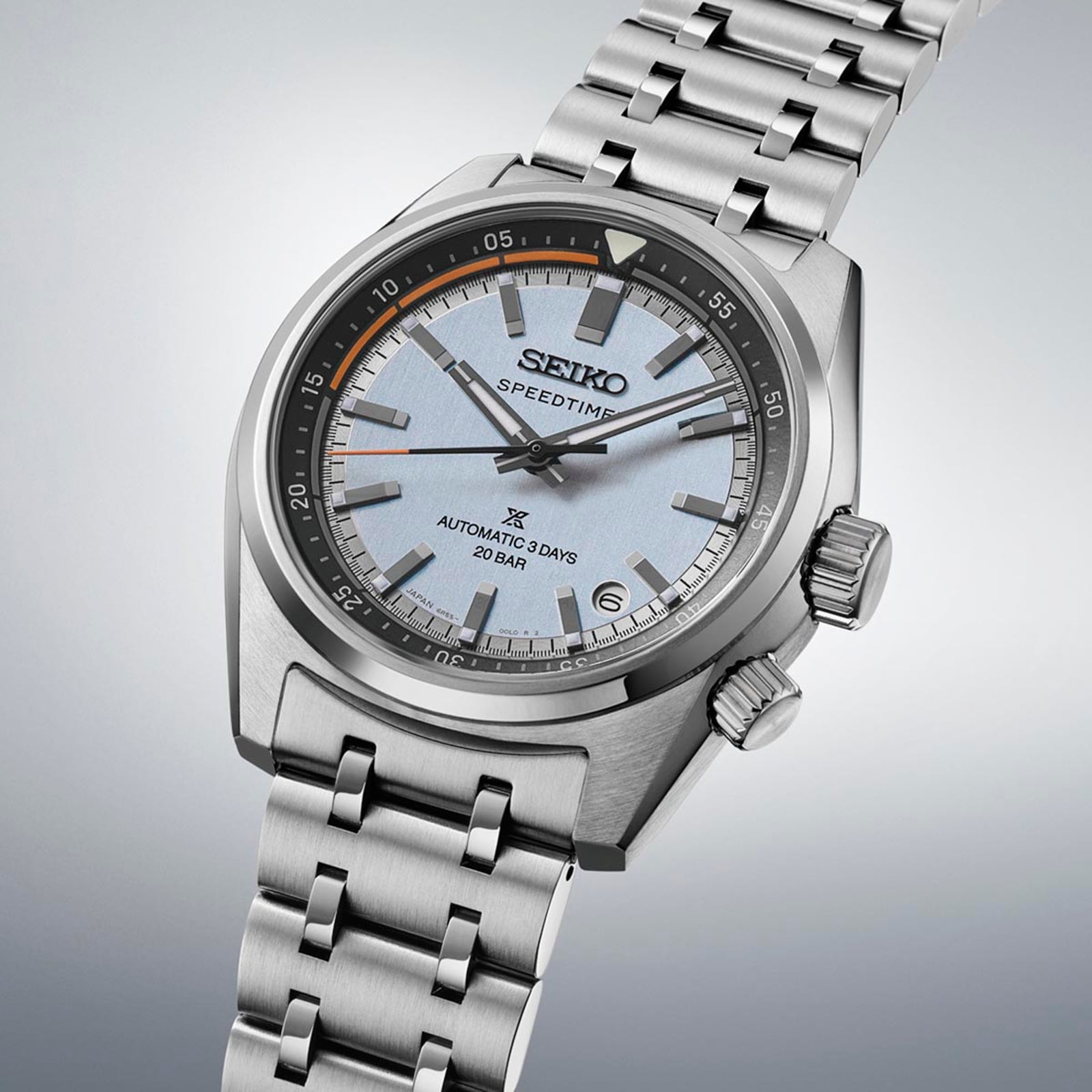
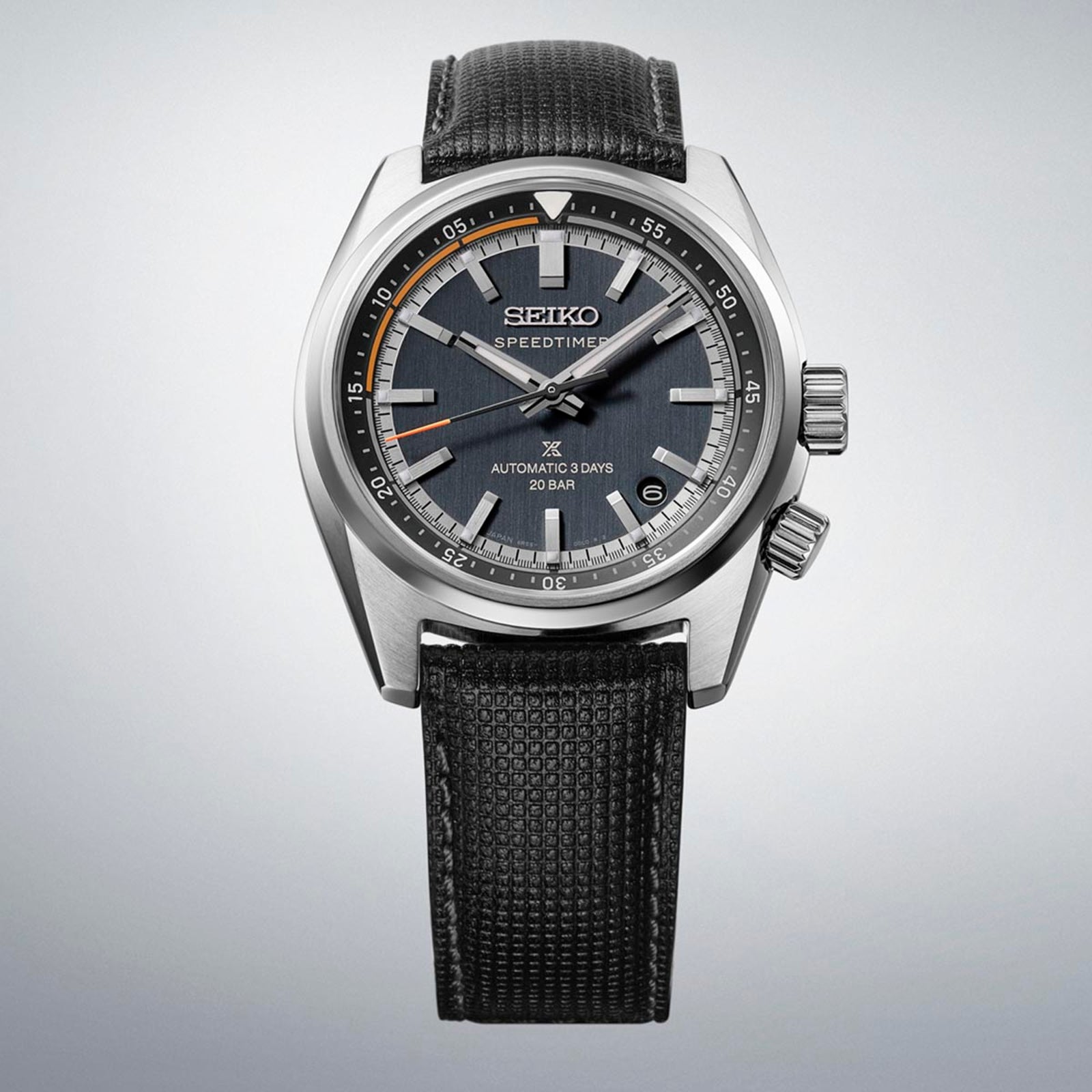
The HBC003 and HBC004 take a significantly different design approach by prioritizing compact dimensions and extended mechanical endurance. These models reduce the case diameter to 39.5 millimetres and thickness to 12 millimetres, while increasing water resistance to 200 metres.
Inside the compact models, Seiko has housed the calibre 6R55 automatic movement, which runs at 21,600 oscillations per hour and yields a power reserve of approximately 72 hours. The three-day power reserve ensures that a wearer can take the watch off on Friday evening and find it fully operational when putting it back on Monday morning.
Instead of chronograph pushers, these models incorporate an internal rotating countdown bezel controlled via a dedicated second crown at the case side. The HBC003 features a light blue dial with orange accents and a metal bracelet, while the HBC004 pairs a dark grey dial with a leather strap.
Mechanical movement heritage and market position
All four references form part of Seiko's regular production catalog rather than limited edition runs. Pricing in Spain reflects the mechanical complexity of each pair, with the HBD001 listed at 2,900 euros and the HBD002 at 2,800 euros. The compact three-day models are offered at 1,050 euros for the HBC003 and 1,000 euros for the HBC004.
The releases mark a continued emphasis by Seiko on traditional mechanical watchmaking across its sports catalog. The launch follows earlier additions to the brand's automatic lineup in recent months, which similarly featured battery-free mechanical movements operating at 21,600 oscillations per hour.
While positioned above entry-level timepieces, the dual-tier collection provides buyers with a choice between larger wrist presence with active timing features and a slimmer profile paired with weekend-long autonomy. All four Prospex Speedtimer models will be available through retail channels in Spain during September 2026.