Luís Bento, the head of the general emergency department at São José Hospital in Lisbon, has submitted his resignation due to severe bed shortages and staff deficits that have left patients waiting for hours to be admitted to hospital wards. The decision comes after the central Lisbon facility faced intense patient pressure during the first half of August, leaving dozens of patients stranded in emergency observation areas.
Between August 1 and August 16, the general emergency department of the Central Lisbon Local Health Unit, known as ULS Lisboa Central, recorded more than 6,500 patient episodes. That figure represents an increase of more than 500 emergency visits compared to the same period in 2025. For an entire week, the emergency service at São José Hospital handled more than 400 admissions each day.
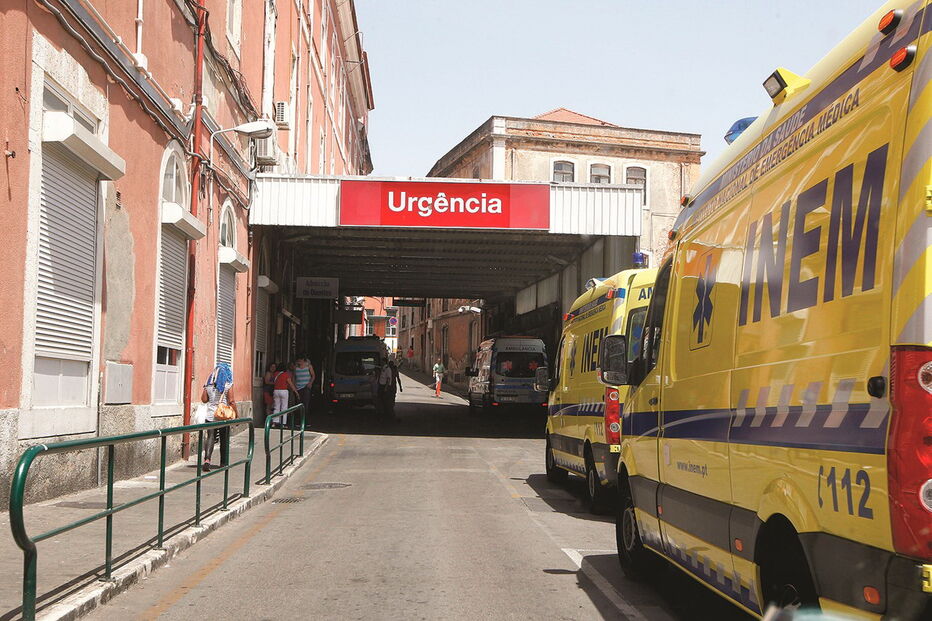
Luís Bento described the situation at the facility as unsustainable, stating, as reported by Portuguese newspaper Expresso, that current conditions are neither human nor dignified. He pointed to a critical shortage of hospital beds and human resources needed to guarantee ward admissions as the primary factors forcing patients to remain stuck in emergency units.
By 5:00 PM on Tuesday, the emergency department at São José Hospital had nearly 100 patients under observation. The average length of stay in the department exceeded 12 hours for patients classified as very urgent, while those classified as urgent faced average wait times of nearly 10 hours. In a parallel development within ULS Lisboa Central, Catarina Pereira, the head of the Internal Medicine service, also tendered her resignation, citing a shortage of doctors and nurses as the main difficulty facing her department.
Pressure across the national health system
The overcrowding at São José Hospital reflects a broader surge in pressure across Portugal's public healthcare framework, the National Health Service, known locally as the Serviço Nacional de Saúde or SNS. In recent weeks, emergency departments across the country have experienced heavy patient volume, particularly in the Lisbon and Tagus Valley region and the southern Algarve region, which experiences high seasonal demand during the summer months.
Across the entire SNS network at 5:00 PM on Tuesday, 1,325 patients were waiting for their initial medical examination following triage. Patient wait queues were particularly concentrated at Garcia de Orta Hospital in Almada, where 81 people were waiting post-triage, as well as Faro Hospital in the Algarve with 74 patients waiting, and Braga Hospital in northern Portugal with 72 patients waiting.
Wait times reached critical levels at several regional facilities. At Faro Hospital, patients assigned a green wristband for less urgent cases waited five hours and 42 minutes for medical attention. At Leiria Hospital, patients given a yellow wristband for urgent cases faced wait times of five hours and 33 minutes. Meanwhile, thousands of other patients remained under observation inside hospital wards across Portugal, including 149 at the Coimbra University Hospitals, 125 at Santa Maria Hospital in Lisbon, and 114 at Leiria Hospital.
Debate over emergency services and leadership
The crisis in hospital emergency rooms coincides with ongoing debates over national pre-hospital care. On Tuesday, the Order of Nurses, Portugal's professional regulatory body for nursing staff, rejected claims that a new operational model defined for the National Institute of Medical Emergency, known as INEM, deprives the system of resources. Luís Filipe Barreira, the president of the Order of Nurses, maintained that the updated structure allows medical teams to deliver specialized care more rapidly to individuals in life-threatening situations, calling it the model that best protects the public.
Hospital administration leaders have also raised concerns regarding governance instability across public health trusts. Xavier Barreto, the president of the Portuguese Association of Hospital Administrators, warned that prolonged uncertainty surrounding the leadership of Local Health Units across Portugal threatens institutional management. He noted that unclear leadership structures risk damaging strategic planning, hindering project continuity, and undermining long-term organizational capacity.
Regional outbreaks and medical updates
Healthcare providers are also dealing with localized health emergencies outside mainland Portugal. On the island of Faial in the Azores autonomous region, hundreds of residents have sought emergency care at Horta Hospital after exhibiting symptoms of gastroenteritis. Armando Faria, the health delegate for Faial, stated that health authorities are awaiting laboratory test results to identify the biological agent responsible for the outbreak.
In northern Portugal, facility managers at a hospital in Valongo encountered operational challenges after a swarm of fruit flies infested the unit's hemodialysis room, raising hygiene and sanitation concerns in the specialized care area.
On the policy front, the Portuguese government issued a formal directive reminding public hospitals of their statutory obligations regarding voluntary termination of pregnancy, known as IVG. Ministers warned health institutions that they are legally required to guarantee access to abortion procedures within prescribed legal timeframes and must directly absorb all associated medical costs.
In environmental health developments in central Portugal, local authorities in Oliveira do Hospital reported progress in pest control, confirming that environmental teams have eliminated 241 nests of the invasive Asian hornet, scientifically known as vespa velutina, since the beginning of the year.
New rules for subsidized prescriptions
Alongside emergency room operations, the Portuguese government announced revised regulations governing free prescription medications for low-income senior citizens receiving the Solidarity Supplement for the Elderly, known as the CSI program. The new rules, designed to encourage the use of generic drugs and limit state expenditure to reference prices, will take effect in two months.
Under the updated framework, subsidized prescription drugs belonging to a homogeneous generic group will receive maximum state coverage of 100 percent based on the reference price, or the actual retail price if lower than the reference price. For prescriptions where no generic equivalent exists, maximum coverage will be calculated using generic pricing baselines. State coverage for CSI beneficiaries stood at 50 percent until 2024, when the current government expanded subsidy levels to 100 percent. More than 220,000 elderly residents in Portugal benefited from fully subsidized medications this year.