The Portuguese government has clarified rules allowing hospital emergency doctors and mobile medical crews to more than double their base salary through overtime payments. The clarification on Monday specifies that hours worked in hospital emergency rooms and aboard emergency medical vehicles count towards legal overtime thresholds.
Under the decree-law regulating extra pay beyond annual legal limits, medical professionals can earn bonuses ranging from 45 percent to 85.5 percent of their base wage. The annual legal limit for overtime is set at 250 hours for doctors working under the full dedication regime and 150 hours for all other medical staff.
The exceptional regime calculates additional pay in consecutive 48-hour blocks to encourage predictable emergency shift rosters. The first 48-hour block provides a 45 percent salary increase, rising incrementally to between 47.5 percent and 56 percent for the second through fifth blocks. Payments reach between 59.5 percent and 75.5 percent for the sixth to ninth blocks, and 85.5 percent for the tenth block and beyond.
Doctors receive a further 20 percent enhancement if they complete at least 48 hours on a Saturday or Sunday during an eight-week reference period and agree to work a new 48-hour block. With the weekend bonus applied, a doctor completing 10 or more blocks of 48 hours can earn up to 102.6 percent of their base salary, effectively doubling their income.
The National Institute of Medical Emergency, known as INEM, manages pre-hospital emergency medical care across mainland Portugal. Its Emergency and Resuscitation Medical Vehicles, known as VMER units, deploy specialized doctor and nurse teams to deliver rapid advanced life support at emergency scenes.
Hospital budget limits and locum spending
To control healthcare spending, the government specified that hospital expenses incurred on these overtime payments must be offset by 120 percent through reductions in spending on contract locum doctors. Public health facilities have relied heavily on temporary service providers to fill shifts in understaffed departments.
Since the beginning of the year, doctors across Portugal have accumulated more than 4.5 million hours in overtime and locum work. This extra labor has cost the National Health Service over 192 million euros, with more than 3,500 doctors already exceeding their legal annual limit of overtime hours.
Portugal created its National Health Service, or SNS, in 1979 to provide state-funded healthcare to all residents. Hospital administration across the country has faced ongoing challenges maintaining full staffing coverage in emergency rooms without exceeding overtime caps.
Algarve hospital computer failure
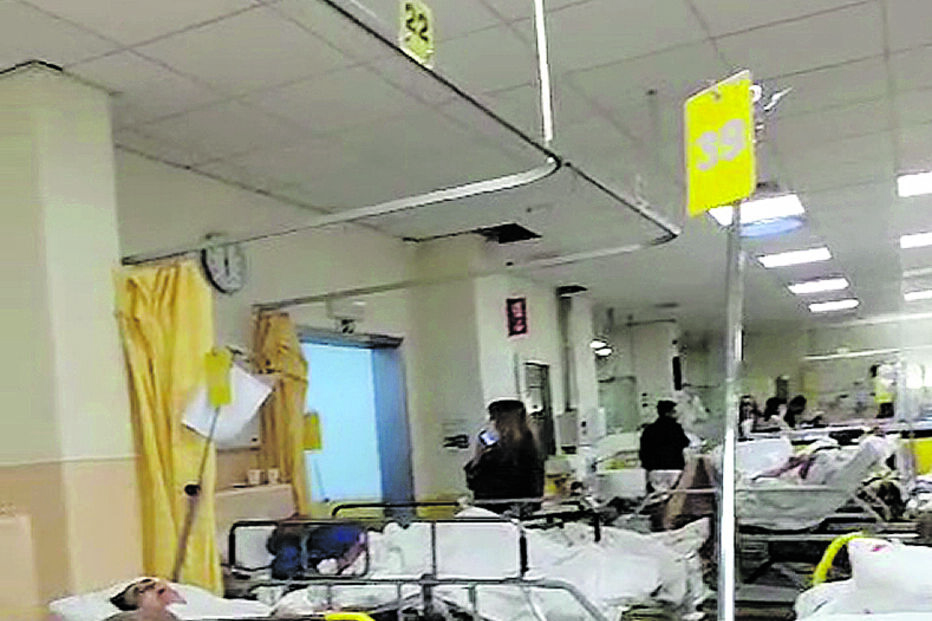
In a separate disruption to emergency services, computer system glitches at the Algarve Local Health Unit affected patient wait time data at hospitals in Faro and Portimão on Saturday. At one point, system monitors incorrectly displayed a wait time of 17 hours for a patient classified as very urgent.
Across the National Health Service emergency network, more than 1,400 patients were waiting for an initial medical consultation following triage at 4:00 p.m. on Sunday. At Faro Hospital, patients classified as non-urgent faced wait times of two hours and 26 minutes.
The Algarve Local Health Unit, known as ULS Algarve, oversees public healthcare provision across the southern coastal region of Portugal. Faro Hospital serves as the primary regional trauma center, while Portimão Hospital handles care for the western Algarve district.
Wider medical sector developments
The operational update follows several other developments across the Portuguese medical sector. Doctors have welcomed the postponement of a new digital access system for scheduling consultations and surgical procedures.
Meanwhile, the Portuguese Medical Association, the Ordem dos Médicos, reaffirmed the essential responsibility of physicians in monitoring pregnancy care. Medical representatives have also requested a comprehensive national evaluation of hospital building resilience to withstand potential earthquakes.