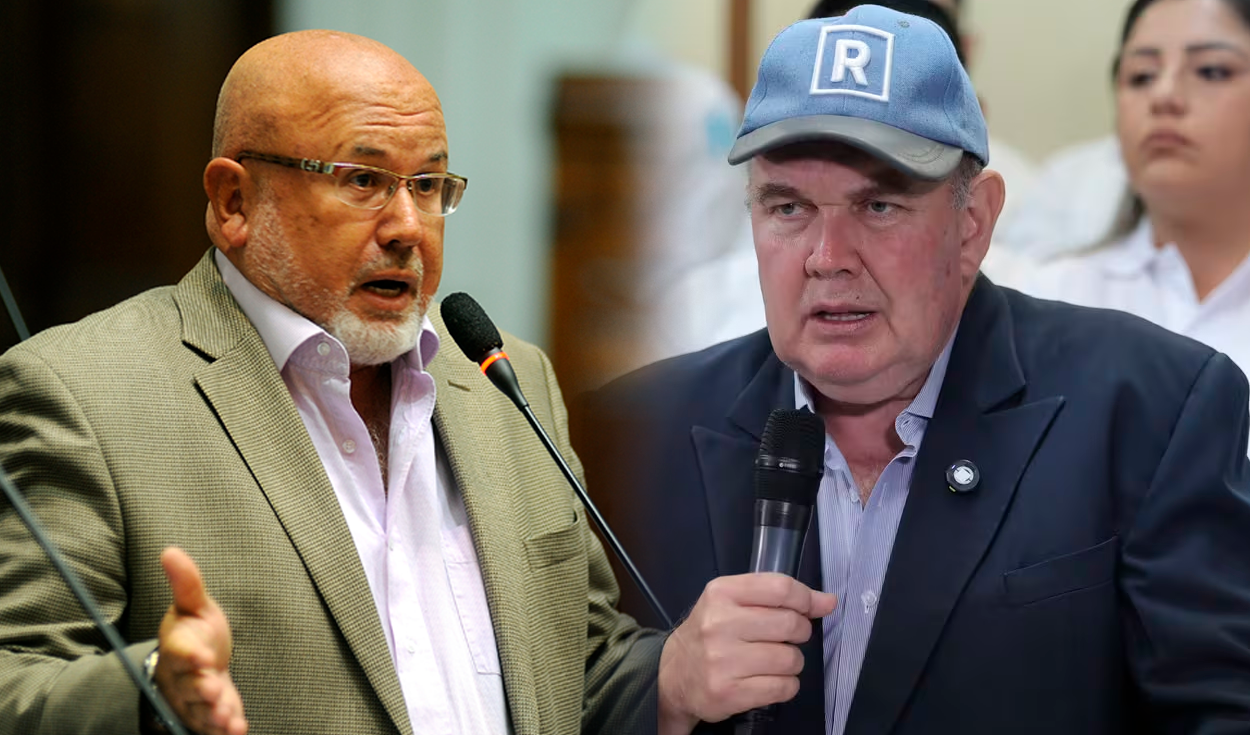
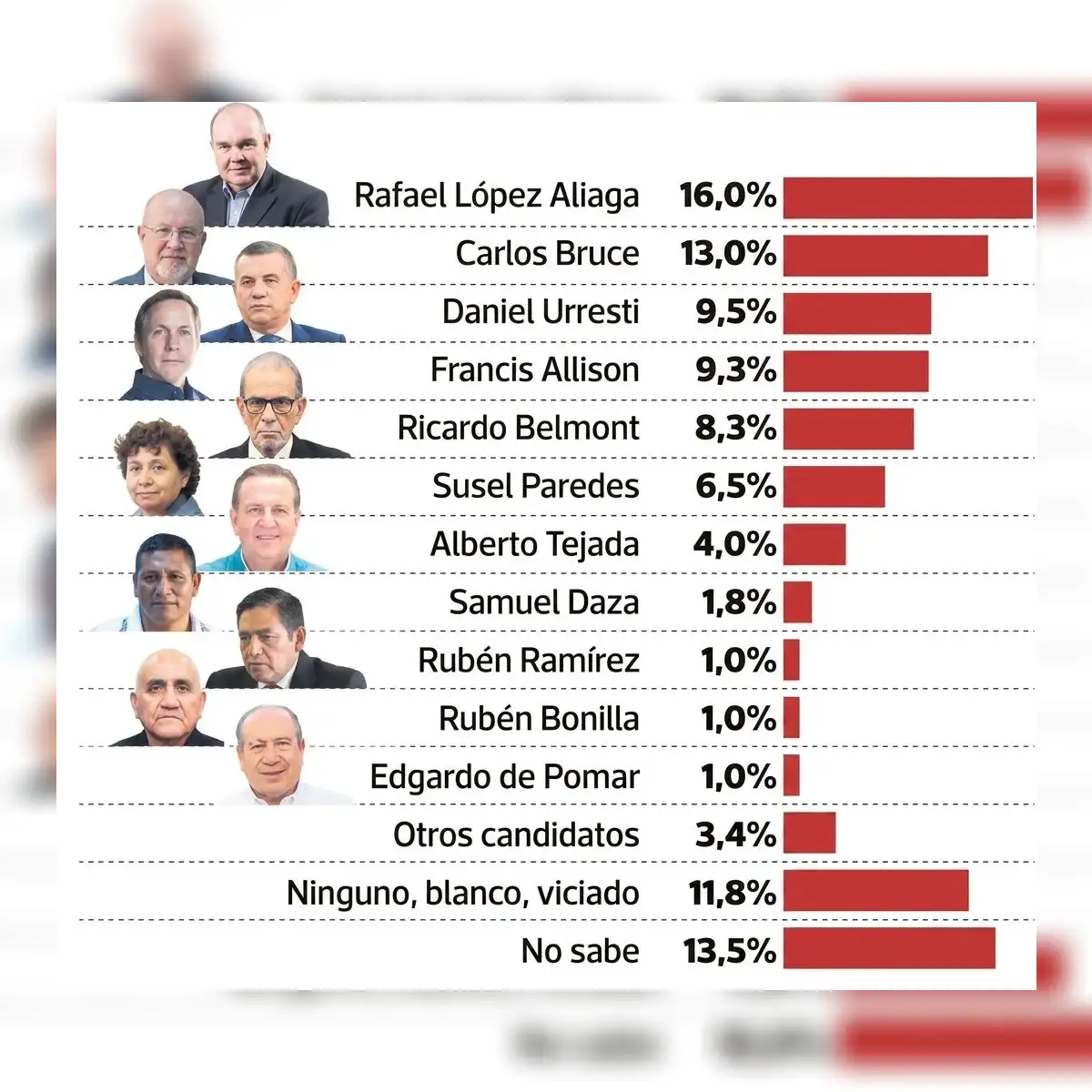
Rafael López Aliaga leads the Lima mayoral election with 16 percent of voting intention, holding a three-point advantage over rival candidate Carlos Bruce, according to the latest survey by Datum Internacional.
The poll, broadcast on Sunday by América Televisión on the investigative program Cuarto Poder, shows López Aliaga taking top spot for Renovación Popular just seven weeks before Peru's regional and municipal elections. Bruce, the current mayor of Santiago de Surco and candidate for Somos Perú, sits in second place with 13 percent.
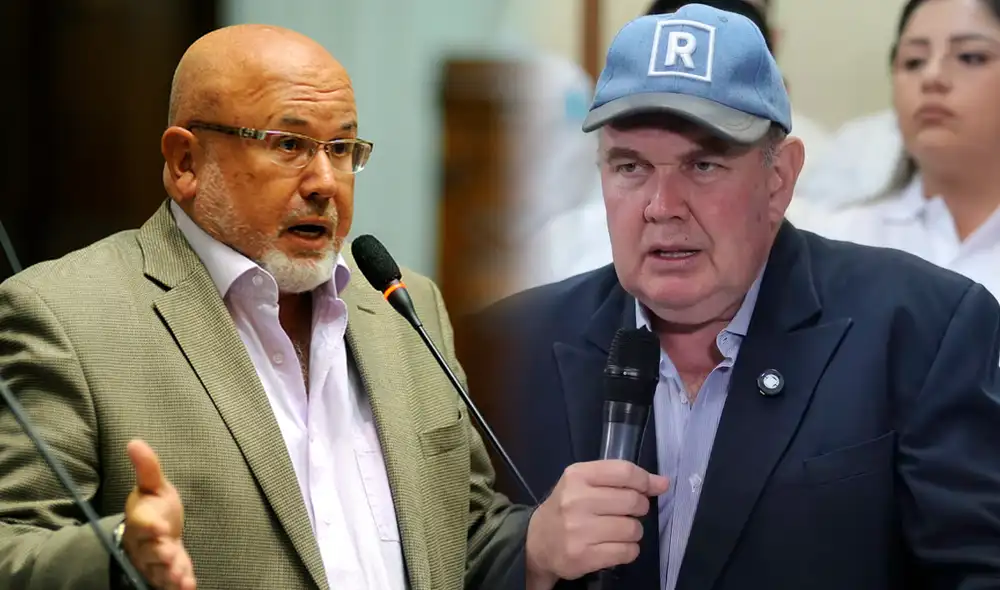
Former minister Daniel Urresti of Podemos Perú ranks third with 9.5 percent, closely followed by Francis Allison of Avanza País at 9.3 percent. Former mayor Ricardo Belmont of the Obras movement completes the first group of main contenders with 8.3 percent.
The election will determine who governs Metropolitan Lima, the capital city of Peru and home to more than 10 million residents. The mayoral office oversees major municipal services, public transit infrastructure, and urban administration across the metropolis.
Renovación Popular candidate substitution
López Aliaga jumped to the front of the municipal contest following the resignation of physician Luis Rubio from the Renovación Popular ticket. Rubio recorded 7.5 percent voting intention in July and was not among the main candidates before announcing his decision to step aside.
López Aliaga, a prominent businessman who ran for president and the Senate earlier this year, was elected to the upper house of Congress in national voting. However, he subsequently surrendered his legislative credentials, a request formally accepted by the National Jury of Elections (JNE), Peru's national electoral authority.
To navigate constitutional rules that prohibit sitting municipal mayors from seeking immediate reelection to consecutive terms, López Aliaga registered as the candidate for deputy mayor on the municipal ticket.
The Datum survey asked citizens about the motives behind Rubio's exit, finding that 60 percent of respondents believe the doctor withdrew specifically to clear the way for López Aliaga to head the municipal list. Meanwhile, 21 percent said they did not know the reason, and only 19 percent believed Rubio resigned for personal reasons, which was the explanation he provided when announcing his exit.
Geographical distribution of voter support
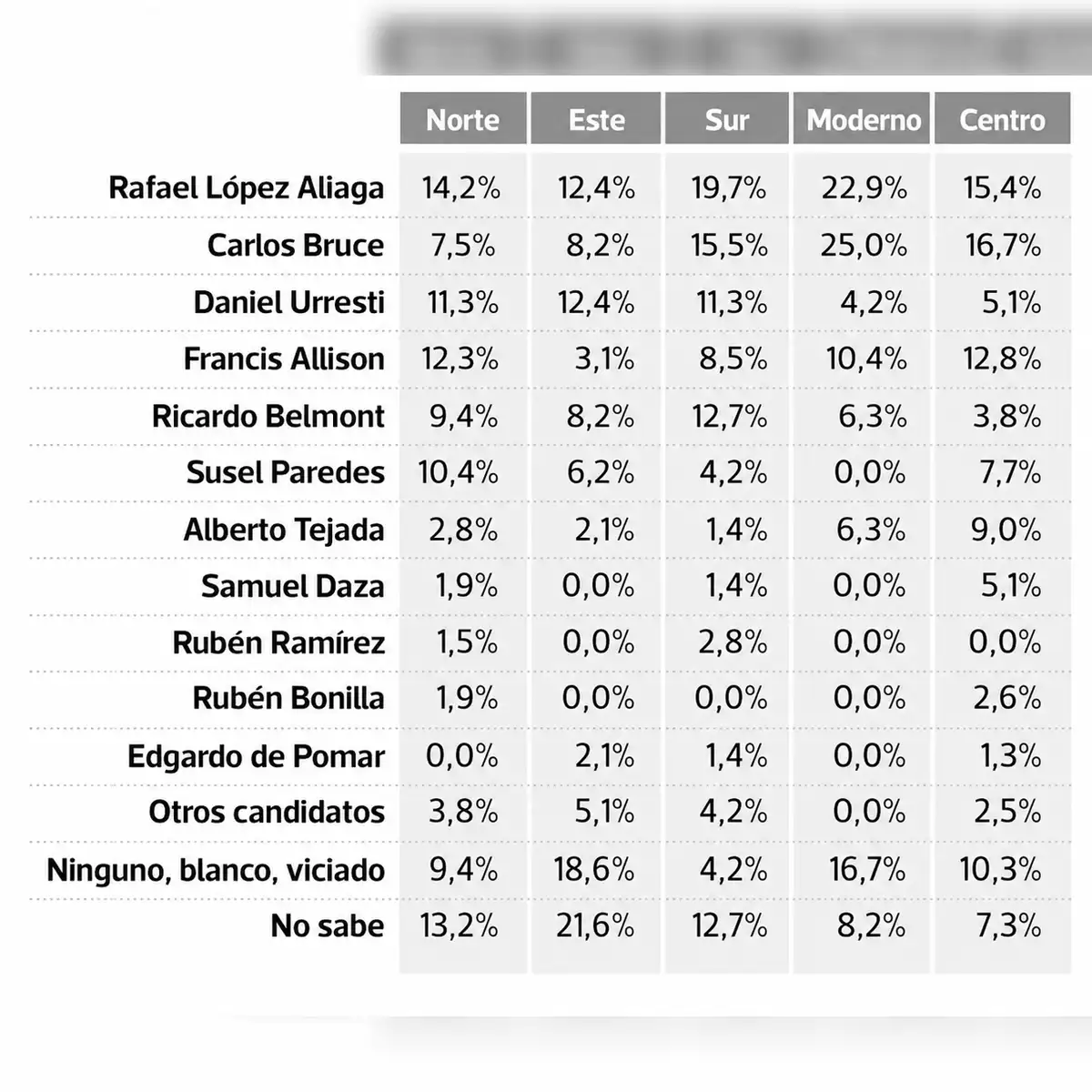
The survey reveals distinct territorial patterns across Metropolitan Lima's major geographic zones. López Aliaga achieves his highest voting intention in Modern Lima, a central zone of middle-and high-income districts, where he reaches 22.9 percent. He follows with 19.7 percent in South Lima, while recording his lowest support in East Lima at 12.4 percent.
Bruce, a former housing minister who currently serves as mayor of Surco, also draws his strongest backing from Modern Lima, leading there with 25 percent. He secures 16.7 percent in Central Lima and 15.5 percent in South Lima, but drops to 7.5 percent in North Lima and 8.2 percent in East Lima.
In the second group of contenders, Susel Paredes of Ahora Nación holds 6.5 percent of voting intention. She is followed by former health minister and former San Borja mayor Alberto Tejada, candidate for Acción Popular, who registers 4 percent.
Ancón mayor Samuel Daza, running for Fuerza Popular, stands at 1.8 percent, while Edgardo del Pomar of the Christian People's Party (PPC) receives 1 percent.
Reduction in undecided and blank votes
The Datum study indicates a shrinking number of uncommitted voters as election day approaches. Blank and spoiled votes dropped to 11.8 percent from 15.3 percent recorded in July.
The proportion of undecided voters also fell, moving to 13.5 percent from 16.3 percent the previous month. Electoral analysts note that this remaining uncommitted electorate represents a key decision-making group that could alter the final results during the remaining seven weeks of the campaign.
Reelection controversy and legal objections
Bruce has publicly expressed his rejection of López Aliaga's candidacy, describing his entry into the mayoral race as an alleged violation of the Constitution. Bruce argued that the constitutional prohibition on immediate reelection is explicitly laid down in the supreme law, and questioned why electoral tribunals have failed to uphold the constitutional mandate.
Bruce stated that the prohibition on reelection is established in the Constitution, adding that the electoral board believes it should not defend the Constitution because it considers that duty to belong to Congress.
The legal controversy arises because López Aliaga was elected Mayor of Lima in the previous elections for a term intended to end in 2026. He resigned from the office to participate in presidential elections, and after failing to advance to a second round runoff and subsequently winning election to the Senate, he surrendered that legislative post to attempt a return to the Lima Municipality.
In separate parliamentary developments reported alongside the poll, the congressional administration led by Fernando Rospigliosi implemented a 15 percent salary increase for all workers in the Congress of the Republic.