Radio Liberty journalists Serhiy Naboka, Leonid Milyavsky and Svitlana Ryaboshapka operated an unofficial news bureau from a Kyiv apartment during the final years of the Soviet Union. The reporting team broadcast key events leading to Ukrainian independence directly to listeners across the region from 1989 until 1991.
The Munich-based broadcaster launched its Ukrainian service on August 16, 1954. Its opening program declared that the station would speak to and for compatriots who lacked freedom, a democratic press or free radio in their homeland, adding that while Ukraine had sacrificed greatly in fighting communism, God would reward the nation for its suffering.
Soviet General Secretary Mikhail Gorbachev ordered an end to 35 years of continuous jamming of Radio Liberty on November 29, 1988, as part of his policy of perestroika and glasnost. While jamming of the Voice of America had ended a year earlier and experienced temporary pauses during previous international detente, Soviet authorities had jammed Radio Liberty continuously throughout the Cold War. Listeners previously relied on shortwave radio sets at night or outside major cities to hear the broadcasts over noise known as KGB jazz.

In 1989, British journalist and political scientist Bohdan Nahaylo assumed leadership of Radio Liberty's Ukrainian service in Munich and decided to establish an unofficial presence in Kyiv. Naboka led the initial reporting team alongside Milyavsky and Ryaboshapka.
Naboka and Milyavsky brought dissident backgrounds to the radio service, having both served three-year prison sentences in the early 1980s. Milyavsky noted that their convictions fell under a Soviet law prohibiting the dissemination of fabrications defaming the Soviet state, which carried a lighter maximum sentence than anti-Soviet agitation charges. Milyavsky's wife Lesya Lokhvytska and Naboka's wife Inna Chernyavska had also served prison terms. All members of the 1989 reporting team belonged to the Ukrainian Helsinki Group, formed by human rights activists after the Soviet Union signed the 1975 Helsinki Final Act.

Cold War Listening and Early Bureau Operations
Both Milyavsky and Ryaboshapka had listened to foreign radio broadcasts since childhood. Milyavsky recalled listening to Radio Liberty's Ukrainian and Russian services, the Voice of America, the BBC, Deutsche Welle, and the Polish service of Radio Free Europe, through which he learned Polish following the 1968 Soviet invasion of Czechoslovakia. Ryaboshapka said her parents regularly tuned to Western stations using a Baltic-made shortwave receiver.

The journalists conducted their work under constant surveillance by Soviet authorities. Ryaboshapka said the team maintained professional standards despite knowing they were watched by security services, while Milyavsky explained that their prior imprisonment removed any fear as momentum grew toward independence.

Radio Liberty established a network of regional correspondents across Ukraine to support the Kyiv bureau. Ukrainian-speaking journalist Anatoliy Dotsenko received telephone reports in Moscow from regional correspondents and transmitted them to Munich headquarters. The regional network included Hennadiy Sakharov in Dnipropetrovsk, Mariya Oliynyk in Donetsk, Hanna Stetsiv in Lviv, Ihor Stolyarov in Odesa, and Volodymyr Prytula and Tetyana Korobova in Crimea. Journalist Vitaliy Portnikov began collaborating with the service in 1990. Nahaylo noted that provincial journalists faced substantial risks due to greater vulnerability to local authorities.


The news operation initially functioned out of the apartment of Milyavsky and Lokhvytska at 4 Yerevan Street before moving to a rented five-storey brick Khrushchevka apartment building at 11 Rybalska Street, near Lesya Ukrainka Boulevard and St. Vvedensky Monastery. Western visitors privately imported a fax machine without customs documentation to transmit press releases, while journalists dictated news dispatches over telephone lines. Direct outgoing calls from the Soviet Union to Western countries became possible in early 1991, leading to significant telephone expenses following morning editorial planning calls.

Police Raids and Political Interviews
During one police search at the Rybalska Street apartment, officers and a KGB major entered the premises. Munich editors phoned during the raid, enabling the correspondents to broadcast the search live while legal representatives from the People's Movement of Ukraine provided support over the line. When a police officer struggled to describe an electrical adapter for the property inventory, Ryaboshapka advised him to record the item as a black box of unknown purpose.
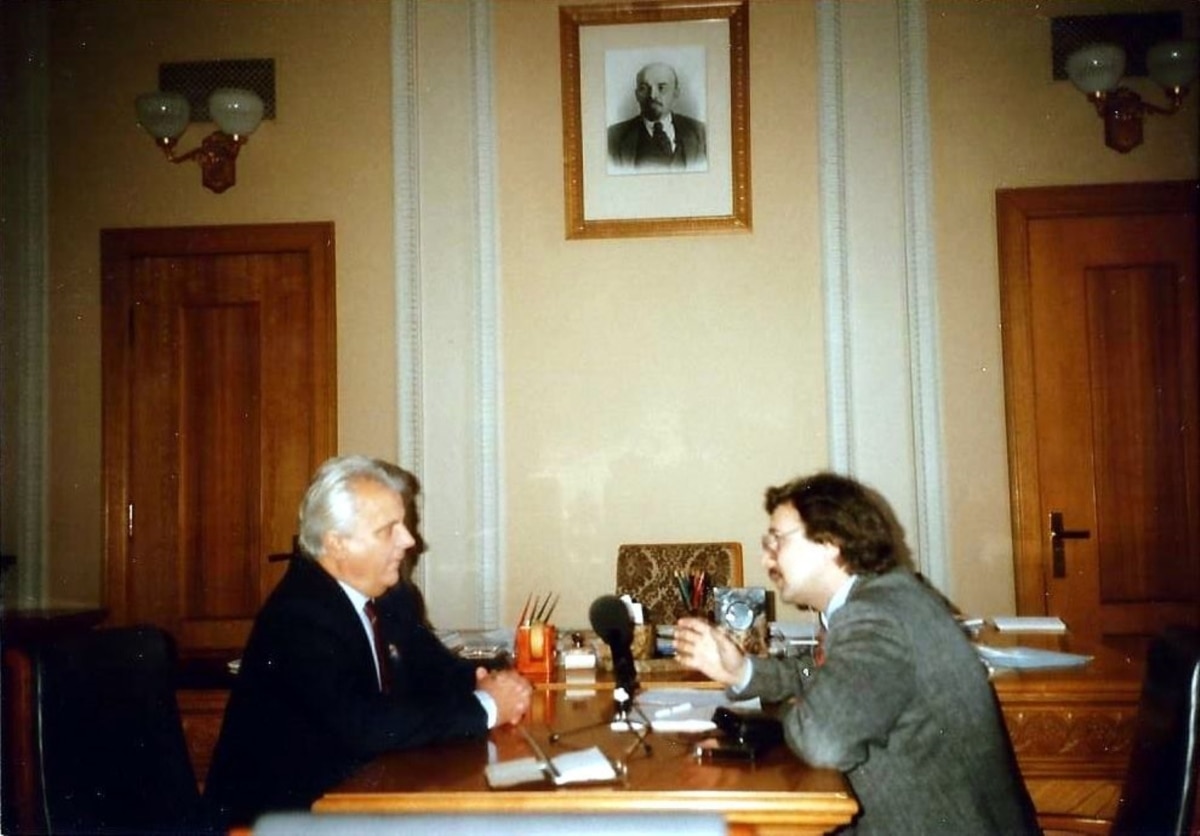
Following the passage of the Declaration of State Sovereignty of Ukraine by the Verkhovna Rada on July 16, 1990, Nahaylo visited Kyiv in June 1990 accompanied by representatives of the Society for Cultural Relations with Ukrainians Abroad. He returned in October 1990 during the Revolution on Granite student hunger strikes on October Revolution Square, now Maidan Nezalezhnosti.
On October 24, 1990, Nahaylo conducted the first unscripted interview granted to a foreign journalist by Leonid Kravchuk, then Chairman of the Verkhovna Rada of the Ukrainian SSR. Sitting under a portrait of Lenin, Kravchuk agreed to the opening of a Radio Liberty bureau. Nahaylo publicly announced the agreement at the second congress of the People's Movement of Ukraine, although official bureaucracy delayed formal legalization until August 24, 1991.
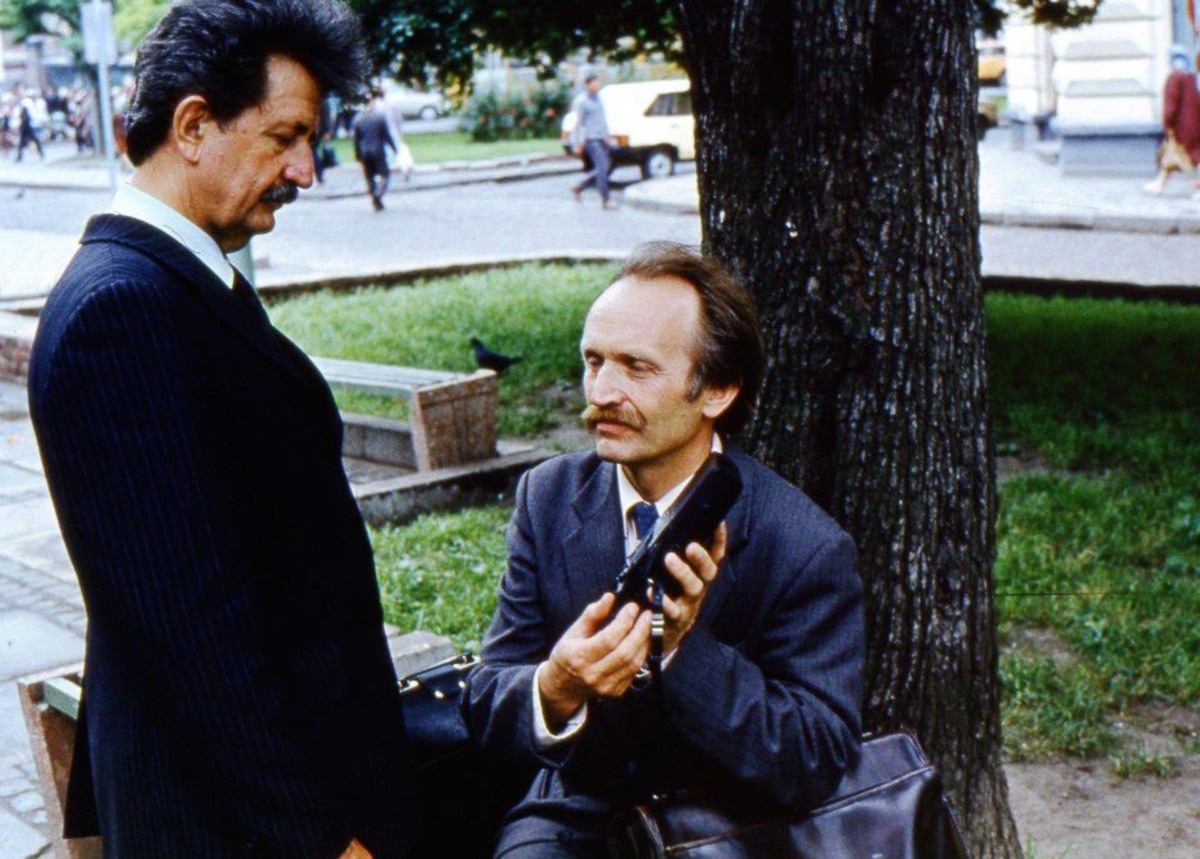
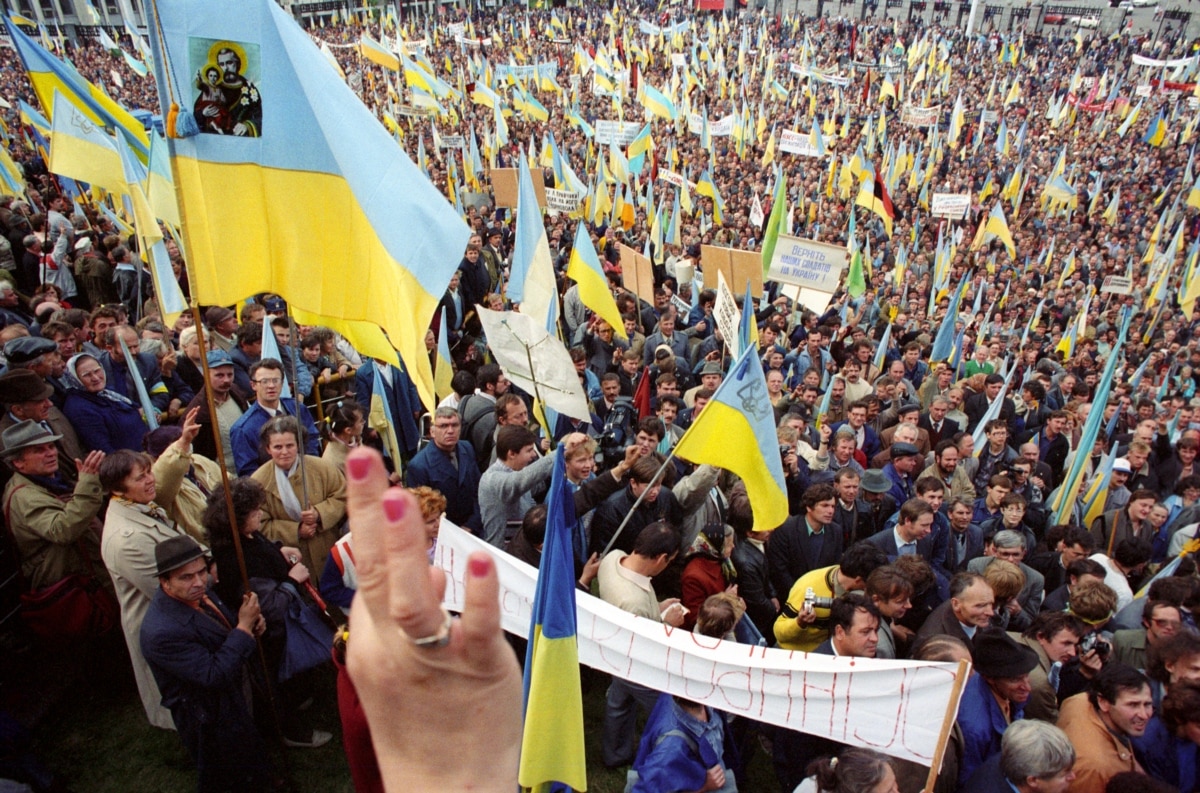
The bureau covered major political events, including congresses of the People's Movement of Ukraine and Prosvita, public rallies, the raising of blue-and-yellow national flags, the January 1990 human chain demonstration connecting Lviv and Kyiv, and the revival of the Ukrainian Autocephalous Orthodox Church and the Ukrainian Greek Catholic Church.

High-profile interviews helped establish the broadcaster's standing in Ukraine. An interview with writer Volodymyr Yavorivsky, a deputy of the Supreme Soviet of the USSR, marked the first time a union-level lawmaker spoke to a Western radio station. Subsequent interviewees included Kyiv district official Ivan Saliy, who later served as mayor of Kyiv, and singer Yosyf Kobzon, who spoke by telephone from Donetsk.

Reporting Independence and Official Bureau Launch
Following the failed hardline Soviet coup attempt on August 19, 1991, Radio Liberty mobilized full coverage for the extraordinary parliamentary session on Saturday, August 24, 1991. Correspondents reported simultaneously from the Verkhovna Rada building and the Rybalska Street apartment.

Seeking updates from Kyiv, Nahaylo phoned the apartment, where Ryaboshapka informed him that Kravchuk was submitting the Act of Declaration of Independence to a vote. She held the telephone receiver next to her television set to relay the audio. Nahaylo ran to the Munich studio and handed host Vasyl Darchuk a one-sentence news note confirming the declaration, which Darchuk read on air. In parliament, lawmakers including Larysa Skoryk, Serhiy Holovatyi, Ivan Zayets and Volodymyr Yavorivsky assembled in the main chamber as the independence act passed.

Ryaboshapka recalled feelings of joy and personal pride that the team's work had contributed to independence, while noting that journalists anticipated further challenges from the Soviet state. Radio Liberty officially opened its permanent bureau in the Ukrinform building on Lenin Street in central Kyiv on June 3, 1992, appointing Andriy Haydamakha as its first director. Roman Kupchinsky, who later succeeded Nahaylo as Ukrainian service director, noted the irony of an American news corporation operating on a street named after Lenin, before municipal authorities renamed the thoroughfare to Bohdan Khmelnytsky Street in 1993.