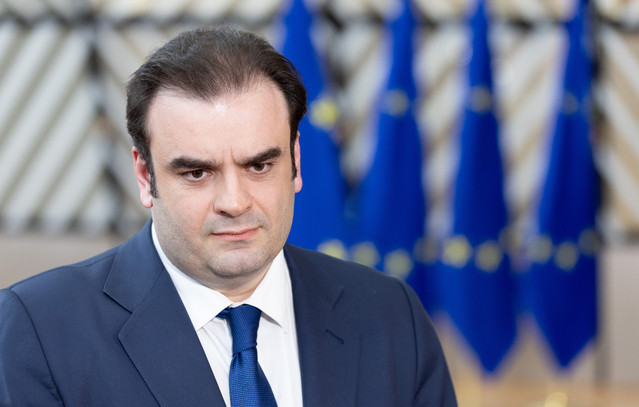
Greek Finance Minister and Eurogroup President Kyriakos Pierrakakis urged European nations to unite into a single strategic force at the sixth Thessaloniki Metropolitan Summit.
Speaking in a session titled Europe's imperative vision for a new growth leap, Pierrakakis stated that current geopolitical shifts mean the European Union can no longer afford to operate as twenty-seven separate national policies. He warned that member states must abandon inertia and move from managing immediate problems to shaping a clear strategic direction for the bloc.
Pierrakakis remarked that in today's geopolitical landscape, European countries do not have the luxury of remaining twenty-seven separate entities and must instead act as one. He highlighted that Russia's invasion of Ukraine, growing defense and security requirements, and the global technology race have fundamentally altered international conditions, requiring unified European answers.
The minister noted that member states are increasingly realizing the cost of non-Europe, which refers to the economic and social losses incurred when member countries fail to take collective action. The concept of the cost of non-Europe is widely used in European Union policy analysis to measure the benefits lost due to fragmented national markets and uncoordinated regulations.
The Eurogroup is the council of finance ministers from European Union member states that use the euro currency, responsible for overseeing shared monetary and fiscal policies. The Thessaloniki Metropolitan Summit is an annual economic conference held in Thessaloniki, the second-largest city in Greece, focusing on regional connectivity, economic development, and integration across south-east Europe.
Demands for Greater Integration and Speed
Pierrakakis stressed that modern political leadership must possess the speed, flexibility, and political will to address both accumulated problems and emerging threats. He observed that the future is accelerating much faster than in previous eras, requiring governments to avoid getting trapped in daily administrative management at the expense of long-term strategic planning.
Addressing economic policy, Pierrakakis pointed to critical unfinished tasks facing the bloc, including completing the single market, integrating capital markets, finalizing the banking union, and implementing a comprehensive digital strategy. However, he argued that past delays could be transformed into a growth advantage, as substantial scope remains for structural reforms capable of boosting European economic output.
The European single market guarantees the free movement of goods, services, capital, and people across all member states. The banking union and capital markets union are major ongoing European Union initiatives designed to create a unified financial sector, reduce market fragmentation across member countries, and make investment flow more easily across national borders.
Artificial Intelligence and Practical Solutions
Turning to technological developments, Pierrakakis described technological evolution and artificial intelligence as the great global race of the twenty-first century. He stated that Europe must decide which sectors it intends to lead and where it should choose to collaborate with other global powers. He added that artificial intelligence cannot be managed with tools from previous decades, as the speed of change rapidly surpasses the traditional operating methods of political and administrative systems.
The minister emphasized that European citizens require practical solutions that improve daily life rather than grand political declarations. As an example of effective implementation, he cited gov.gr, the central Greek public administration portal, which gained widespread public acceptance because citizens immediately perceived its practical usefulness.
The gov.gr platform serves as the central digital portal for public services in Greece, allowing citizens and businesses to complete administrative procedures online, streamlining interactions with state agencies and reducing bureaucratic delays.
Oxford Historian Urges Ambition
In the panel discussion, Peter Frankopan, Professor of Global History at the University of Oxford, argued that Europe needs to re-examine its geopolitical identity and operate with far greater ambition. Frankopan stressed that European institutions must take more risks, move faster, and think on a larger scale to remain competitive internationally.
Frankopan also highlighted the necessity of structural changes to European competition policy, arguing that rules must be updated so European businesses can effectively compete against global corporate giants.
The session concluded with a shared emphasis on preparing Europe for the major challenges expected over the coming decade. Both speakers highlighted technology, climate change, energy security, and geopolitical instability as the critical areas where European preparation and joint action will be essential leading up to 2030.