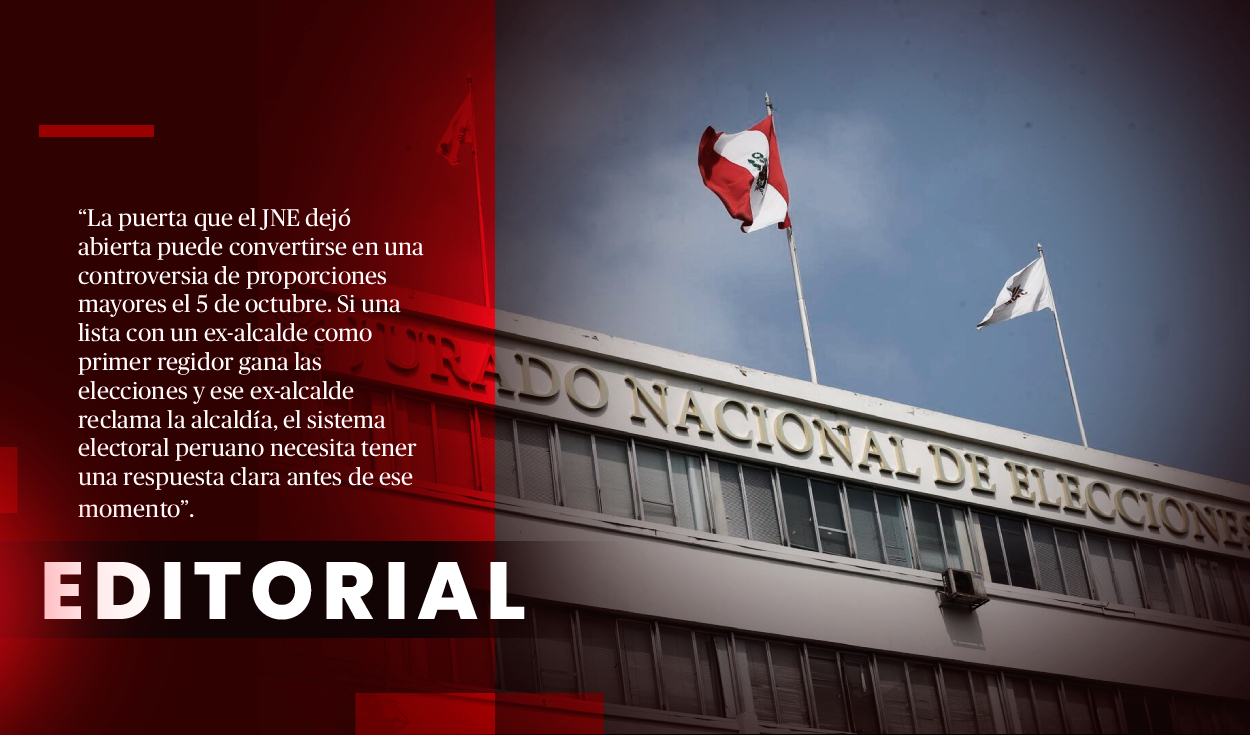
Peru's electoral authority, the Jurado Nacional de Elecciones (JNE), has ruled that a sitting mayor may run as first regidor, or deputy councilman, on a rival ticket, but has left open the far more consequential question of whether that person could then take over as mayor if the ticket wins, with just 23 days remaining before the October 4 municipal elections. The JNE is Peru's highest electoral authority and rules on disputes between candidates and parties.
The debate reflects a broader principle: democracies function on elections built around clear rules that every contender knows before the race begins. When electoral bodies interpret those rules in advance, voters can cast ballots with full knowledge of who they are choosing and what happens once the votes are counted. That clarity, the editorial argues, is the minimum condition for a transparent and legitimate election, and it is precisely what many Peruvians need resolved with urgency in the weeks before October 4.
Roberto Burneo, the head of the JNE, acknowledged that the board had not yet resolved the other controversial issue at stake, referring to whether a first regidor barred from immediate reelection could receive a mayor's credentials.
Why the succession question matters
Under Peru's constitution, mayors are barred from seeking immediate reelection. Peru's Organic Law of Municipalities states that if an elected mayor is removed or unable to serve, the first regidor automatically takes over the post. That rule creates a direct conflict if the first regidor on a winning ticket is a former mayor who cannot legally be reelected, since it would leave unclear whether he could still inherit the mayor's office through succession rather than election.
Fourteen political organizations have already asked the JNE for a binding ruling on the matter before the candidate debates scheduled for September 21 and September 22.
Risk of a post-election crisis
The editorial warns that leaving the question open could produce a far larger controversy after election day. If a ticket with a former mayor running as first regidor wins on October 4 and that person then claims the mayor's office, Peru's electoral system would need a clear answer before October 5 to avoid a dispute. Resolving the issue in advance, the piece argues, protects the legitimacy of the vote and the candidates themselves, while resolving it afterward, amid legal challenges, would do far greater damage to an institutional system Peru needs to strengthen.
The JNE has the authority and the responsibility to rule on the matter soon, according to the editorial.