Peru must maintain a balanced foreign policy and avoid aligning with either the United States or China, international relations scholar Oscar Vidarte warned.
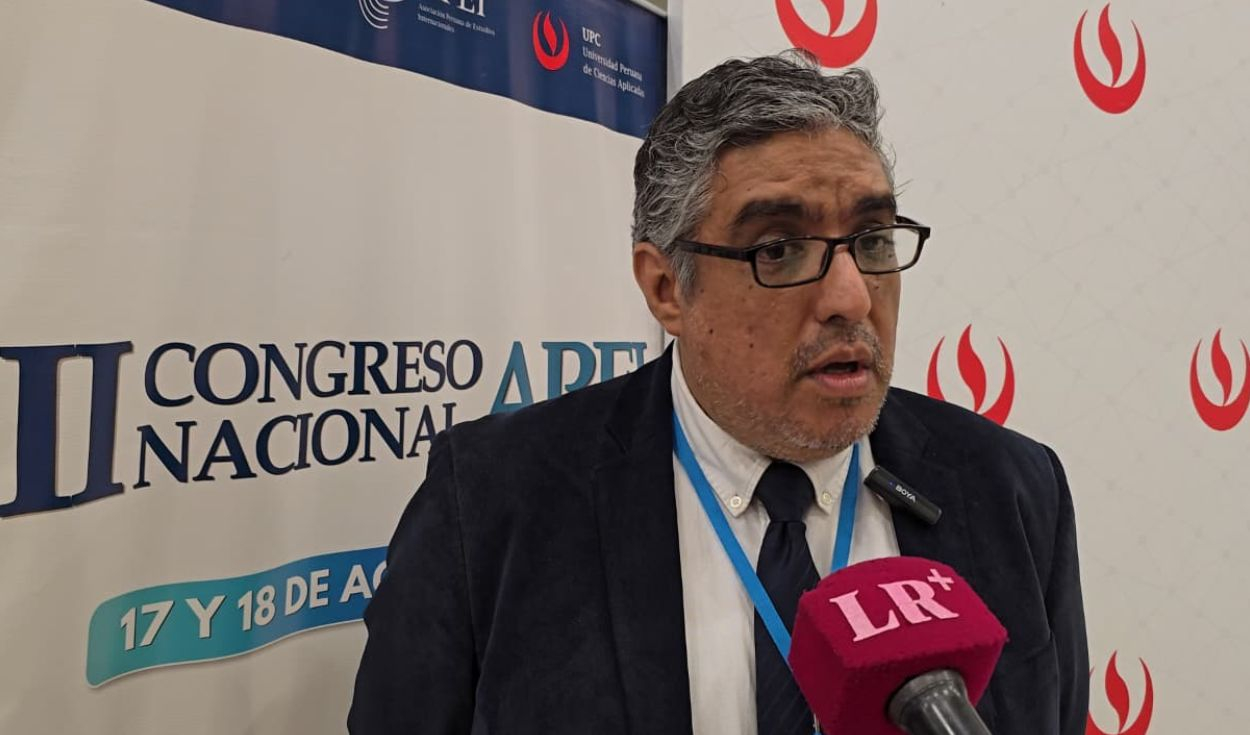
Speaking after the second National Congress of the Peruvian Association of International Studies, held on August 17 and 18 at the Peruvian University of Applied Sciences in Lima, Vidarte stated that Peru needs to recover an active strategy of non-alignment between the two global superpowers.
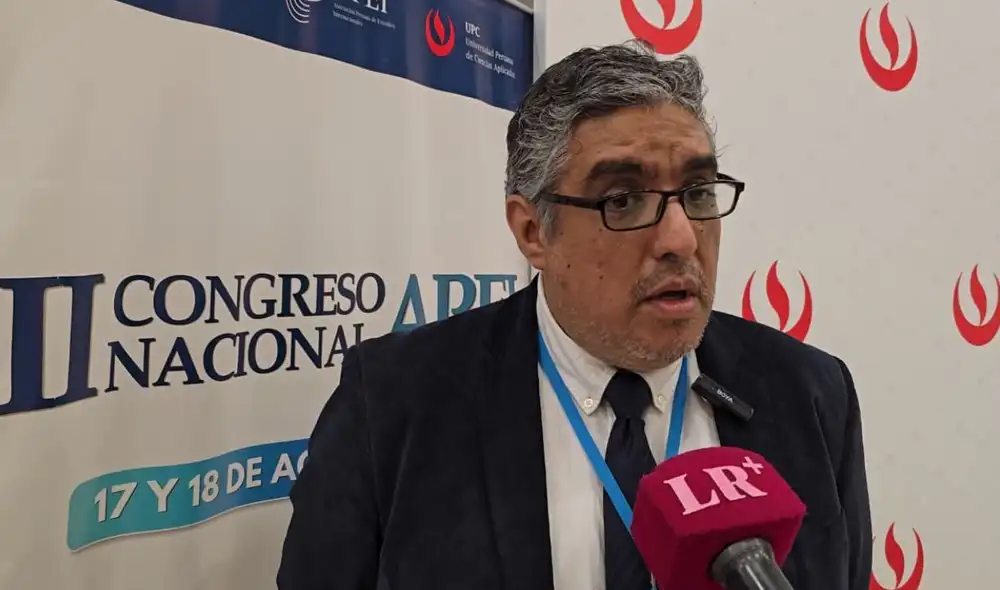
Vidarte, who serves as president of the academic association known as APEI, explained in an interview with La Republica that both Washington and Beijing represent essential partners for Peru. He emphasized that the South American nation's relationship with China should not be viewed strictly through an economic lens.
The two day academic conference brought together scholars, specialists, industry professionals, graduates and students interested in international affairs. Over the course of the gathering, participants held more than 22 panel discussions and roundtables featuring over 95 individual presentations.
Featured international participants included Michael Shifter of Georgetown University and Jose Briceno from the National Autonomous University of Mexico. The congress also hosted a dedicated panel with representatives from the newly created Center for Global and Strategic Studies, a specialized unit within Peru's Ministry of Foreign Affairs.
Vidarte noted that academic forums of this nature are essential during a turbulent international era marked by ongoing wars, severe crises, human rights violations and emerging opportunities for state level cooperation.
Superpower competition and the Chancay megaport
Reflecting on Peru's diplomatic history, Vidarte pointed out that the country previously maintained robust ties with multiple global powers simultaneously. Foreign policy experts have variously described this balanced approach as hedging, strategic ambiguity, active neutrality or active non-alignment.
He stressed that recovering this equilibrium is vital for Peru given its standing in the international arena. In his assessment, the country must avoid committing to either side in the escalating rivalry for global dominance between the United States and China.
China's economic and political influence in Peru has expanded significantly in recent years, highlighted by major investments such as the deepwater megaport in Chancay. Located north of Lima on Peru's Pacific coastline, the Chancay project has drawn global attention to Beijing's growing presence in South America.
Vidarte argued that Peru should strengthen its ties with China while preserving its strategic relationship with the United States. He explained that Peru should reach out one hand to Washington, another to Beijing, and extend additional hands toward other nations across the globe.
The future trajectory of Peruvian foreign policy will depend in part on how the competition for world hegemony between Washington and Beijing evolves, Vidarte observed. He urged Peruvian policymakers to leverage the nation's position within a multipolar world order to broaden its international partnerships.
Security challenges and transnational crime
With the arrival of a new administration, cabinet and leadership at Peru's Foreign Ministry, Vidarte identified several pressing challenges facing Peruvian diplomacy. Chief among them is tackling transnational criminal networks through international security cooperation.
Vidarte stressed that no single nation can defeat organized crime on its own, making collaborative efforts with other states essential. While noting the current Peruvian government's proposal to establish security cooperation mechanisms with neighboring regional countries and the United States, Vidarte expressed doubts about whether that framework is necessarily the best option.
He cautioned that government officials must carefully evaluate how any new security initiative is implemented before moving forward. Beyond law enforcement, Vidarte argued that international cooperation must extend to other urgent items on the global agenda.
Global agenda, trade blocs and citizens abroad
The political scientist asserted that Peruvian foreign policy must prioritize key global concerns, including the conflict in the Middle East, human rights protection and global climate change.
Vidarte also called on Peru to deepen its economic integration across the Asia-Pacific region. He urged diplomats to build upon existing trade frameworks, including the Asia-Pacific Economic Cooperation forum and the Pacific Alliance trade bloc, alongside the new logistical infrastructure provided by the Chancay megaport.
To maximize the benefit of the Chancay development, Vidarte emphasized that the project must transcend its initial function as a regional logistics hub and become a broader engine of economic development for the country.
Another critical challenge involves safeguarding the estimated four million Peruvian citizens currently living outside the country. Amid an increasingly complex international environment for migrants, Vidarte stated that protecting nationals abroad must become a major priority for the Foreign Ministry.
In conclusion, Vidarte stated that Peru's diplomatic mission requires combining the defense of national interests, international cooperation and strong relations with diverse global powers. Navigating a competitive, multipolar landscape requires Peru to maintain its independence without becoming constrained by superpower disputes.