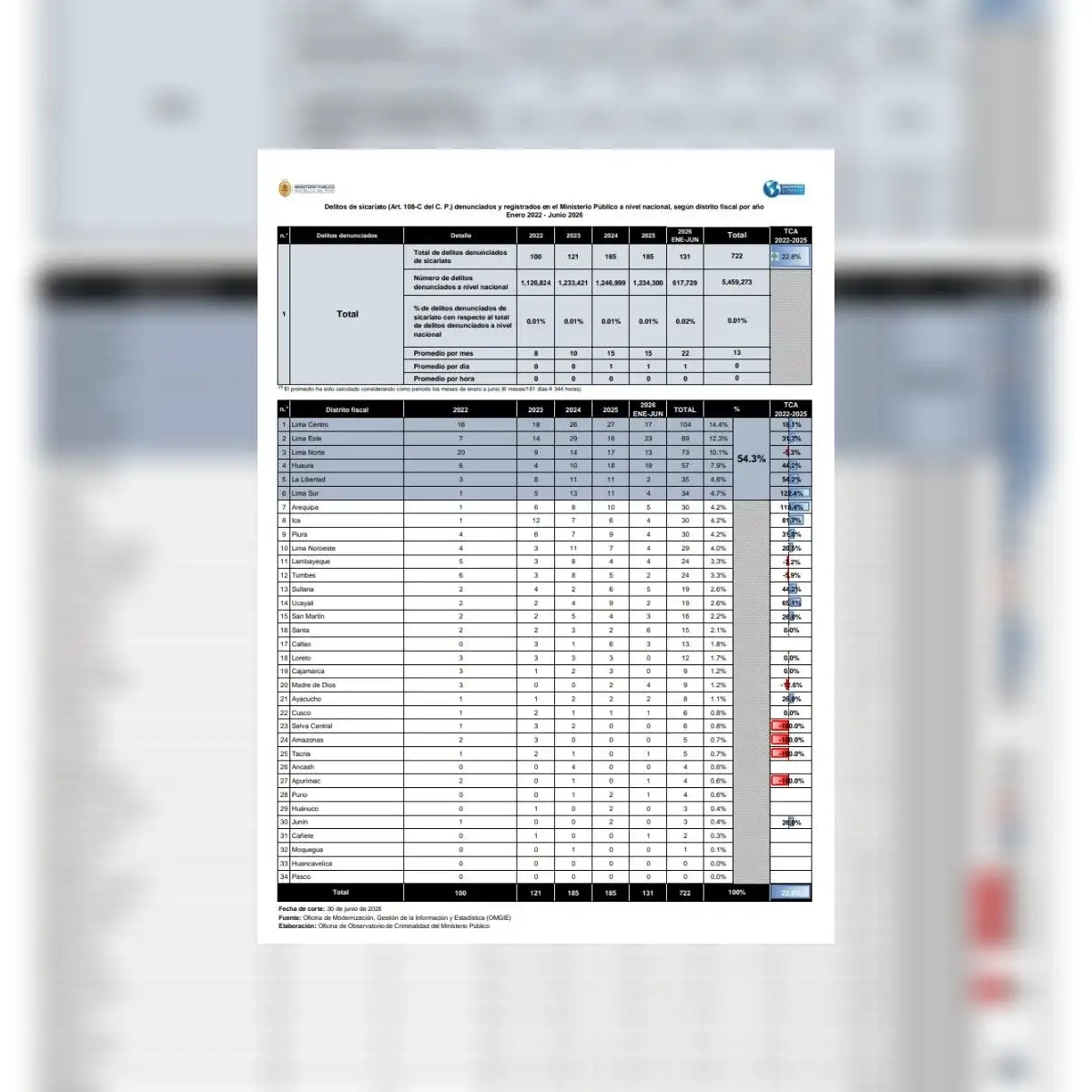
Peru's Public Prosecutor's Office has registered 722 contract killing cases across the country between January 2022 and mid-2026 as hitman violence escalates.
During the first six months of 2026, prosecutors recorded 131 contract killings, representing an average of 22 murder-for-hire crimes every month. Official figures from the National Information System of Deaths show 1,241 total homicides occurred nationwide in the first seven months of the year, with 873 committed using firearms.
The five-year dataset from the Public Prosecutor's Office reveals a steady rise in contract violence. Authorities logged 100 hitman cases during the first half of 2022, 121 in 2023, and 185 cases in both 2024 and 2025 before the 131 cases reported in the first half of 2026.
Data analyst Juan Carbajal noted that the 1,241 homicides in the first seven months of 2026 represent a 5 percent reduction compared to the 1,307 murders investigated during the same period in 2025. However, Carbajal warned that if current trends persist, the nation will fail once again to reduce street violence.
Violence has continued during recent political shifts. Between July 28 and August 10, during the administration of President Keiko Fujimori, 81 homicides occurred in just two weeks. Firearm projectiles caused 62 of those deaths, accounting for 76.5 percent of the total.
In response to the killings, the high command of the National Police of Peru held extraordinary meetings after President Fujimori announced an evaluation of security leadership. Meanwhile, authorities deployed 4,000 officers under Plan Escudo, though violent attacks have continued across urban centers.
Contract killing logistics in Lima
Relatives of victims frequently complain that law enforcement captures only the physical perpetrators while failing to reach the masterminds who hire them. Over the past six months, police investigations confirmed that hired hitmen executed numerous victims, with many identified and tried attackers being foreign nationals.
General Víctor Revoredo, head of the Criminal Investigation Directorate, stated that organized gangs deploy hitmen against anyone who interferes with their operations. When targeting individuals in Metropolitan Lima, criminal groups contact prison cells known as offices to reach seasoned criminals called faites.
These prison brokers connect gangs with contract killers who sell their services to the highest bidder without considering the consequences. Police officials emphasize that the surge in contract killings is fueled by expanding extortion rings, drug trafficking networks, human trafficking for sexual exploitation, and rampant local drug sales.
The murder of Jonathan Santos Carrasco
One prominent investigation involved the murder of 48-year-old Jonathan Santos Carrasco, general manager of the Aló Jhons car wash in the San Juan de Lurigancho district of Lima. Prosecutors allege that Santos maintained a secret relationship with Paola Gamonal Quiliche.
Upon discovering the relationship, Gamonal's partner, Jair Maraví Inga, alias Farruco, ordered the execution of Santos. The murder occurred on August 5, 2025, while the business owner was sitting on a sofa inside his establishment.
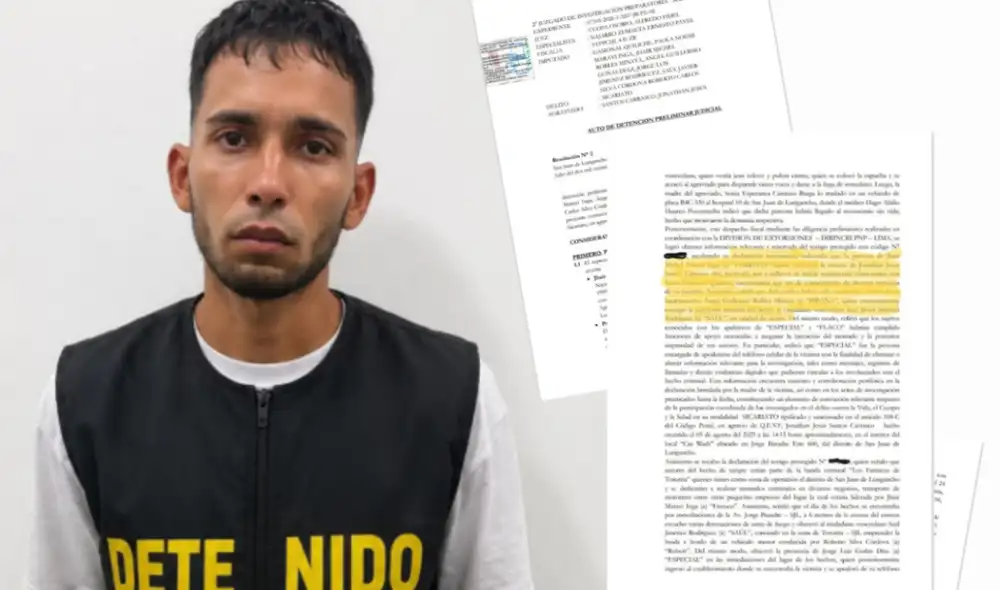
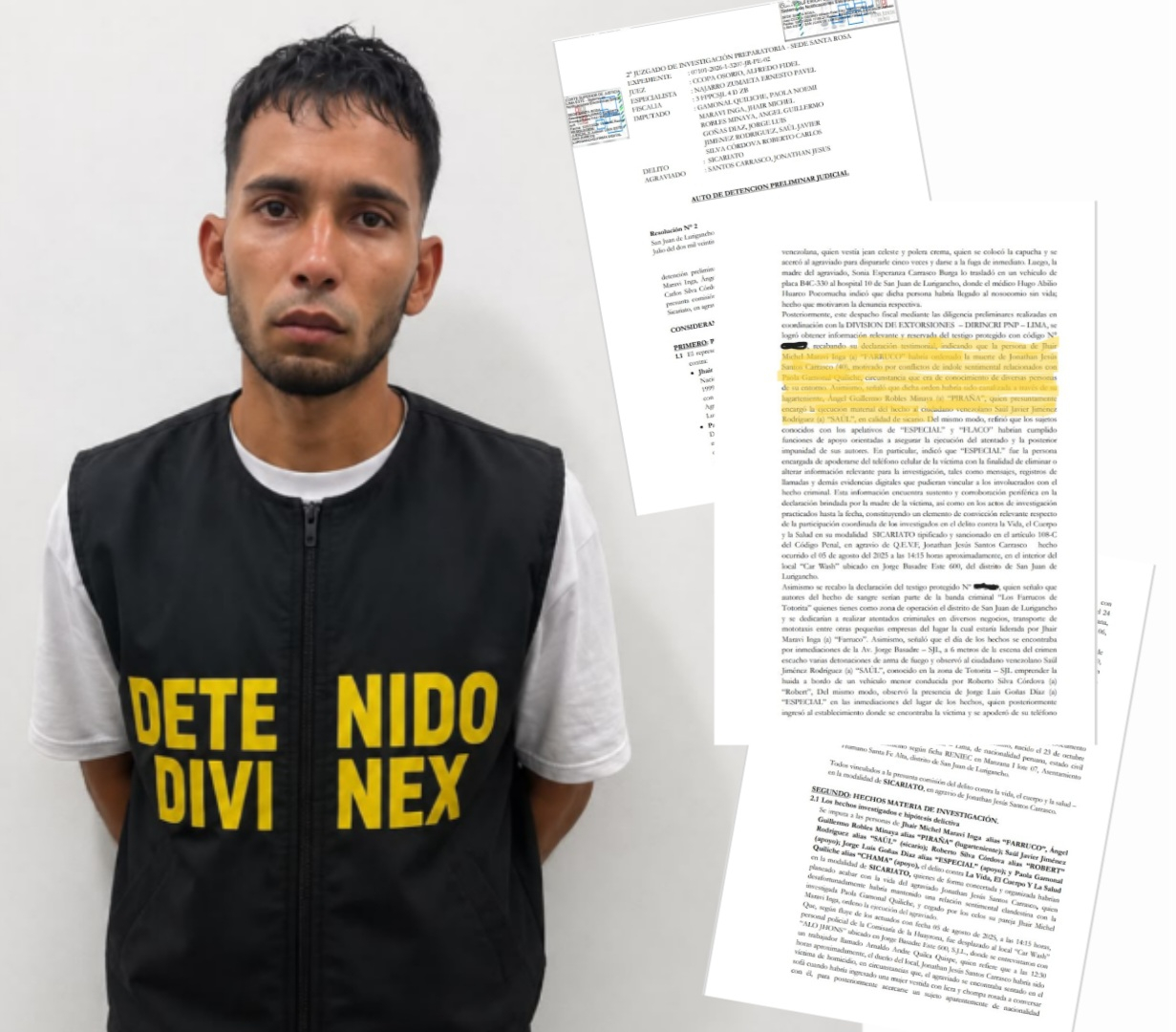
A woman entered the car wash, followed immediately by a Venezuelan gunman who fired multiple shots at Santos. Police subsequently arrested the hitman, Saúl Jiménez Rodríguez, who confessed to the murder.
During police interrogation, Jiménez Rodríguez said his mind went blank and he gave in to financial necessity because his pregnant wife was hospitalized losing amniotic fluid, threatening the loss of their baby. When asked how many shots he fired, he answered that there were several.
Jiménez Rodríguez told officers that an individual known as El Gordo provided the weapon and promised to help him, but added that he never received any money. Prosecutors secured 18 months of preventive detention against five individuals charged with organizing and executing the contract killing.
Teenage hitman and gold theft connection
Another major case centered on the murder of Giancarlo Zegarra Cuadros, known as Careca. On April 10, police intercepted a 17-year-old hitman known as Dominick while he was driving a pickup truck in the Rímac district of Lima. Officers seized a Smith and Wesson pistol and illegal drugs from the vehicle.
Dominick initially told police that he carried out the attack because Zegarra Cuadros had failed to pay him a financial debt. However, investigators have not yet established solid leads identifying who ordered the execution.
Dominick is the son of Diego Oré León, leader of the Los Charlies de Breña criminal gang who is serving a prison sentence for aggravated robbery. Although the teenager's mother told media outlets that her son was a very noble boy, police records show prior detentions for drug trafficking, illegal firearm possession, and aggravated robbery, after which he was released.
Police also linked Dominick to an armed robbery on March 22 along the Costa Verde highway, where criminals stole eight gold ingots.
Prison statistics and hitman rates

Despite more than 1,200 homicides recorded this year, the judicial system operates far from the speed required to address the crisis. Data from the National Penitentiary Institute from May 2026 shows Peru's total prison population reached 105,939 inmates, comprising 39,330 prisoners awaiting trial and 66,609 sentenced convicts.
Inmates held for aggravated murder totaled 3,411, representing 3.22 percent of the entire prison population. Of those 3,411 prisoners, 1,085 are undergoing trial while 2,336 have been convicted. Out of 6,267 foreign inmates in Peruvian prisons, 169 are incarcerated for aggravated murder and 44 for contract killing.
Contract killing rates vary widely across Peru. In Lima, fees for a murder-for-hire range from 200 Peruvian soles to 20,000 US dollars. In the northern city of Trujillo, 23-year-old hitman Marco Romero Silva, alias Niche, confessed after his arrest that he charged 1,000 soles for each murder.
Romero Silva spoke without guilt or regret, describing death as his daily bread and stating that he operated like a ghost trailing closely behind his targets.
Extortion violence and criminal terminology
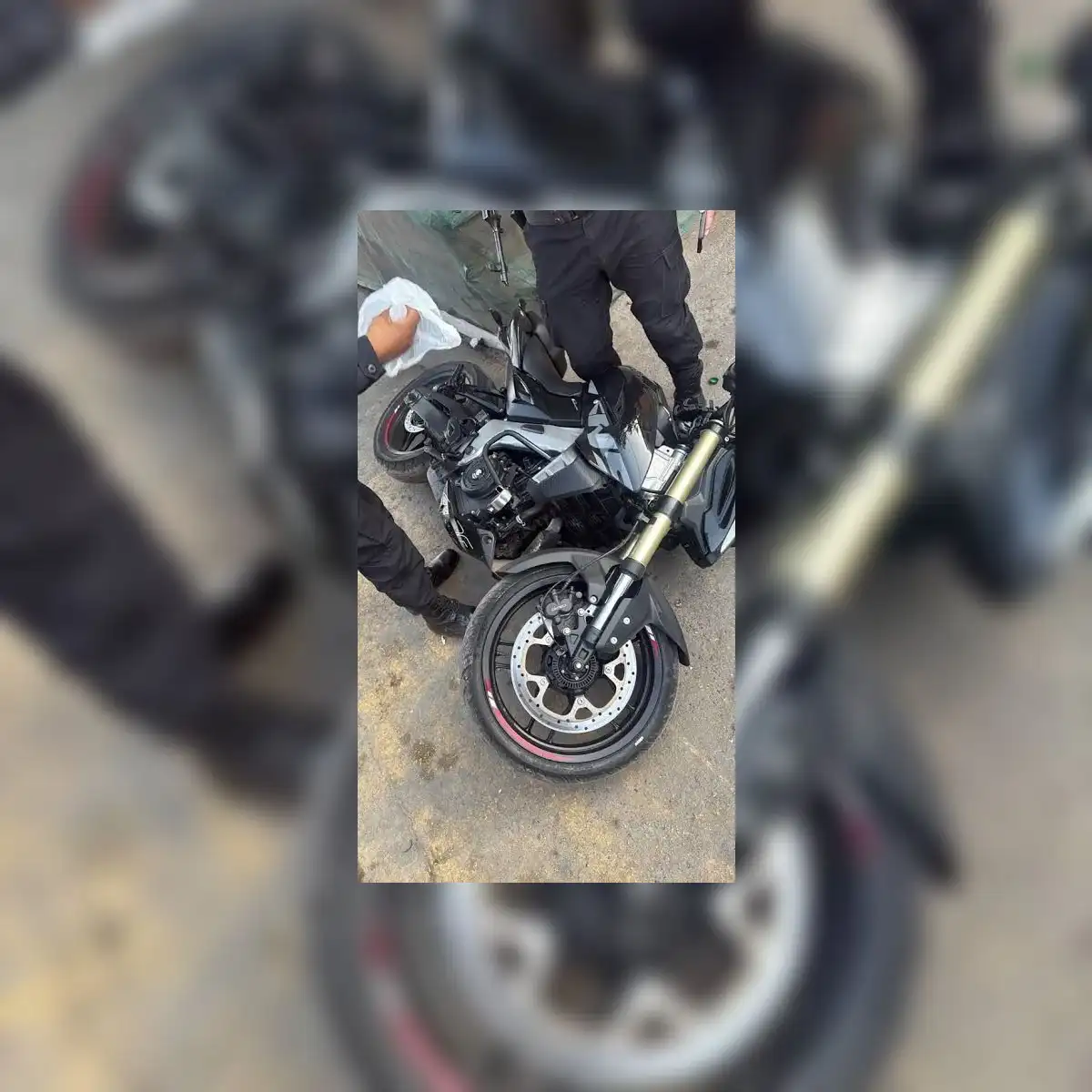
Criminal networks rely on specialized terminology to manage contract killings. Hitmen executing attacks from motorcycles are referred to as gatilleros or patos, while drivers are known as pilotos. Foreign hitmen working for extortionists frequently use terms such as coronar la vuelta, traquetear, sapo, camellar, dar piso, and the ultimatum plata o plomo, meaning silver or lead.
The lethal impact of extortion hitmen was highlighted in Trujillo, where four civil construction workers from the Piura region were shot dead while gathered outside a grocery store in the Alto Salaverry sector. Police reported that the victims were targeted after refusing to pay a weekly extortion fee of 80 soles.
The escalation of contract killings comes amidst other pressing national issues. Relatives of Peruvians in the United States have requested intervention from the Foreign Ministry, fearing their family members will be left abandoned at the border with Mexico. Separately, the Judicial Branch rejected a habeas corpus petition filed on behalf of former President Pedro Castillo, ruling that an opinion from the United Nations is not binding for his release.