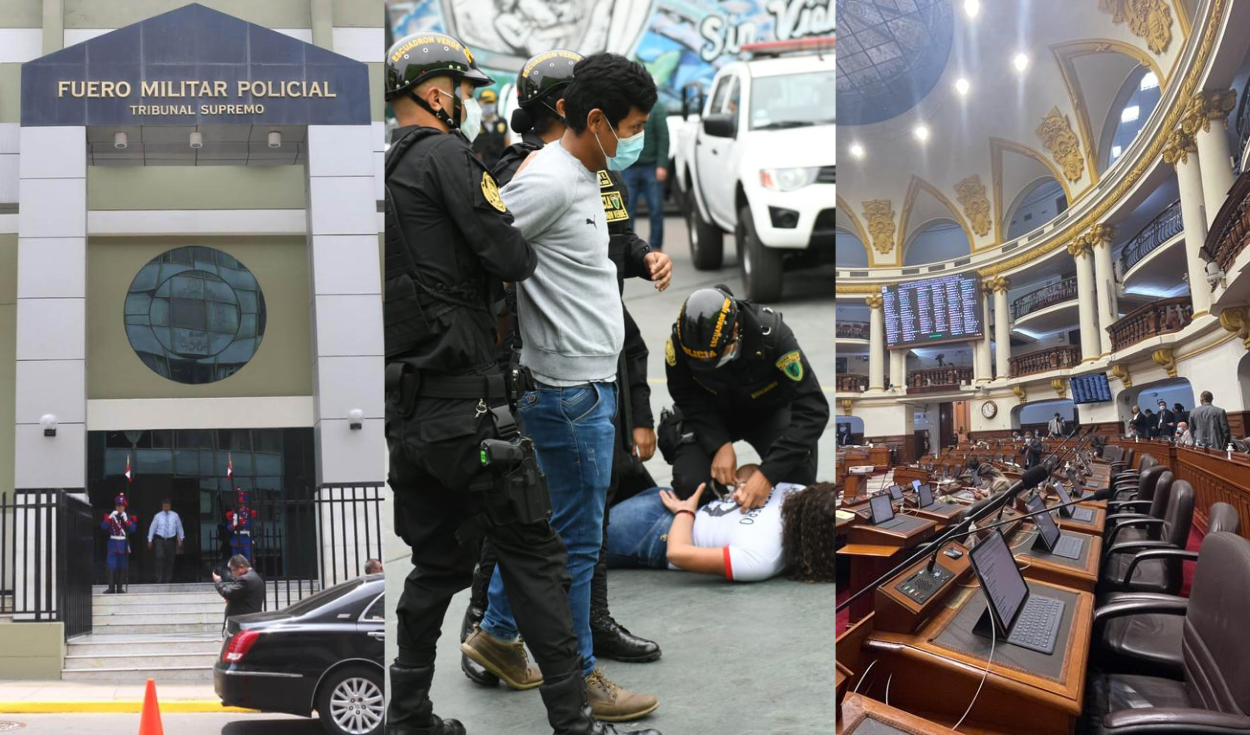
Lawmakers in the Peruvian Chamber of Deputies have introduced the first legislative proposals of the new bicameral Congress, targeting crime laws and virtual legislative sessions.
Two ordinary commissions will concentrate the initiatives submitted so far. The Commission of Justice and Human Rights will review two proposals from Deputy César Holguín, while the Commission of Constitution, Rules and Foreign Relations will analyze a third proposal from Deputy Indira Huilca.
Under Peru's new bicameral system, only members of the Chamber of Deputies can introduce bills. If an initiative passes the lower house, it moves to the Senate for final review, where the upper chamber may ratify, modify, or file the text. This mechanism replaces the unicameral model that governed the Peruvian Congress for more than two decades.
Bicameral System and Committee Assignments
César Holguín, a deputy for Cusco and spokesperson for the Ahora Nación parliamentary group, submitted two of the initiatives. One bill seeks to repeal package laws dubbed pro-crime legislation, and the other aims to eliminate a norm that transfers the trials of police and military officers using force in their duties to military courts. Indira Huilca, also of Ahora Nación, authored the third bill to modify parliamentary rules and end virtual sessions.
The distribution of congressional committees was finalized this week following an agreement by the Board of Spokespersons of the Chamber of Deputies on August 4. The Plenary ratified the committee layout on Wednesday, August 5. From that date, each commission operates under a set deadline to evaluate and report on the bills assigned to it.
Repeal of Pro-Crime Laws Package
Holguín filed his first bill on July 29 during the opening days of the new legislative term. The proposal targets a package of ten laws passed between 2023 and 2025 under the administration of President Dina Boluarte. Both of Holguín's bills have been referred to the Commission of Justice and Human Rights.
Among the measures targeted for repeal is the Soto Law, which shortened the suspension period for the statute of limitations in criminal cases to one year. The proposal also seeks to reverse a rule that reduced the timeframe for effective collaboration proceedings to eight months, restoring both statutes to their previous wording.
According to the bill text, the package passed by the previous legislature weakened anti-corruption enforcement. One provision exempted political parties from penalties such as closure or dissolution even when their structures concealed crimes. Another required a final unappealable conviction before starting asset forfeiture proceedings, delaying the seizure of illicit assets.
The Public Prosecutor's Office warned in January 2025 that these statutory changes reduced the tools available for fiscal investigations. The Judiciary calculated that the Peruvian state failed to recover nearly 50 million dollars in 2025 alone due to the restrictions placed on asset forfeiture.
Military Police Jurisdiction Changes
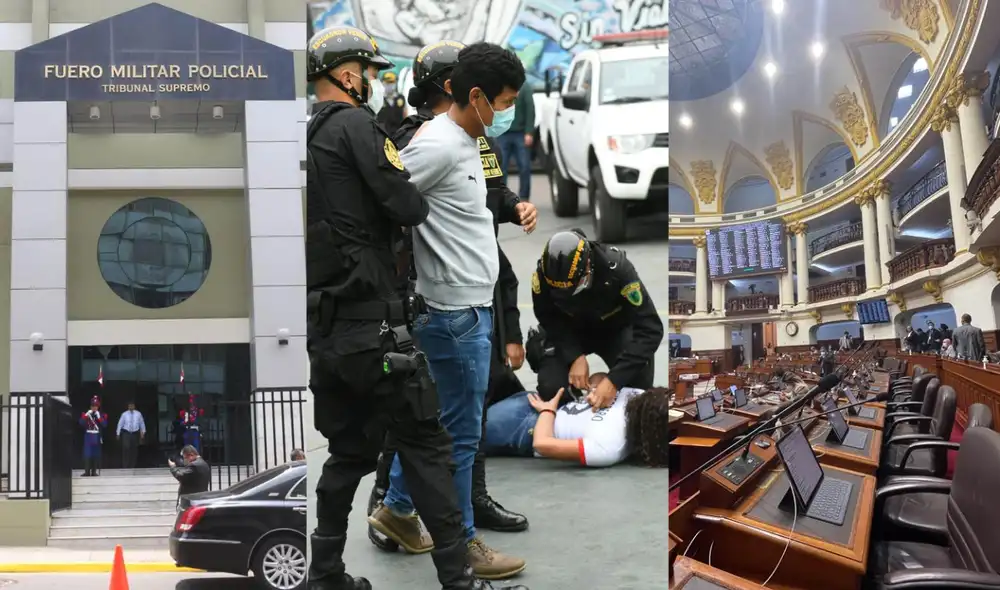
Holguín submitted his second project in August to repeal Law No. 32735, known as the military police impunity law. Published on July 21 amid public criticism, that statute expanded the definition of duty-related crimes for police and military personnel. The expanded scope allows security agents who commit common offenses to be tried in military courts rather than ordinary courts.
Law No. 32735 also establishes that military police jurisdiction must be preferred whenever a conflict of jurisdiction arises. Holguín's bill states that the current law enables the automatic transfer of criminal cases against police and military personnel to military jurisdiction, including cases with first-instance convictions.
The proposal notes that the current statute allows the dismissal of ongoing investigations and the erasure of judicial records without requiring a prior hearing. Amnesty International warned that the law severely risks judicial independence and prevents victims of human rights violations from accessing justice.
Both of Holguín's proposals focus on reversing laws enacted by the previous Congress during the final period of Dina Boluarte's government. Holguín argues that those laws weakened the state against organized crime and created impunity risks for security forces.
Mandatory In-Person Attendance Proposal
Indira Huilca's bill amends Article 26 of the Regulations of the Chamber of Deputies and Article 27 of the Regulations of Congress. The proposal aims to turn physical attendance into a written obligation rather than a custom. Filed on August 3, the initiative carries the signatures of Huilca, César Holguín, Marleny Arminta, and other congress members.
The bill supports its mandate by citing figures on legislative absenteeism. For instance, on May 25, 2023, only 85 lawmakers were physically present in the chamber at the start of a Plenary session. In June 2026, up to nine committees, including Science, Production, Defense, and Ethics, held sessions that were nearly empty.
Huilca noted that absenteeism has persisted even though the Covid-19 health emergency ended in 2023. Under her bill, remote participation would only be allowed when a deputy or senator has official leave for travel outside Lima, is abroad, or is ill. Otherwise, physical presence would be mandatory in both the Plenary and committee sessions.
Legislative Fast-Track Evaluation
Huilca said her caucus is evaluating options to accelerate the bill's passage. She explained that lawmakers will assess bypassing committee review because the issue carries broad consensus. She added that committee waivers operated in previous congresses and that several members support applying the mechanism from the start of the bicameral period.
If the committee waiver is approved, the proposal will go directly to a Plenary vote without prior review by the Rules Commission. Huilca stated she believes a majority supports the initiative because Congress must return to in-person work, ensure proper legislative debate, and demonstrate commitment to citizens.
Huilca confirmed that she will sit on the Labor and Social Security Commission as well as the Justice and Human Rights Commission. She noted that the Justice and Human Rights Commission will handle the two bills submitted by César Holguín regarding pro-crime laws and military police jurisdiction.