Greek opposition party PASOK has rejected government claims that its private debt framework protects borrowers, calling the policies an abandonment of struggling households and businesses.
The critique came in a joint statement from Milena Apostolaki, PASOK spokesman for banking, private debt, and borrower protection, and Dimitris Spyrakos, the secretary for private debt and borrower protection. They were responding to earlier criticisms published by the Ministry of Finance regarding PASOK's debt relief proposals.
The party officials stated that the government continues to treat private debt as a mere accounting figure rather than a major social and economic issue. They argued that unmanaged debt directly threatens the primary residences, personal assets, and financial viability of thousands of Greek households, self-employed professionals, and commercial enterprises.
Apostolaki and Spyrakos accused the ministry of mislabeling restrictive regulations as protective measures. They maintained that official statements present bureaucratic procedures as successes when those processes actually exclude or financially burden the vast majority of citizens seeking relief.
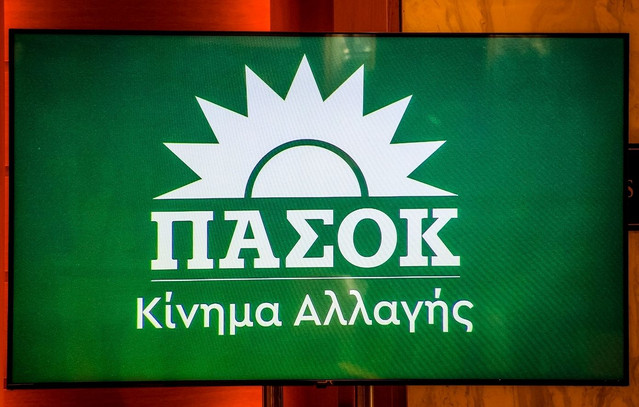
Private debt remains a central political topic in Greece, where years of economic instability and non-performing loans have led to widespread mortgage defaults. PASOK, officially known as the Panhellenic Socialist Movement and Movement for Change, is a major center-left opposition party advocating for legal protections for distressed borrowers and statutory safeguards against home foreclosures.
Housing protections and 120-installment proposal
Detailing their objections, the PASOK representatives challenged the government's claim of protecting primary residences. They noted that current rules effectively prioritize the right of creditors to liquidate a debtor's remaining assets, while offering no legal guarantee that housing debt restructurings will be calculated at fair commercial market values.
In contrast, PASOK defended its own legislative proposal for a 120-installment payment plan. Under the party's plan, borrowers who consistently adhere to their repayment schedules would receive a reduction in accrued interest surcharges alongside a 30 percent write-off of their total debt principal.
Loan purchase rights and Swiss franc mortgages
The joint statement also addressed the right of borrowers to repurchase their own loans directly from financial institutions. Apostolaki and Spyrakos clarified that this mechanism does not fall under insolvency law or bankruptcy proceedings. Instead, when a bank determines that a loan has lost its real market value and plans to sell it to third-party funds, the bank should be obligated to offer the loan to the original borrower first. Under PASOK's amendment, the borrower could buy back the loan at the target sale price plus a tiered markup, providing significant refinancing savings. The officials dismissed assertions that such a right is prohibited as entirely false.
Regarding Swiss franc mortgages, PASOK outlined specific measures for borrowers affected by currency fluctuations, including those whose loans were later converted into euros. Tens of thousands of Greek mortgage holders took out Swiss franc loans prior to the 2008 financial crisis, only to see their debt burdens surge when the euro depreciated against the franc.
PASOK criticized the government's scheme, which offers a 15 percent reduction limited strictly to the outstanding balance of performing borrowers who are up to date on payments. The party pointed out that higher prevailing interest rates neutralize this minor discount, while any future payment default automatically revokes the 15 percent reduction entirely.
Out-of-court debt workout mechanism
Turning to the state out-of-court debt settlement mechanism, Apostolaki and Spyrakos noted that official statements from the Ministry of National Economy and Finance confirm that creditor participation remains optional for all corporate debt and the vast majority of individual cases. Furthermore, participating financial institutions are not required to provide detailed justifications when rejecting a restructuring plan, allowing them to turn down proposals by checking vague, pre-formulated options.
The PASOK officials concluded by asserting that their party will not compromise with policies that manage over-indebtedness by shifting the entire burden onto citizens. They called for a balanced legal framework that protects primary homes, establishes sustainable debt restructurings, and restores public confidence in the judicial system and democratic institutions.