

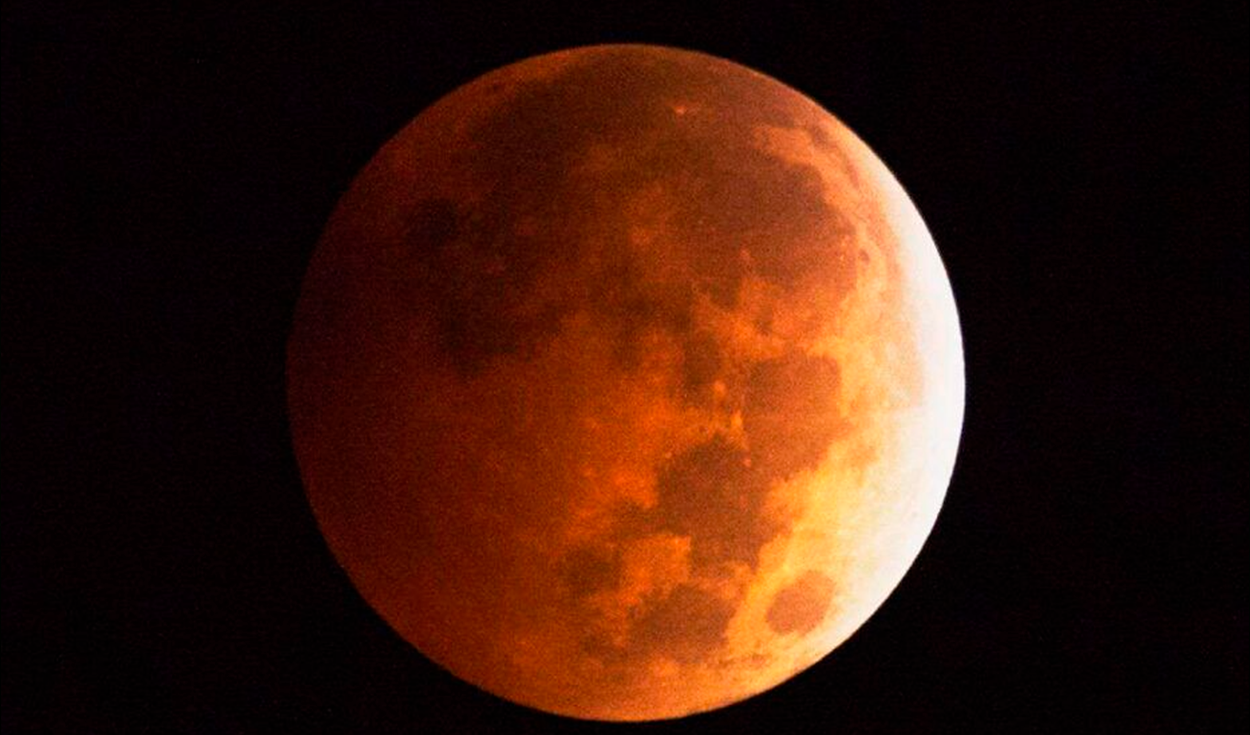
A partial lunar eclipse will turn the full moon a reddish shade across North and South America during the night of Thursday, August 27 to Friday, August 28, coming just weeks after a historic solar eclipse.
The astronomical spectacle occurs when Earth passes directly between the full moon and the sun. This positioning casts Earth's shadow across the lunar surface, blocking direct sunlight from reaching the satellite.
Observers do not need special protective glasses to watch the event. The eclipse can be safely viewed outdoors with the naked eye, though skywatchers can use binoculars or telescopes to better distinguish subtle surface changes.
Atmospheric optics and the reddish hue
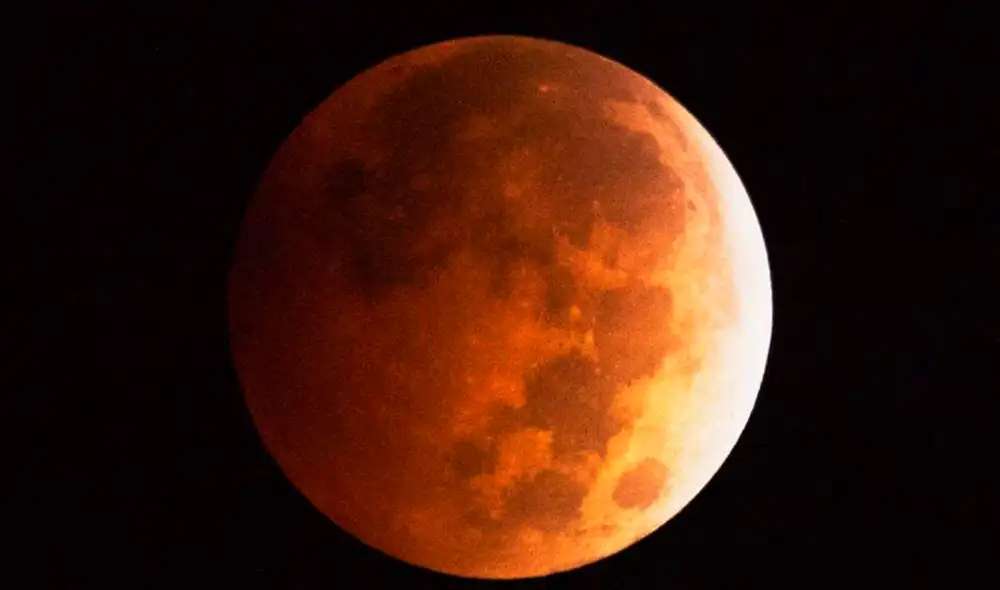
The characteristic copper and reddish tone that the moon acquires during the event is caused by Earth's atmosphere. As the satellite enters the umbra, sunlight passes through the gaseous layer surrounding Earth before reflecting off the lunar surface.
During this journey through the atmosphere, shorter wavelengths of light, such as blue, scatter easily. Longer red wavelengths pass through Earth's atmospheric envelope more effectively, bending toward the moon and illuminating it in red light.
The exact intensity and color of the blood moon depend on atmospheric conditions. Particles such as dust, volcanic ash, and pollution in Earth's atmosphere can darken the lunar disk or modify the specific shades of red visible during the event.
Eclipse viewing times in Peru and Argentina
Skywatchers in South America will experience varying schedules based on local time zones. In Peru, the penumbral phase of the eclipse begins at 8:23 p.m. on Thursday, August 27, followed by the start of the partial phase at 9:34 p.m.
The peak of the eclipse in Peru will occur at approximately 11:13 p.m., when the umbra covers the majority of the lunar disk. The moon will exit the umbral shadow at 12:52 a.m. on Friday, August 28, and fully leave the penumbral shadow at 2:03 a.m.
In Argentina, timing varies slightly depending on location. In Buenos Aires, the penumbral phase starts at 10:24 p.m., with the moon entering the umbra at 11:33 p.m. Maximum coverage reaches nearly 93 percent of the lunar disk at 1:13 a.m. on August 28, before the moon exits the umbra at 2:52 a.m. and the penumbral phase ends at 4:01 a.m.
Visibility in Europe
In Europe, the eclipse will occur primarily before sunrise. The ability to observe the phenomenon across European countries will depend on local weather, viewing position, and the exact time the moon sets below the horizon.
During a partial lunar eclipse, only a portion of the moon enters Earth's dark central shadow, known as the umbra. The remainder of the lunar disk passes through the lighter outer shadow, called the penumbra, creating a distinct visual contrast during peak alignment.



